


How Much Does a Construction Performance Bond Cost? Top Guide 2025
How much does a construction performance bond cost? For projects big or small, this is a common question for many in the construction industry. In simple terms, a construction performance bond typically costs between 0.7% and 2.5% of the total contract value, though it can sometimes reach up to 4%, depending on various factors like the size of the project and the contractor’s creditworthiness.
Construction bonds are essential financial guarantees that ensure a contractor will complete a project as agreed. If they fail, the bond offers a safety net for the client, covering the costs to hire another contractor or finish the project.
We’ll dive deeper into understanding what these bonds mean for your business and its financial stability. As someone who has spearheaded strategic growth in industries involving surety bonds, I’m here to break down the complexities into simple terms. So, whether you’re a seasoned contractor or new to construction, let’s explore the ins and outs of construction bond costs together.
Understanding Construction Performance Bonds
Construction performance bonds play a crucial role in the construction industry by ensuring that projects are completed as promised. Let’s break down what these bonds mean for contractors and clients.
Contractor Obligations
When a contractor agrees to take on a project, they commit to completing it according to the agreed terms. This includes finishing on time, staying within budget, and meeting all quality standards. A performance bond acts as a formal guarantee that the contractor will fulfill these obligations.
If the contractor fails to meet these obligations, the bond steps in to protect the project owner. The surety company that issued the bond will cover the costs of completing the project or fixing any issues, up to the bond amount.
Project Completion
The main goal of a performance bond is to ensure project completion. If a contractor defaults, the project owner can make a claim on the bond. This claim can help cover the expenses of hiring a new contractor to finish the work or correcting any problems left by the original contractor.
This process ensures that projects do not stall indefinitely and that they reach completion without additional financial burden on the project owner.

Financial Protection
Performance bonds offer significant financial protection. They are a safety net for project owners, shielding them from unexpected costs if a contractor fails to deliver. This protection is especially important for large projects where the financial stakes are high.
In addition to protecting project owners, these bonds also boost the credibility of contractors. By obtaining a performance bond, contractors demonstrate their reliability and financial stability, making them more attractive to potential clients.
Performance bonds are a vital part of the construction landscape, ensuring projects are completed as planned and providing financial security to all parties involved. This financial assurance is invaluable, especially in an industry where unforeseen challenges can arise at any moment.
Let’s dig into how much these bonds cost and the factors that influence their pricing.
How Much Does a Construction Performance Bond Cost?
When diving into how much does a construction performance bond cost, several factors come into play. The cost isn’t a one-size-fits-all figure; it varies based on multiple elements that influence the bond’s premium.
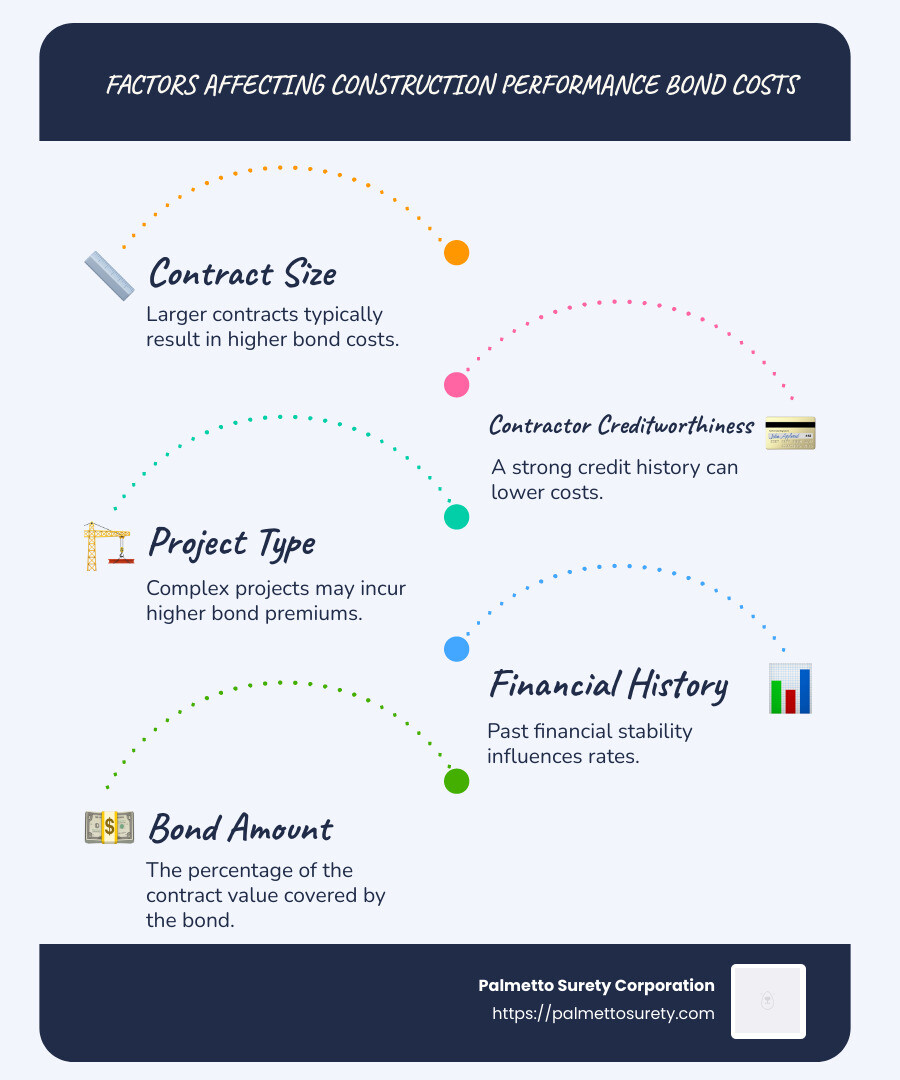
Factors Influencing Bond Costs
-
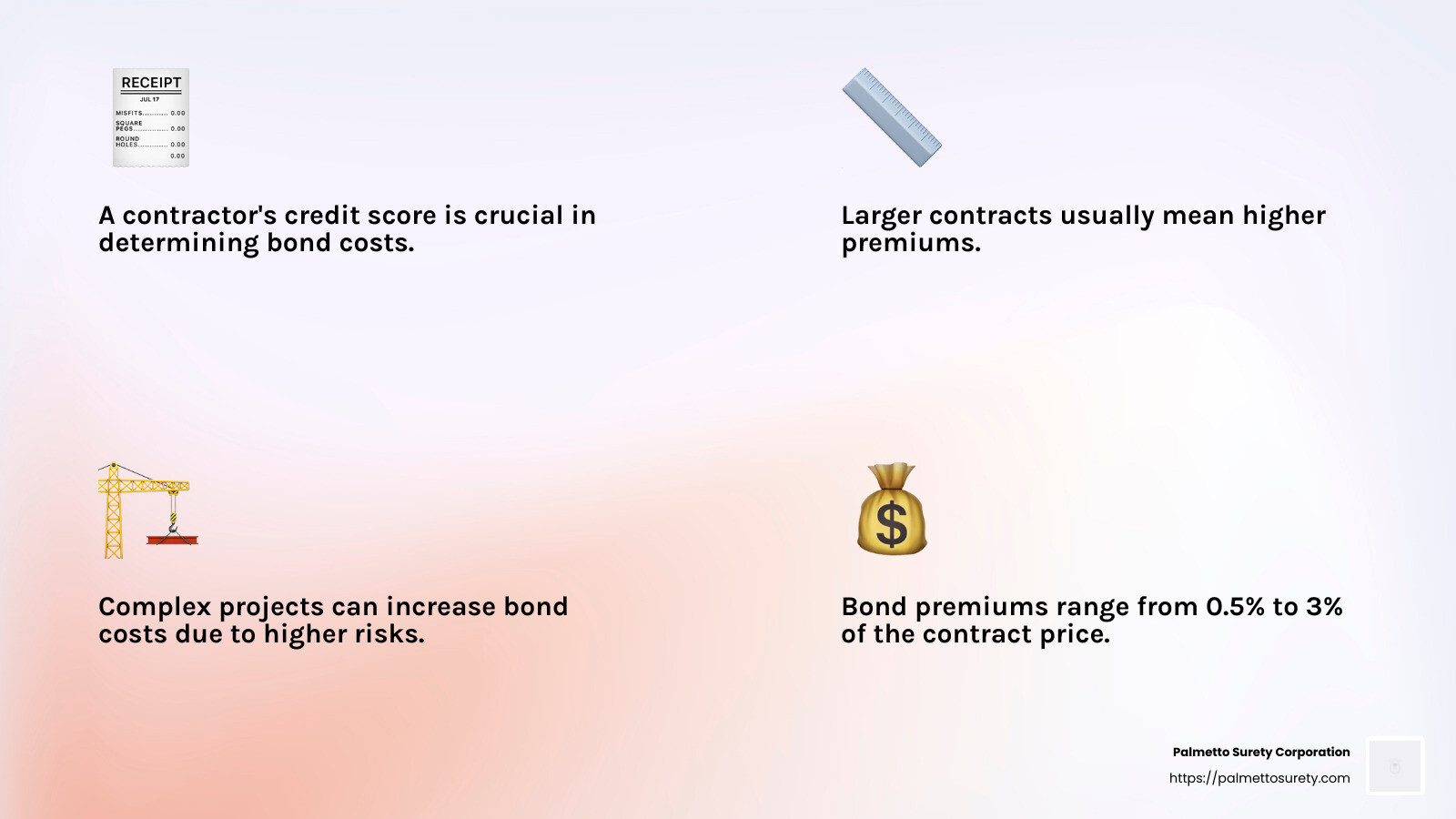
Creditworthiness: A contractor’s credit score is a significant determinant. Higher credit scores often result in lower premiums because they indicate lower risk to the surety company. On the other hand, poor credit can lead to higher costs.
-
Contract Size: The size of the contract directly impacts the bond amount. Larger contracts typically require higher bond amounts, which can increase the premium. This is because the risk is greater with bigger projects.
-
Contractor Credit and Financial History: Surety companies closely examine a contractor’s financial history. A strong financial track record and a history of successful project completions can lead to more favorable premium rates.
-
Project Type: Different projects carry different levels of risk. For example, complex projects might incur higher bond costs due to the increased likelihood of complications.
Calculating the Cost
The cost of a performance bond is typically calculated as a percentage of the contract price. This percentage is known as the premium rate and usually falls between 0.5% and 3%, depending on the factors mentioned above.
-
Contract Price: The total value of the contract is the baseline for calculating the bond premium. For instance, a $1 million contract with a 1% premium rate would result in a $10,000 bond cost.
-
Bond Amount: The bond amount is often set at 100% of the contract price. However, some jurisdictions or projects might require different percentages, affecting the overall cost.
To illustrate, let’s say you’re working on a $2 million project with a premium rate of 1.5%. The bond cost would be $30,000. If your credit is excellent, you might secure a lower rate, reducing the cost.
Understanding these factors can help contractors anticipate and manage the costs associated with construction performance bonds. By maintaining good credit and financial health, contractors can potentially reduce their bond expenses, making them more competitive in the bidding process.
Let’s explore the role of surety companies in this process and how they determine these rates.
The Role of Surety Companies
When it comes to construction performance bonds, surety companies play a vital role in determining the rates and ensuring that everything runs smoothly. They act as financial guarantors, providing assurance to project owners that contractors will fulfill their obligations. Let’s explore how surety companies determine rates.
How Surety Companies Determine Rates
-
Underwriting Process: The underwriting process is where it all begins. Surety companies assess the risk associated with issuing a bond to a contractor. This involves a detailed review of various factors to determine the likelihood of a claim being made against the bond.
-
Risk Assessment: Risk assessment is a critical part of underwriting. Surety companies evaluate the contractor’s ability to complete the project successfully. They consider factors such as the contractor’s experience, the complexity of the project, and any potential challenges that might arise.
-
Indemnification Agreement: Before issuing a bond, surety companies often require contractors to sign an indemnification agreement. This agreement holds the contractor responsible for reimbursing the surety for any losses incurred due to a claim. It’s a safety net for the surety, ensuring they can recover their costs if needed.
-
Financial Statements: A contractor’s financial health is crucial. Surety companies review financial statements to assess the contractor’s ability to handle the project’s financial demands. Strong financials can lead to lower bond rates, while weaker financials might increase the cost.
-
Past Performance: Contractors with a history of successful project completions are seen as lower risk. Surety companies look at past performance to gauge reliability. A solid track record can result in more favorable rates.
-
Bond Duration: The length of time a bond is required also affects the rate. Longer projects may carry higher risks, potentially leading to higher premiums. Surety companies consider the project’s timeline when determining the bond rate.
By evaluating these factors, surety companies can set a premium rate that reflects the level of risk involved. This careful assessment helps ensure that both the project owner and the contractor are protected throughout the construction process.
Now, let’s move on to frequently asked questions about construction performance bonds.
Frequently Asked Questions about Construction Performance Bonds
How much is a performance bond in construction?
How much does a construction performance bond cost? It’s a common question. Typically, the cost is a percentage of the total contract value. This percentage usually ranges from 0.7% to 3%. However, it can sometimes go up to 3.5% depending on various factors like the contractor’s creditworthiness and the project’s complexity.
For instance, if you have a $1 million contract, the performance bond might cost between $7,000 and $30,000. The exact amount depends on the risk assessment done by the surety company.
How hard is it to get a performance bond?
Getting a performance bond involves several steps. Here’s a simple breakdown:
-
Application Process: Contractors must fill out an application providing details about their business, the project, and financial history. This is the first step in securing a bond.
-
Credit Requirements: A contractor’s credit score plays a significant role. Surety companies look at both personal and business credit scores. A higher credit score often leads to lower bond costs and simpler approval processes.
-
Financial History: Surety companies evaluate financial statements to ensure the contractor can handle the project’s financial requirements. Strong financials make the process smoother and increase the likelihood of approval.
While the process might seem daunting, contractors with good credit and financial stability typically find it easier to obtain a bond.
Who pays for a performance bond?
The cost of a performance bond is generally the responsibility of the contractor. It’s considered a project cost and is often factored into the bid submitted to the project owner.
Contractors pay the bond premium to the surety company. This cost is then passed on to the project owner as part of the overall contract price. Essentially, while the contractor pays for the bond upfront, the project owner indirectly covers this cost through the agreed contract amount.
Understanding these aspects helps explain the process of obtaining construction performance bonds and highlights the importance of financial readiness and credit health in securing these essential guarantees.
Conclusion
At Palmetto Surety Corporation, we understand that navigating construction performance bonds can feel overwhelming. That’s why we focus on providing quick approval and efficient service to make the process as smooth as possible.
Our team is dedicated to helping you secure the necessary bonds with minimal hassle. With over 20 years of experience, we specialize in offering a broad range of surety bonds, ensuring that you find the right fit for your construction project needs.
Why Choose Palmetto Surety Corporation?
-
Fast Approval: We pride ourselves on our ability to approve most applications within hours. This means less waiting time for you and a quicker start to your project.
-
Expert Guidance: Our experts are here to walk you through every step of the bonding process. From understanding costs to assessing your creditworthiness, we’re here to help.
-
Comprehensive Coverage: Whether your project is in construction, manufacturing, transportation, or healthcare, we provide the bonds you need to meet industry standards and protect your interests.
If you’re ready to explore how a construction performance bond can benefit your project, or if you have more questions, contact us today. Let Palmetto Surety Corporation be your trusted partner in securing your project’s success.


