


Bonded Builders Insurance: Top 5 Trust & Security Benefits
Bonded builders insurance is a vital component for anyone involved in construction, offering peace of mind and essential protection. If you’re managing construction projects, here’s what you need to know:
- Bonded: Provides financial protection against incomplete or faulty work.
- Construction Bonds: Legally binding agreements that ensure a project will be completed as promised.
- Surety Bonds: Involves three parties (principal, obligee, and surety) to guarantee performance.
Bonded builders insurance is crucial in safeguarding investments, preventing financial losses, and ensuring work completion.
As Haiko de Poel Jr, I’ve spearheaded major initiatives in branding and strategic development within the construction insurance sector. My work reflects a deep commitment to simplifying and promoting bonded builders insurance solutions to support businesses in managing their risks effectively.
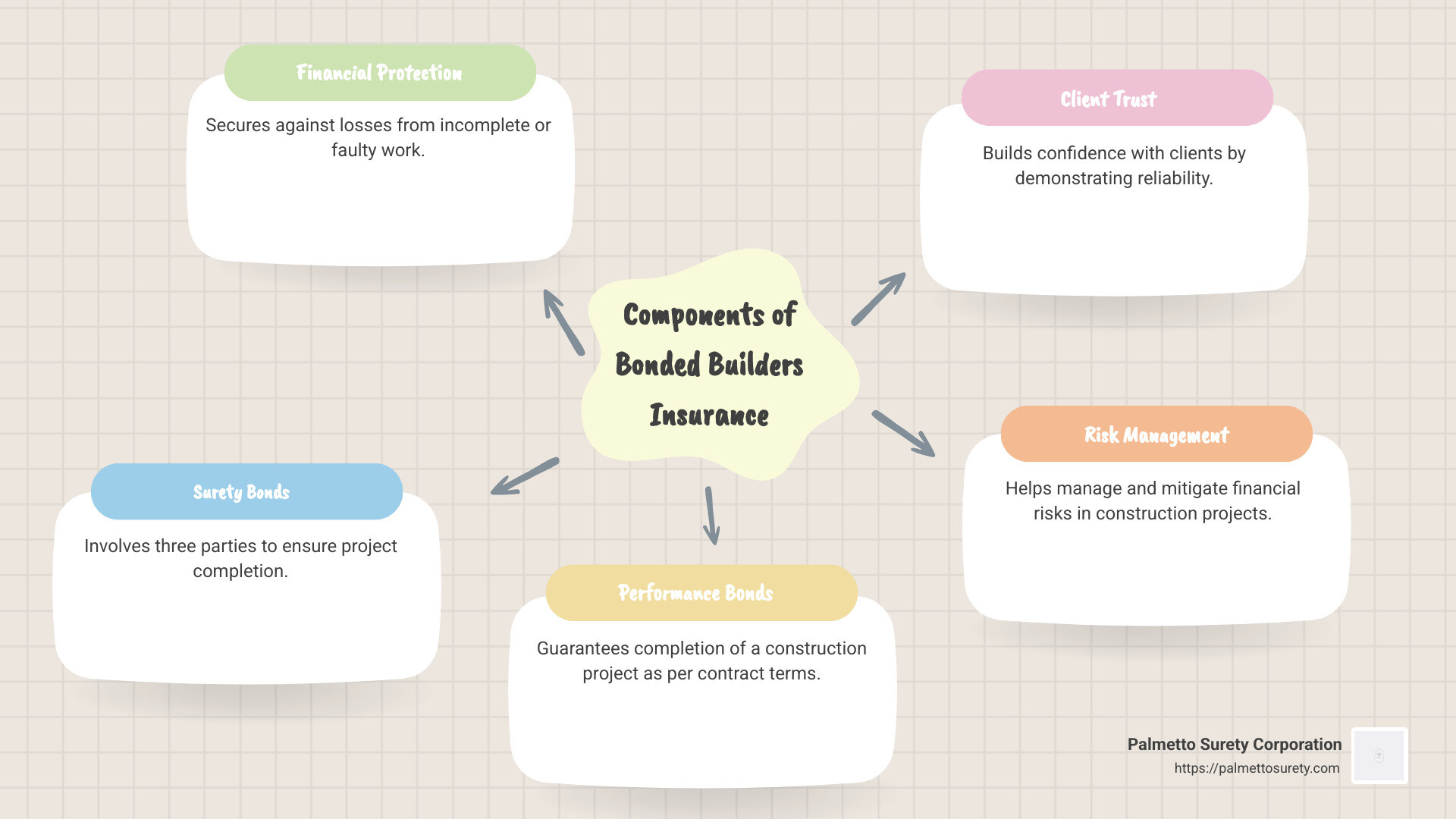
Understanding Bonded Builders Insurance
Bonded builders insurance is a crucial component in construction projects, combining the benefits of bonding with the security of insurance to ensure smooth and secure project completion.
What is Bonded Builders Insurance?
At its core, bonded builders insurance involves surety bonds. A surety bond is a commitment to be liable for the debt, default, or failure of another. In the construction context, this means ensuring that a project is completed according to the agreed terms.
The Role of Surety Bonds in Construction
Surety bonds in construction involve three parties:
- Principal: The contractor who needs the bond.
- Obligee: The project owner who requires the bond.
- Surety: The company that backs the bond.
These bonds protect project owners from financial loss if the contractor fails to fulfill the project terms.
Types of Construction Bonds
- Performance Bonds: Ensure that the contractor completes the project as per the contract.
- Payment Bonds: Guarantee that subcontractors and suppliers are paid.
- Bid Bonds: Protect the project owner if the winning bidder fails to begin the project.
- Ancillary Bonds: Cover other aspects of the contract not directly related to performance or payment.
Why Bonded Builders Insurance Matters
- Financial Security: Protects against unexpected costs due to contractor failures.
- Trust Building: Provides assurance to clients that their investments are secure.
- Risk Management: Helps manage potential risks associated with construction projects.
For businesses involved in construction, having bonded builders insurance is essential. It builds trust with clients and ensures projects are completed successfully and on time.

Types of Bonds in Construction
In the construction industry, various types of bonds are vital for safeguarding projects. These bonds ensure that projects are completed as promised and protect all parties involved from financial loss. Let’s explore the different types of bonds commonly used in construction.
Performance Bonds
Performance bonds serve as a safety net for project owners, ensuring that the contractor will complete the project according to the contract terms. If the contractor fails to deliver, the surety company steps in to cover the costs needed to finish the project. This bond not only protects the owner’s investment but also keeps the project on track.
Payment Bonds
Payment bonds guarantee that subcontractors and suppliers will be paid for their work and materials. This bond is crucial because it prevents liens from being placed on the property if the main contractor defaults on payments. Payment bonds ensure that everyone who contributes to the project is compensated, maintaining smooth operations and good relationships.
Bid Bonds
Bid bonds are used during the bidding process to protect the project owner. They ensure that contractors submit serious bids and are capable of undertaking the project if awarded. If a contractor wins the bid but backs out, the bid bond compensates the owner for the difference between the initial bid and the next best bid. This bond keeps the bidding process fair and competitive.
Ancillary Bonds
Ancillary bonds cover various additional obligations in a construction contract that are not directly related to performance or payment. These could include maintenance, supply, or warranty obligations. Ancillary bonds offer a comprehensive safety net, ensuring all aspects of the contract are honored.
Each of these bonds serves a specific purpose, contributing to the overall security and success of a construction project. With bonded builders insurance, contractors and project owners can move forward with confidence, knowing they have robust financial protection and risk management in place.
Palmetto Surety Corporation specializes in providing these essential bonds, helping construction professionals meet their obligations and build trust with clients.
Benefits of Being Licensed, Bonded, and Insured
In the construction industry, being licensed, bonded, and insured isn’t just a formality—it’s a strategic advantage. Here’s why:
Financial Protection
When a business is bonded, it provides a safety net for clients. If something goes wrong, like incomplete work or contract breaches, the surety bond ensures financial compensation. This means the client doesn’t bear the financial burden of the contractor’s failures.
Insurance adds another layer of protection. It covers unexpected events like property damage or injuries on site. Together, bonding and insurance protect both the business and the client from unforeseen financial losses.
Building Client Trust
Clients prefer working with companies that are licensed, bonded, and insured. It signals professionalism and reliability. When clients see these credentials, they know the company has met specific standards and is serious about its work.
Trust is crucial in construction. Projects are often complex and costly, so clients need assurance that their investment is safe. Being bonded and insured gives them peace of mind, knowing they are protected if things don’t go as planned.
Effective Risk Management
For businesses, these credentials are vital in managing risk. Surety bonds and insurance policies help mitigate risks associated with construction projects. They ensure that obligations are met and that there is a plan in place for handling potential issues.
By having a robust risk management strategy, businesses can focus on delivering quality work without worrying about the “what-ifs.” This not only improves project outcomes but also strengthens client relationships.
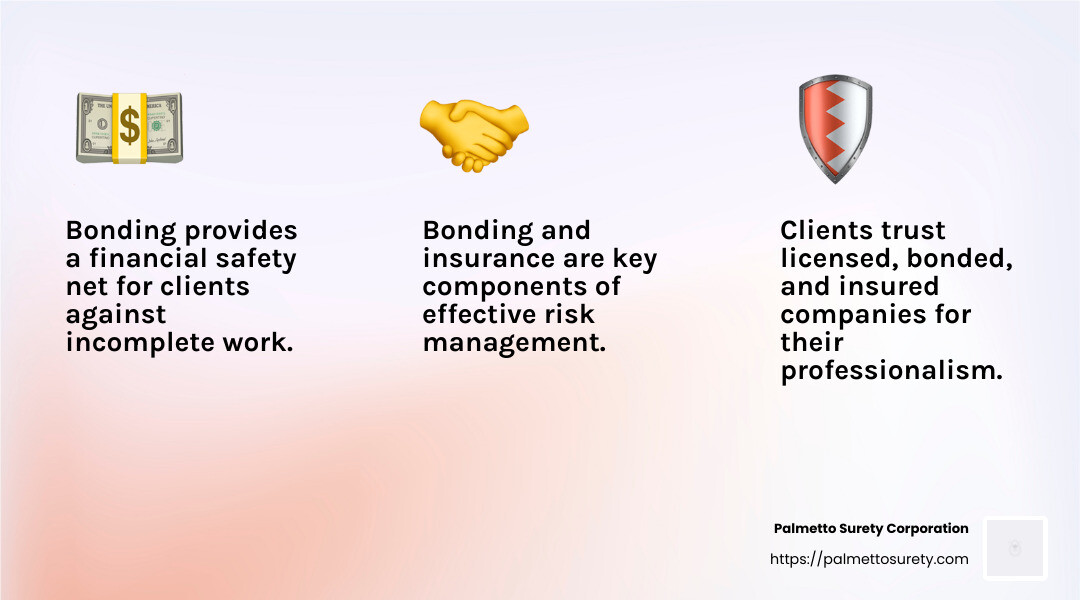
In summary, being licensed, bonded, and insured is more than just a regulatory requirement. It’s a key component of a successful business strategy. It offers financial protection, builds client trust, and improves risk management, setting the stage for successful construction projects.
With Palmetto Surety Corporation, you can easily steer the complexities of bonding and insurance, ensuring your business is well-protected and trusted by clients.
Frequently Asked Questions about Bonded Builders Insurance
What does bonded insurance cover?
Bonded insurance primarily covers incomplete work, financial losses, and contract obligations. When a contractor fails to complete a project as agreed, the surety bond steps in. It compensates the client for the unfinished work, ensuring they don’t suffer financial losses due to the contractor’s shortcomings. This type of insurance also covers any breach of contract, providing a safety net for clients and ensuring that all contractual obligations are met.
Do you need to be bonded and insured?
Yes, being bonded and insured is crucial for any construction business. It builds client confidence and is often a requirement for winning contracts. Clients prefer working with contractors who are bonded and insured because it provides them with assurance and protection. Bonding and insurance signal that a contractor is reliable and prepared to handle potential liabilities, which is essential in an industry where projects are complex and costly.
Who typically pays for builders risk insurance?
In most cases, the general contractor or the project owner is responsible for purchasing builders risk insurance. The choice of who pays can depend on the specific terms of the contract. Builders risk insurance is crucial as it protects against damage to the project during construction. It covers various risks, including theft, vandalism, and natural disasters, ensuring the project’s financial security until completion.
By understanding these aspects of bonded builders insurance, construction professionals can better steer the complexities of contracts and project security, ensuring both their business and their clients are safeguarded.
Conclusion
At Palmetto Surety Corporation, we understand the complexities of the construction industry and the importance of securing your projects with the right insurance and bonds. Our expertise in providing bonded builders insurance ensures that contractors and clients alike can proceed with confidence, knowing they are protected against unforeseen challenges.
One of our standout features is our quick service. We pride ourselves on our ability to approve most applications within hours, allowing you to focus on what you do best—building and managing your projects. This efficiency is crucial in an industry where time is often of the essence.
Our deep industry expertise sets us apart. With over 20 years in the commercial surety business, we’ve built a reputation for reliability and trust. We specialize in providing surety bonds across various industries, including construction, manufacturing, transportation, and healthcare. Our knowledge and experience mean we can offer custom solutions that meet your specific needs.
Whether you’re a contractor needing a performance bond or a project owner looking for builders risk insurance, Palmetto Surety Corporation is here to help. We are committed to providing you with the best possible service and ensuring your projects are secured from start to finish.
For more information on how we can assist you with your bonding needs, explore our services and find how we can support your business today.


