


Court Cash Bond: 5 Simple Steps for Easy Success
When it comes to navigating the bail process, understanding the Court Cash Bond can save both time and money. A Court Cash Bond is a payment made directly to the court, ensuring that a defendant appears at all required hearings. If the defendant fulfills their court obligations, the cash bond is typically refunded after deducting any applicable fees. This process, compared to a surety bond, cuts out the middleman and can be a more straightforward path for those who have the necessary funds available.
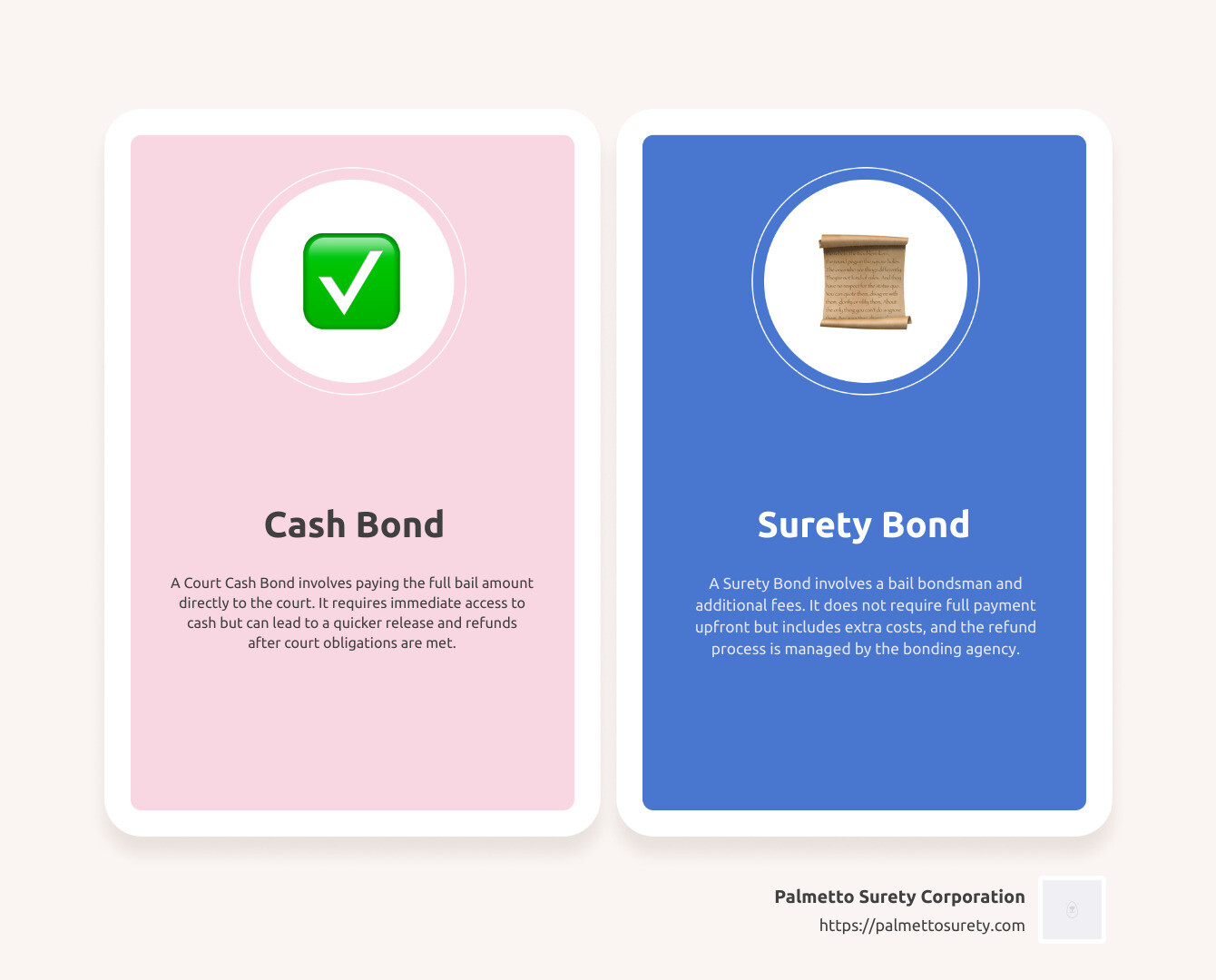
Unlike a surety bond, which involves a bail bondsman and additional fees, a Court Cash Bond requires paying the full bail amount upfront. This means having immediate access to the full bail amount, staying compliant with court procedures, and potentially securing a quicker release. For many, this direct approach to bailing a loved one out of jail is the most transparent and secure option.
I’m Haiko de Poel Jr. With years of experience reshaping surety bond companies, I offer insights into the complexities of Court Cash Bonds. My role as a strategic leader in marketing at Palmetto Surety Corporation has focused on simplifying and expediting bond processes to ensure our clients find swift resolutions during stressful times.
Step 1: What is a Court Cash Bond?
A Court Cash Bond is a straightforward way to post bail by paying the full bail amount directly to the court. This bond acts as a financial guarantee that the defendant will appear for all scheduled court dates. If the defendant attends all court appearances and complies with any other conditions set by the court, the cash bond is typically refunded after the case concludes, minus any fees or fines.
Key Features of a Court Cash Bond:
-
Full Payment Upfront: Unlike other bail options, a cash bond requires the entire bail amount to be paid in cash at once. This can be a significant sum, depending on the charges and the judge’s discretion.
-
Direct Court Payment: The payment goes directly to the court, eliminating the need for a middleman like a bail bond agent. This can simplify the process and reduce additional costs associated with surety bonds.
-
Refundable: Upon the conclusion of the court case, the cash bond is refundable, provided that the defendant fulfills all court obligations. However, any court-related fees or fines will be deducted from the refund.
-
Compliance with Court Procedures: Paying a cash bond requires adhering to specific court procedures, including providing the correct payment method and completing any necessary forms, such as an IRS form for large amounts.

Choosing a Court Cash Bond can be an efficient way to ensure a quick release from jail, provided you have the financial resources available. This option offers transparency and can be less costly in the long run compared to surety bonds, which involve service fees. Understanding these fundamentals helps in making informed decisions during the bail process.
Step 2: How to Pay a Court Cash Bond
Paying a Court Cash Bond is a straightforward process, but it requires careful attention to detail to ensure everything goes smoothly. Here’s a step-by-step guide to help you steer the payment process:
Cash Payment or Cashier’s Check
-
Payment Options: You can pay the cash bond using either actual cash or a cashier’s check. If you opt for a cashier’s check, ensure it is made payable to “Clerk, U.S. District Court.”
-
Location for Payment: Payments should be made at the Clerk’s Office of the U.S. District Court. In Pittsburgh, for example, the office is located at 700 Grant Street, Suite 3110, Pittsburgh, PA 15219.
-
Receipt of Payment: Once the payment is processed, you will receive a receipt. This receipt is crucial as it serves as proof of payment and is needed if you wish to reclaim the bond money later. Do not lose this receipt.
IRS Form for Large Cash Payments
-
IRS Requirement: If your cash payment is $10,000 or more, you will be required to complete an IRS form. This is a standard procedure to ensure compliance with federal regulations concerning large cash transactions.
-
Contact Information Form: Alongside the IRS form, you’ll need to fill out a contact information form to be retained by the Clerk’s Office. This ensures they can reach you if necessary regarding the bond.
Key Considerations
-
Ensure Accurate Information: Double-check all the details on your cashier’s check and forms to avoid any delays in processing.
-
Keep Copies: Make duplicates of all forms and receipts for your records. This can be helpful if any issues arise during the bond refund process.
-
Understand the Process: Familiarizing yourself with these steps can help make the bond payment process smoother and less stressful.
By following these steps, you can efficiently manage the payment of a Court Cash Bond, ensuring a timely release from custody and compliance with court requirements. This upfront payment, though substantial, can be a strategic option if you have the necessary funds available.
Step 3: Conditions for Cash Bond Refund
Once you’ve paid the Court Cash Bond, you might wonder how to get that money back. The refund process is straightforward, but it hinges on a few key conditions.
Court Appearances
To qualify for a refund, the defendant must attend all required court appearances. Think of the cash bond as a promise to the court that the defendant will show up. If they miss even one appearance, the bond can be forfeited, meaning you lose the money.
Tip: Keep track of all court dates and ensure the defendant attends each one. This is crucial for getting your cash bond back.
Judgment Entry
A cash bond becomes eligible for a refund once a judgment is entered in the case. This means the court has reached a decision, whether it’s a conviction, acquittal, or dismissal of charges.
-
Acquittal or Dismissal: If the defendant is found not guilty or charges are dropped, the bond is typically returned.
-
Conviction: Even if the defendant is convicted, as long as they attended all court appearances, the bond may be refunded.
Bond Return Process
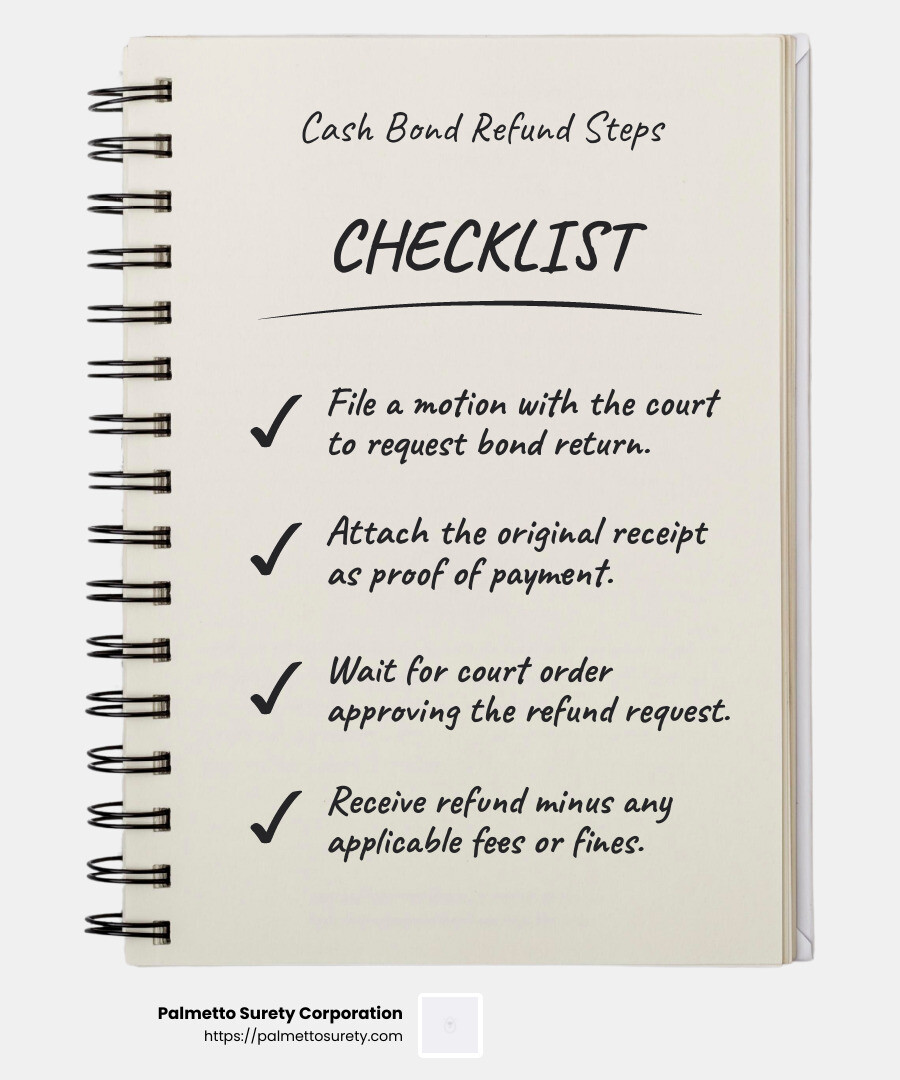
To start the refund process, you—or your attorney—must file a motion with the court. This motion requests the return of the cash bond. Here’s how it generally works:
-
File a Motion: Submit a motion to the court requesting the bond’s return. Attach the original receipt as proof of payment. This document is essential, so keep it safe.
-
Court Order: Once the court reviews and approves your motion, it will issue an order for the bond’s return.
-
Receive Refund: After the order is signed, the court will process the refund. You’ll receive the bond amount minus any court fees or fines.
Important Note: If the original receipt is lost, you must provide a notarized statement of loss, including details like the payment date and amount.
By understanding these conditions and following the correct procedures, you can ensure a smooth refund process for your Court Cash Bond. This process not only helps recover your financial outlay but also marks the conclusion of your obligations related to the bond.
Step 4: Differences Between Cash Bonds and Surety Bonds
Understanding the differences between a cash bond and a surety bond can help you make informed decisions during the bail process. Let’s break down these differences into three key areas: financial risk, refundability, and overall structure.
Financial Risk
Cash Bonds: When you post a cash bond, you bear all the financial risk. If the defendant fails to appear in court, the entire bail amount is forfeited. This means you could lose a significant amount of money.
Surety Bonds: With a surety bond, the risk is shared with a bail bond agency. You pay a smaller, non-refundable fee (usually around 10% of the bail amount) to the agency. The agency then takes on the risk of the defendant not showing up in court. They may require collateral to cover potential losses, but you won’t lose the full bail amount.
Refundability
Cash Bonds: If the defendant meets all court obligations, the cash bond is refundable. After the court case concludes, you can apply to get your money back, minus any court fees. This makes cash bonds an attractive option for those who can afford the upfront cost and want to recover their funds.
Surety Bonds: The fee paid to the bail bond agency is non-refundable. This fee is the cost of using the agency’s services and is not returned, regardless of the case outcome. However, since the upfront cost is lower, it’s often more accessible for many families.
Overall Structure
Cash Bonds: Involve just two parties—the defendant (or their representative) and the court. This simplicity can expedite the release process, as there’s no need to involve a third party.
Surety Bonds: Involve three parties—the defendant, the bail bond agency, and the court. This structure provides professional guidance through the bail process, which can be beneficial if you’re unfamiliar with legal procedures. However, it involves additional paperwork and conditions set by the agency.

When deciding between a cash bond and a surety bond, consider your financial situation, the urgency of the release, and whether you need professional guidance. Each option has its pros and cons, so choose what aligns best with your circumstances.
Next, we’ll explore how to decide which bond option is right for you.
Step 5: Choosing the Right Bond Option
When faced with the decision of choosing between a cash bond and a surety bond, it’s crucial to weigh your options based on three main factors: financial resources, urgency, and legal guidance.
Financial Resources
First, assess your financial situation. A cash bond requires the full bail amount upfront. If you have the financial means, this option allows you to potentially recover your money, provided the defendant meets all court obligations. However, if the full amount is beyond your reach, a surety bond might be more feasible. With a surety bond, you only pay a non-refundable fee, typically around 10% of the bail amount, making it a more accessible choice for many families.
Urgency
Consider the urgency of the defendant’s release. A cash bond can expedite the process since it involves only the defendant (or their representative) and the court. This simplicity can lead to a quicker release. On the other hand, a surety bond involves a third party—the bail bond agency—which might add some time due to the additional paperwork and conditions. However, the agency’s expertise can streamline the process, even if it involves a bit more coordination.
Legal Guidance
Think about how comfortable you are navigating the legal system. If you have experience or legal support, a cash bond might be straightforward enough. But if you’re unfamiliar with court procedures, a surety bond offers the added benefit of professional guidance. The bail bond agency can assist you through the complexities of the bail process, ensuring you understand each step and meet all requirements.
By evaluating these factors, you can make an informed decision that best suits your needs and circumstances. Next, we’ll address some common questions about court cash bonds to further clarify this process.
Frequently Asked Questions about Court Cash Bonds
What Happens If the Defendant Fails to Appear in Court?
When a defendant does not show up for their court date, the consequences can be serious. With a Court Cash Bond, the entire bail amount is forfeited to the court. This means whoever paid the bond loses that money. It’s a significant financial risk because there’s no refund. The court keeps the money as a penalty for the defendant’s failure to appear.
Can You Switch Between a Cash and a Surety Bond?
Switching from a cash bond to a surety bond is possible, but it depends on the court’s requirements and the specific situation. If you initially posted a cash bond but find it financially burdensome, you might consider working with a bail bond agency to transition to a surety bond. This involves paying a non-refundable fee to the agency, which then assumes responsibility for the bail amount. However, the court must approve this switch, and it may involve additional paperwork and conditions.
Is a Surety Bond Always an Option?
Not every case qualifies for a surety bond. The court has discretion in these matters and may decide based on the nature of the charges or the defendant’s history. For instance, a defendant with a history of not appearing in court might be required to post a cash bond instead. Courts assess each case individually, considering factors like the severity of the offense and the defendant’s past behavior to determine the appropriate bond type.
Conclusion
Navigating the bail process can be daunting, but understanding the options available to you, such as a Court Cash Bond, is crucial. At Palmetto Surety Corporation, we know that time is of the essence when dealing with bail, which is why we specialize in quick and efficient service. Our expertise in bail bond services allows us to approve most applications within hours, providing you with the swift assistance you need.
With over 20 years of experience, we are committed to offering reliable and professional support. Our team is ready to guide you through the process, ensuring that you make informed decisions custom to your specific situation. Whether you’re considering a cash bond or exploring a surety bond, we are here to help you every step of the way.
Trust Palmetto Surety Corporation to be your partner in navigating the complexities of the bail system. Our dedication to excellence ensures that you receive the best possible service, allowing you to focus on what truly matters—securing your loved one’s release.


