


Bonded Title vs Surety Bond: Top 3 Essential Insights
Bonded Title vs Surety Bond—understanding the difference is crucial for resolving vehicle ownership issues. Here’s a breakdown:
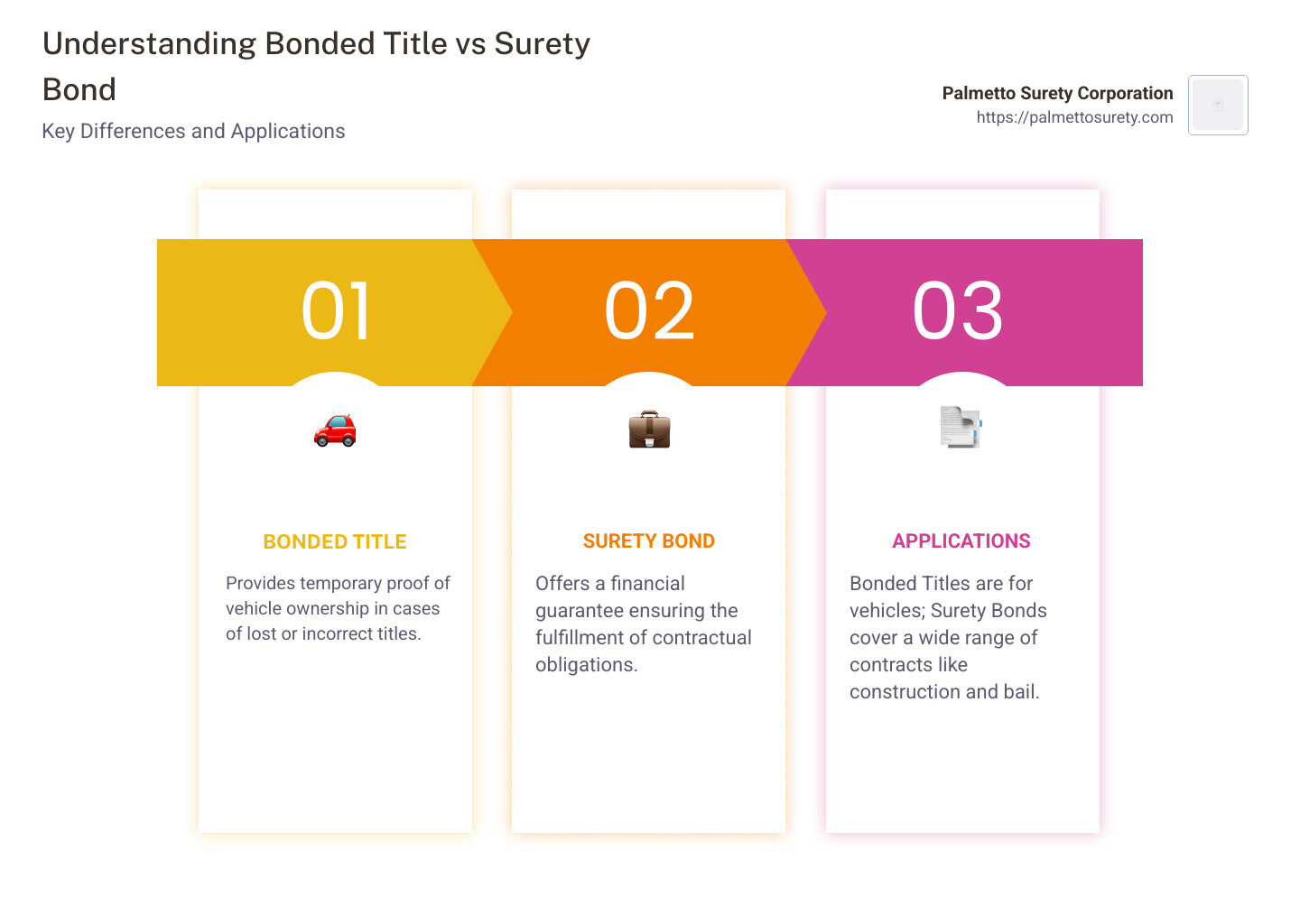
- Bonded Title: This is a temporary solution for when vehicle titles are missing or incorrect, providing legal proof of ownership.
- Surety Bond: A broader financial guarantee that ensures contractual obligations are met, typically involving three parties.
If your main concern is proving legal ownership of a vehicle when the title is misplaced or illegible, a bonded title is what you need. On the other hand, surety bonds are used for projects or contracts that require assurance of performance or payment.
My expertise in navigating the complexities of bonded titles and surety bonds has been instrumental in guiding companies like Palmetto Surety Corporation to success. As Haiko de Poel Jr, I have played a key role in rebranding efforts and helping businesses tackle the challenges of bonded title vs surety bond.
This introduction is part of an article titled “Bonded Title or Surety Bond? A Guide to Making the Right Choice,” focusing on the keyword “bonded title vs surety bond,” written for Palmetto Surety Corporation and to be published on https://palmettosurety.com.
Understanding Bonded Titles
What is a Bonded Title?
A bonded title is a unique type of vehicle title that serves as a temporary title backed by a surety bond. This title acts as legal proof of ownership when the original title is unavailable or contains inaccuracies. Think of it as a temporary solution for your vehicle, allowing you to demonstrate ownership and legally register your car.
For instance, if you purchase a used car and the previous owner has misplaced the title, you won’t be able to register the vehicle or obtain insurance without it. This is where a bonded title becomes essential. It provides a legal method to assert ownership and get your vehicle on the road.
When Do You Need a Bonded Title?
There are several scenarios where you might require a bonded title:
- Lost Title: If your vehicle’s title is lost and you can’t obtain a replacement from the previous owner, a bonded title can be your solution.
- Insufficient Proof of Ownership: When there’s inadequate documentation to prove you own the vehicle, a bonded title can serve as your proof.
- Missing Title Information: Occasionally, a title might lack crucial details, such as the VIN, rendering it invalid. A bonded title can rectify this.
- Vehicle Registration: To legally register your vehicle with the DMV, a valid title is necessary. A bonded title ensures you fulfill this requirement.


It’s important to note that a bonded title is not a permanent solution. It is a provisional measure that can eventually be converted into a regular title after a specified period, typically a few years, depending on your state’s regulations.
In summary, if you’re facing a missing title or have insufficient proof of ownership, a bonded title is your means to verify ownership and have your vehicle legally recognized.
Next, we’ll delve into surety bonds and how they differ from bonded titles in terms of financial guarantees and obligations.
Exploring Surety Bonds
What is a Surety Bond?
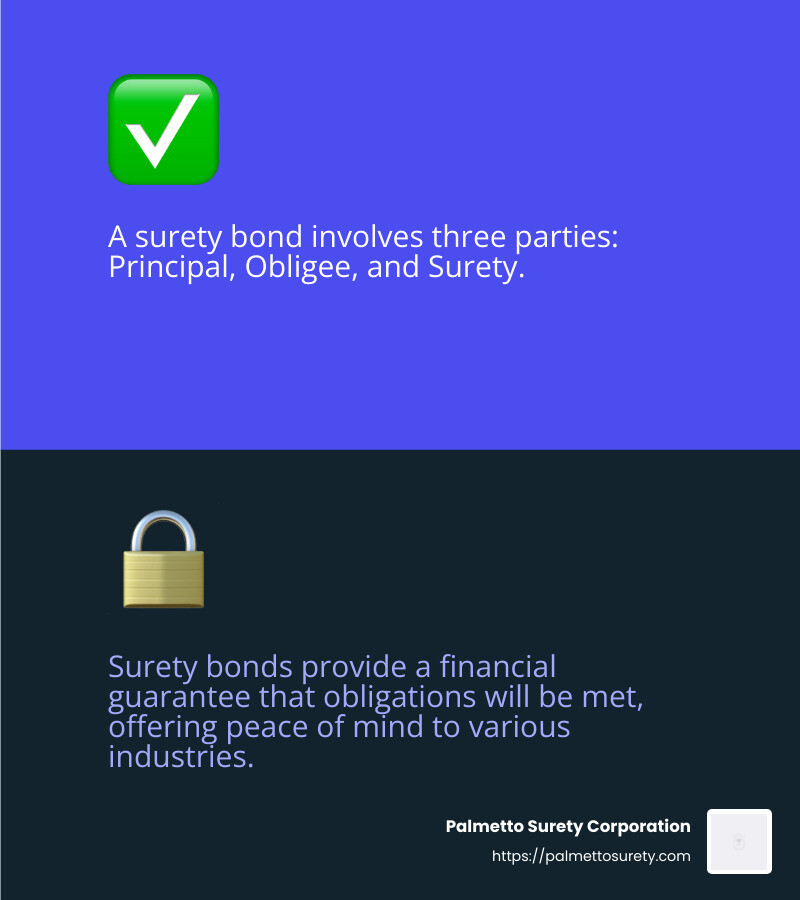
A surety bond is a financial guarantee that involves three key players: the principal, the obligee, and the surety. Imagine it as a safety net ensuring that commitments are met.
- Principal: This is the person or business that needs the bond. They are responsible for fulfilling the obligation.
- Obligee: This is the party that requires the bond. It’s often a government agency or a business ensuring that the principal will perform as agreed.
- Surety: This is the insurance company that backs the bond. They promise to pay the obligee if the principal fails to meet their obligations.
The surety bond acts like a promise that the principal will perform a specific task or uphold a contract. If the principal fails, the surety steps in to cover the financial loss up to the bond amount. This makes surety bonds crucial in many industries, offering peace of mind that obligations will be met.
Types of Surety Bonds
Surety bonds come in various forms, each designed to meet different needs. Here are some common types:
-
Construction Bond: Used in the construction industry to ensure contractors complete projects according to the contract. It protects project owners from financial loss if a contractor fails to deliver.
-
Bail Bond: In the legal system, a bail bond helps ensure that a defendant appears in court. The surety guarantees the court that the defendant will comply with the judicial process.
-
Performance Guarantee: This bond ensures that a contractor or service provider fulfills their contractual obligations. If they don’t, the surety compensates the obligee for any financial losses.
Each type of surety bond serves a unique role in providing financial security and ensuring that various types of obligations are fulfilled. Whether it’s completing a construction project or ensuring a court appearance, surety bonds play a critical role in maintaining trust and accountability in different sectors.
In the next section, we’ll dive into the key differences between bonded titles and surety bonds, helping you understand when to use each one.
Bonded Title vs Surety Bond
Key Differences
When it comes to bonded title vs surety bond, understanding their differences is crucial. A bonded title is primarily about proving ownership of a vehicle when the original title is missing or incorrect. In contrast, a surety bond is a broader financial guarantee used in various industries to ensure obligations are met.
Bonded Title:
– Purpose: Provides proof of vehicle ownership when the original title is lost or defective.
– Parties Involved: Principal (vehicle owner), Obligee (DMV), Surety Company.
– Application Process: Requires a title bond, vehicle inspection, and DMV approval.
– Ownership Proof: Acts as a provisional title until a regular title can be issued.
– Time Frame: Typically valid for 3-5 years, depending on the state.
Surety Bond:
– Purpose: Guarantees the performance of an obligation, such as completing a project or appearing in court.
– Parties Involved: Principal, Obligee, Surety.
– Application Process: Involves credit checks and financial assessments.
– Financial Guarantee: Ensures financial compensation if the principal fails to meet obligations.
– Flexibility: Used in various sectors, including construction, legal, and business.
Pros and Cons
Understanding the pros and cons of each can help you decide which is right for your needs.
Bonded Title Pros:
– Simplifies Ownership Issues: Helps resolve ownership disputes when an original title is unavailable.
– Legal Recognition: Allows registration and legal use of the vehicle.
Bonded Title Cons:
– Provisional: Can be contested, which may delay obtaining a regular title.
– Cost: Requires purchasing a title bond, which can be expensive depending on the vehicle’s value.
Surety Bond Pros:
– Broad Application: Useful in many industries for various obligations.
– Financial Security: Protects obligees from financial loss if the principal defaults.
Surety Bond Cons:
– Risk Assessment: Requires a thorough evaluation of the principal’s financial health.
– Legal Obligations: The principal must repay the surety if a claim is made.
Choosing between a bonded title and a surety bond depends on your specific situation. If you’re dealing with vehicle ownership issues, a bonded title is the way to go. For broader financial guarantees, a surety bond is essential.
In the next section, we’ll explore the steps to obtain a bonded title, diving into the DMV process and state-specific requirements.
How to Obtain a Bonded Title
Steps to Acquire a Bonded Title
Obtaining a bonded title can seem daunting, but breaking it down into simple steps makes it manageable. Here’s how you can steer through the process:
-
Contact the DMV: First, reach out to your local DMV to confirm the need for a bonded title. They’ll guide you on the specific requirements for your state.
-
Gather Necessary Documents: Prepare essential paperwork like a bill of sale, receipts, and any other proof of ownership. This evidence is crucial for your application.
-
Apply for a Title Bond: Visit a surety broker to purchase a title bond. The bond amount is typically 1.5x to 2x the vehicle’s value, as determined by sources like Kelley Blue Book.
-
Complete the Application Form: Fill out the bonded title application form. Each state has its own form, such as Texas’ Form VTR-130-SOF.
-
Vehicle Inspection: Some states require a vehicle inspection. This can be done at a certified Safety Inspection Station or by law enforcement.
-
Submit Documents to the DMV: Bring your completed application form, title bond, and supporting documents to the DMV. They’ll review and approve your application if everything is in order.
-
Receive Your Bonded Title: Once approved, you’ll receive your bonded title, which serves as provisional proof of ownership.
State-Specific Requirements
Different states have specific requirements for obtaining a bonded title. Here’s a look at Texas, Georgia, and Vermont:
-
Texas: You need a Texas driver’s license to apply. Texas requires a bond amount of 1.5x the vehicle’s value. The vehicle must be inspected if it’s from out of state.
-
Georgia: Georgia requires a bond amount of 2x the vehicle’s value. Like Texas, if the vehicle is from another state, an inspection is necessary.
-
Vermont: Only Vermont residents can apply for a bonded title here. You must prove that you’ve exhausted all options to obtain the original title. Vermont has a three-year holding period for bonded titles.
By understanding these steps and state-specific requirements, you can successfully steer the process of obtaining a bonded title. Up next, we’ll answer some frequently asked questions about bonded titles and surety bonds.
Frequently Asked Questions about Bonded Titles and Surety Bonds
What are the risks of a bonded title?
A bonded title can have hidden problems and an unclear history. Since it acts as a provisional title, it might not fully guarantee ownership. For instance, if someone else claims the vehicle within the contest period, typically 3-5 years, you could face legal challenges. Always check for liens or past ownership issues before proceeding.
How much does a surety bond cost?
The cost of a surety bond depends on the bond amount and your credit score. Generally, the bond amount is a multiple of the vehicle’s value, often 1.5x to 2x. For a vehicle valued at $10,000, the bond might be $15,000 to $20,000. The bond cost is a small percentage of this amount, usually between $100 to $600. A higher credit score can lead to a lower rate, while a lower score might increase the cost.
Can a bonded title become a regular title?
Yes, a bonded title can become a regular title after the holding period, which varies by state. In Texas, for example, the holding period is three years. During this time, if no one contests your ownership, you can apply for a regular title. It’s important to keep track of this period and ensure all paperwork is in order to make the transition smooth.
Conclusion
At Palmetto Surety Corporation, we understand that navigating bonded titles vs surety bonds can be complex. Our mission is to simplify the process for you. With over 20 years of experience, we specialize in offering quick approval and efficient service for all your surety bond needs.
Whether you’re dealing with vehicle ownership challenges or need a financial guarantee for a project, our team is here to help. We pride ourselves on our ability to approve most applications within hours, ensuring you get the support you need without unnecessary delays.
Our commitment to excellence means you can trust us to handle your surety bond applications with care and precision. If you’re in states like Florida, Georgia, Louisiana, Mississippi, South Carolina, Tennessee, or Texas, we’re ready to assist you.
For more information on how we can help you secure the right bond for your needs, visit our Palmetto Surety Corporation service page. Let us guide you through the process with ease and confidence.


