


DUI Bond Amount Georgia: 5 Crucial Facts in 2025
Understanding the dui bond amount georgia is essential for anyone facing a DUI charge in Georgia. Here’s a concise overview of what you might encounter:
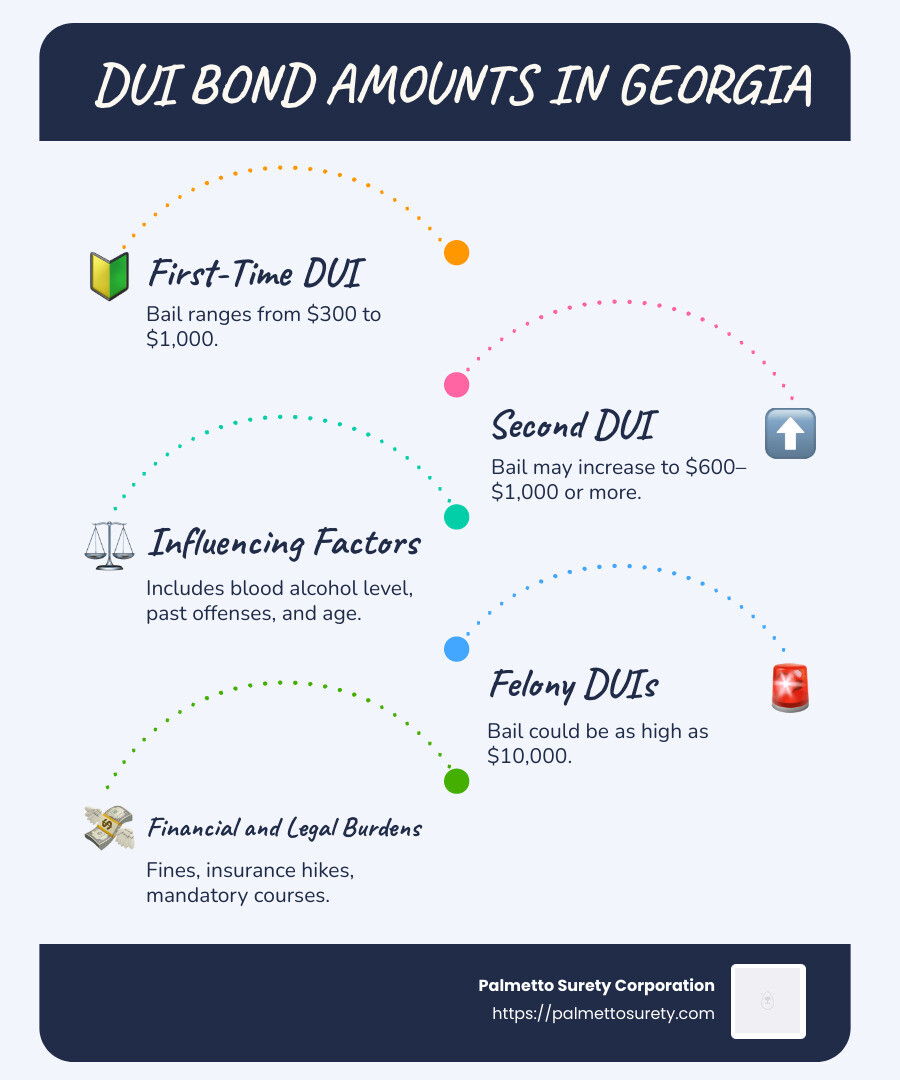
- First-Time DUI: Bail can range from $300 to $1,000.
- Second DUI: Bail might increase to $600–$1,000, potentially more with additional charges.
- Factors: Blood alcohol level, past offenses, and age can influence these amounts.
- Felony DUIs: Bail could be as high as $10,000.
A DUI arrest in Georgia can lead to significant financial and legal challenges. You may face fines, increased insurance costs, mandatory courses, and potential job consequences. These factors highlight the importance of understanding dui bond amount georgia.
With years of experience in guiding companies toward growth and my involvement with Palmetto Surety Corporation, addressing complex issues like dui bond amount georgia is second nature. Transitioning from financial burdens to detailed Georgia DUI implications, let’s explore the core aspects.
Quick look at dui bond amount georgia:
– aggravated assault bond amount georgia
– bail amounts by crime in georgia
Understanding DUI Bond Amounts in Georgia
Navigating the legal and financial implications of a DUI in Georgia can be daunting. One key aspect is understanding the dui bond amount georgia, which can vary based on several factors.
Factors Influencing Bond Amounts
The bond amount for a DUI in Georgia is not set in stone. It fluctuates based on various factors:
-
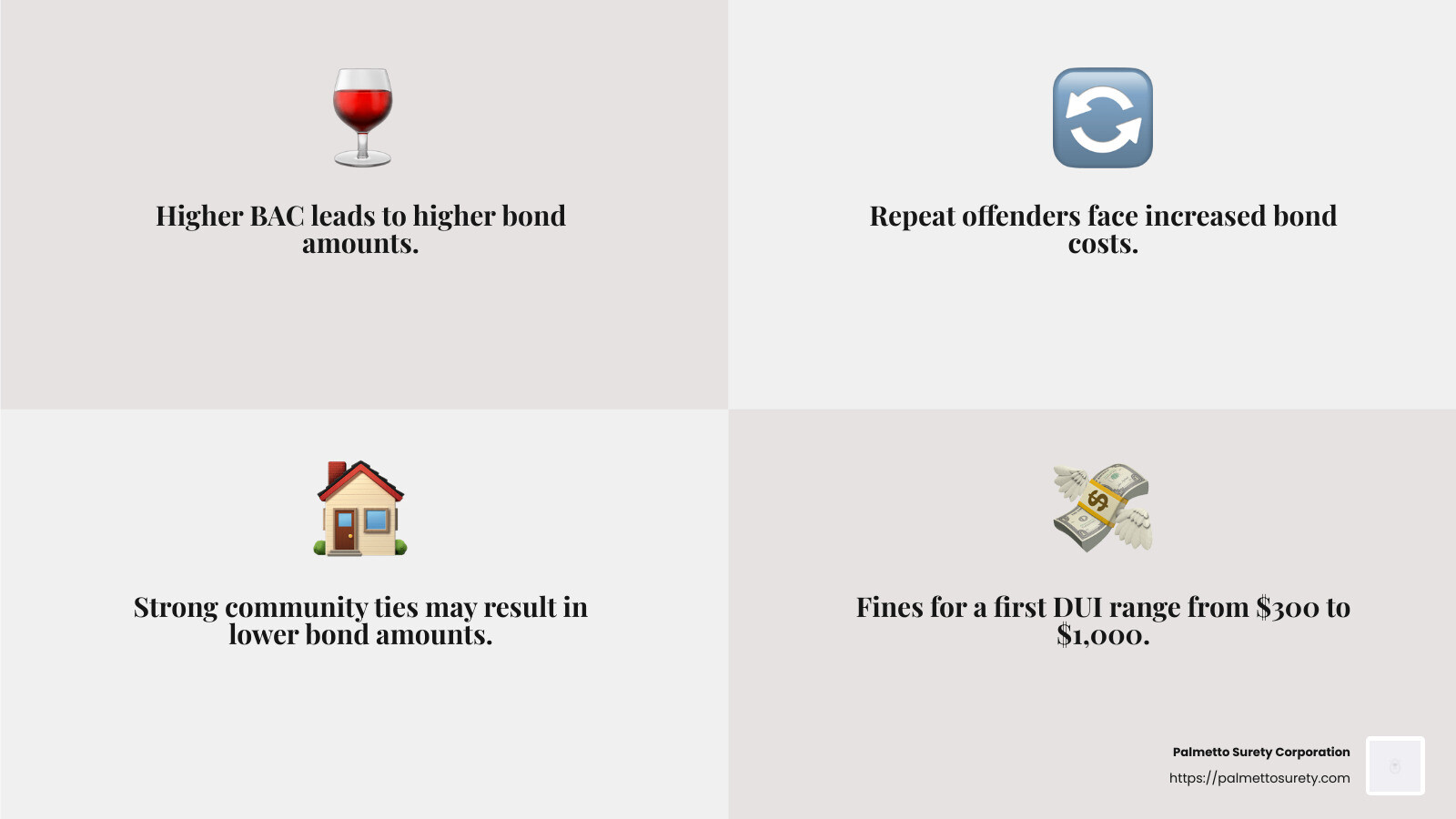
Blood Alcohol Level (BAC): A higher BAC can lead to a higher bond amount. If your BAC is significantly over the legal limit, expect stricter penalties and higher costs.
-
Prior Offenses: Repeat offenders face harsher consequences. A second DUI within ten years can lead to a minimum bond of $600, with potential for even higher amounts based on the circumstances.

-
Community Ties: Individuals with strong community connections might receive more lenient bond terms. Judges often consider whether the defendant has a stable job, family ties, and a good reputation in the community.
Standard Penalties for DUI Convictions
In Georgia, DUI convictions carry a range of penalties that extend beyond just financial costs:
-
Fines and Jail Time: For a first DUI conviction, fines range from $300 to $1,000, with a possible jail sentence of up to one year. A second DUI within ten years increases the minimum jail time to 72 hours, along with a fine of at least $600.
-
Community Service: First-time offenders are often required to complete at least 40 hours of community service. This requirement can increase for subsequent offenses.
-
DUI School: Attendance at a DUI Alcohol or Drug Use Course is mandatory. This educational component aims to prevent future offenses by addressing the root causes of impaired driving.
-
Substance Abuse Evaluation: Offenders may need to undergo a professional evaluation to determine if substance abuse treatment is necessary.
Understanding these factors and penalties is crucial for anyone facing a DUI charge in Georgia. Recognizing the potential financial and legal implications can help in preparing for the challenges ahead.
Costs Associated with a DUI Arrest
Facing a DUI arrest in Georgia is not only a legal challenge but also a significant financial burden. Let’s break down the various costs involved:
Breakdown of Financial Implications
-
Bail/Bond:
The initial cost after a DUI arrest often involves bail, which can range from $150 to $2,500. If you cannot pay the full amount, a bail bond company can help by covering the bail in exchange for a fee, usually 10% to 30% of the bail amount. -
Towing and Impound Fees:
After an arrest, your vehicle may be towed and impounded. This can cost between $50 and $200 initially, with daily fees accruing until the vehicle is retrieved. -
Insurance Increases:
A DUI conviction can dramatically increase your insurance premiums. On average, expect an increase of $4,500 or more over three to five years, depending on your insurance provider and driving history.

-
Legal Fees:
Hiring a lawyer to defend against a DUI charge is crucial, but it comes at a cost. Legal fees can range from $2,000 to $25,000, varying based on the complexity of the case and the attorney’s experience. -
Fines:
Fines for a DUI in Georgia range from $300 to $5,000. These do not include court costs, which can increase the total fine by 50% or more.
Additional Costs and Consequences
-
Alcohol Evaluation and Classes:
You are required to complete an alcohol and drug evaluation, costing between $95 and $300. If recommended, treatment must be undertaken. Additionally, attending a Risk Reduction class (DUI School) is mandatory, costing approximately $350, along with a Victim Impact Panel costing around $100. -
License Reinstatement Fees:
After a DUI conviction, reinstating your driver’s license costs between $210 and $410. Depending on your driving history, you might also need to install an ignition interlock device, which incurs installation and maintenance costs. -
Loss of Professional License:
A DUI conviction can jeopardize professional licenses, impacting your career and livelihood. Certain professions, especially those requiring a clean driving record, may face suspension or revocation of licenses.
These costs highlight the significant financial impact of a DUI arrest in Georgia. Understanding and preparing for these expenses can help mitigate the strain of an already challenging situation.
Strategies for Reducing DUI Costs
Importance of Legal Representation
Navigating the aftermath of a DUI arrest can be daunting, but having the right legal representation can make a significant difference. Legal defense is crucial in minimizing the financial and legal repercussions of a DUI charge.
Defense Strategies:
A skilled attorney will develop a robust defense strategy custom to your case. This might include questioning the legality of the traffic stop, the accuracy of field sobriety tests, or the handling of blood alcohol content (BAC) results.
Plea Bargains:
In some cases, negotiating a plea bargain can lead to reduced charges. This means you might avoid a DUI conviction on your record, which can save you from hefty fines and insurance hikes.
Case Dismissal:
An experienced lawyer might find grounds to have your case dismissed entirely. This could be due to procedural errors or lack of evidence. A dismissal can save you from all the associated costs of a DUI conviction.
Interlock Devices:
If convicted, you might be required to install an ignition interlock device in your vehicle. While there are costs involved, opting for this device can sometimes reduce the suspension period of your driver’s license and demonstrate responsibility to the court.
Reduced Charges:
Even if a complete dismissal isn’t possible, reducing the charges from a DUI to a lesser offense, like reckless driving, can significantly lower fines and other penalties.
Investing in quality legal representation can be a cost-effective strategy in the long run. The right defense can reduce or eliminate the financial burdens associated with a DUI charge, giving you a better chance to move forward with fewer obstacles.
Frequently Asked Questions about DUI Bonds in Georgia
How much does a first DUI cost in Georgia?
The cost of a first DUI in Georgia can vary, but you should expect to pay anywhere from $300 to $1,000 in fines if it’s a misdemeanor. Bond amounts for a first-time DUI typically range from $1,500 to $2,500. However, this can increase based on factors like blood alcohol level and any additional charges. The bail bond fee is usually 10% to 15% of the bond amount, which is non-refundable.
What is the process for obtaining a DUI bond?
Obtaining a DUI bond involves several steps:
-
Contact a Bail Bond Agent:
Once the bond amount is set, you’ll need to contact a bail bond agent. They will guide you through the process and help secure the bond by charging a fee, usually between 10% and 15% of the total bond amount. -
Payment Arrangements:
If you cannot pay the full fee upfront, some agents offer payment plans. Discuss these options to find a plan that works for your budget. -
Collateral:
In some cases, the bondsman might require collateral in addition to the fee. This could be in the form of property or other assets. -
Bond Posting:
Once the fee and any necessary collateral are arranged, the bondsman will post the bond. This allows the arrestee to be released from jail with the promise to appear in court.
How long can you be held without bond in Georgia?
In Georgia, after a DUI arrest, you can expect to be held for a minimum of eight to twelve hours before becoming eligible for release. However, if a bond amount isn’t set immediately, you might have to wait for a bond hearing. The detention period can vary depending on factors like the severity of the offense or prior criminal history. It’s important to know your legal rights during this time, including the right to legal counsel, which can help expedite the process and ensure a fair hearing.
Conclusion
When navigating the complexities of DUI bond amounts in Georgia, having a reliable partner can make all the difference. At Palmetto Surety Corporation, we understand the urgency and stress that come with securing a bond. Our team is committed to providing quick service and efficient approval, so you or your loved one can focus on moving forward.
Why Choose Palmetto Surety Corporation?
-
Quick Service: We pride ourselves on our ability to process most applications within hours. This means less waiting and more time to address other pressing matters.
-
Efficient Approval: Our streamlined approval process ensures you get the support you need without unnecessary delays. Our experienced team is here to guide you every step of the way.
-
Expertise: With over 20 years in the industry, we have the knowledge and experience to handle even the most complex bond situations. Our reputation in the southeastern United States speaks for itself.
For those facing a DUI charge in Georgia, understanding the financial implications and securing a bond quickly is crucial. Let us assist you in this challenging time. Visit our service page to learn more about how Palmetto Surety Corporation can help you with your bond needs.


