


Auto Title Bond: Top 3 Essential Tips for 2025 Success
Auto title bond is an essential topic for anyone trying to establish clear ownership of a vehicle when the original title is unavailable or invalid. Many individuals find themselves needing a bonded title due to lost, damaged, or incomplete car titles. This process involves a surety bond that guarantees the vehicle’s ownership and value to the state, protecting against potential fraud or disputes.
For a quick understanding of auto title bonds, keep these key points in mind:
- Purpose: To assure the state about ownership when the original title is missing or defective.
- Function: Serves as a financial guarantee that protects against title claims.
- Process: Involves assessing the vehicle’s value, obtaining the bond, and applying for a bonded title through the local DMV.
A bonded title is often necessary to assert rightful vehicle ownership and meet regulatory demands. Understanding how auto title bonds intersect with these requirements will enable you to navigate these processes more effectively.
I’m Haiko de Poel Jr, an expert in marketing and digital change with a focus on surety bonds like auto title bonds. My experience includes strategic roles in fast-growing businesses like Palmetto Surety Corporation, where I have helped simplify the complex process of bond acquisition.

Auto title bond basics:
- can i get a bonded title in louisiana
- does louisiana accept bonded titles
- how long does it take to get a bonded title
What is an Auto Title Bond?
An auto title bond is a type of surety bond utilized when the original title of a vehicle is missing, damaged, or otherwise invalid. This bond serves as a legal assurance to the state, confirming that the person claiming ownership of the vehicle is indeed the rightful owner. It also provides protection against any future disputes or claims regarding the vehicle’s title.
Purpose of an Auto Title Bond
The primary purpose of an auto title bond is to facilitate individuals who need to establish ownership of a vehicle without a valid title. This situation can arise due to:
- Lost or Stolen Titles: When the original title is lost or stolen, a bonded title can act as a replacement.
- Incomplete Transactions: If a vehicle was purchased but never properly titled, an auto title bond can help confirm ownership.
- Inherited Vehicles: Occasionally, vehicles inherited may lack the necessary documentation for a traditional title.
By securing an auto title bond, vehicle owners can legally register their vehicles and comply with state regulations.

How Does an Auto Title Bond Work?
An auto title bond involves three parties:
- Principal: The vehicle owner applying for the bond.
- Obligee: The state government that requires the bond.
- Surety: The company, such as Palmetto Surety Corporation, that issues the bond.
The bond ensures that the principal truly owns the vehicle and provides compensation to any party that may suffer financial loss due to a title dispute.
Key Features of Auto Title Bonds
- Financial Guarantee: Offers monetary protection to the state and potential claimants if the title is contested.
- Regulatory Compliance: Assists vehicle owners in meeting state requirements for vehicle registration and titling.
- Peace of Mind: Provides confidence to both the owner and the state about the legitimacy of the vehicle’s title.
In summary, an auto title bond is crucial for securing vehicle ownership when traditional documentation is not available. It ensures that vehicle owners can legally register their vehicles and safeguards the state from fraudulent claims.
When Do You Need an Auto Title Bond?
There are several scenarios where you might need an auto title bond. This type of bond is essential when there’s insufficient proof of ownership, a lost title, or a damaged title.
Insufficient Proof
Sometimes, the documentation required to prove vehicle ownership is incomplete or missing. This can happen if the vehicle was purchased from a private seller who didn’t provide proper paperwork, or if the vehicle was inherited without a formal title transfer. In these cases, an auto title bond provides a way to legally establish ownership and register the vehicle with the state.
Lost Title
Losing the original title is a common reason for needing an auto title bond. Whether the title was misplaced, stolen, or accidentally destroyed, you can’t legally register or sell the vehicle without it. An auto title bond acts as a replacement, allowing you to move forward with the necessary legal processes.
Damaged Title
A title that’s been damaged beyond legibility or altered in a way that makes it invalid requires an auto title bond. This ensures that you can verify ownership and protect against any disputes or claims that might arise from the unclear documentation.
By securing an auto title bond, you can resolve these issues and ensure that your vehicle is legally recognized as yours. This bond acts as a safety net, safeguarding both you and the state from potential title disputes.
How to Obtain an Auto Title Bond
Getting an auto title bond might seem complicated, but breaking it down into simple steps can make the process straightforward. Here’s what you need to know:
DMV Process
Your first step is to contact your local Department of Motor Vehicles (DMV). Each state has its own requirements, so it’s crucial to get the right information from your DMV. They will guide you on the specific documents needed and any forms you must fill out. Typically, you’ll need to explain why you need the bond and provide any available information about the vehicle, like its VIN (Vehicle Identification Number).
Surety Company
Once you have the details from the DMV, the next step is to reach out to a surety company. A surety company, like Palmetto Surety Corporation, is where you will actually obtain the bond. They will assess the risk involved and determine the bond amount based on your vehicle’s value and state requirements.
Tip: Choose a company with a streamlined online process to save time and hassle. This allows you to purchase, print, and manage your bond easily.
Paperwork
After selecting a surety company, you’ll need to complete some paperwork. This usually involves an application form where you provide information about the vehicle and the circumstances leading to the need for a bond. Be prepared to supply any supporting documents that the DMV or surety company might require.
Once everything is submitted, the surety company will issue the bond. You will then take this bond back to the DMV to complete the process of getting a bonded title.
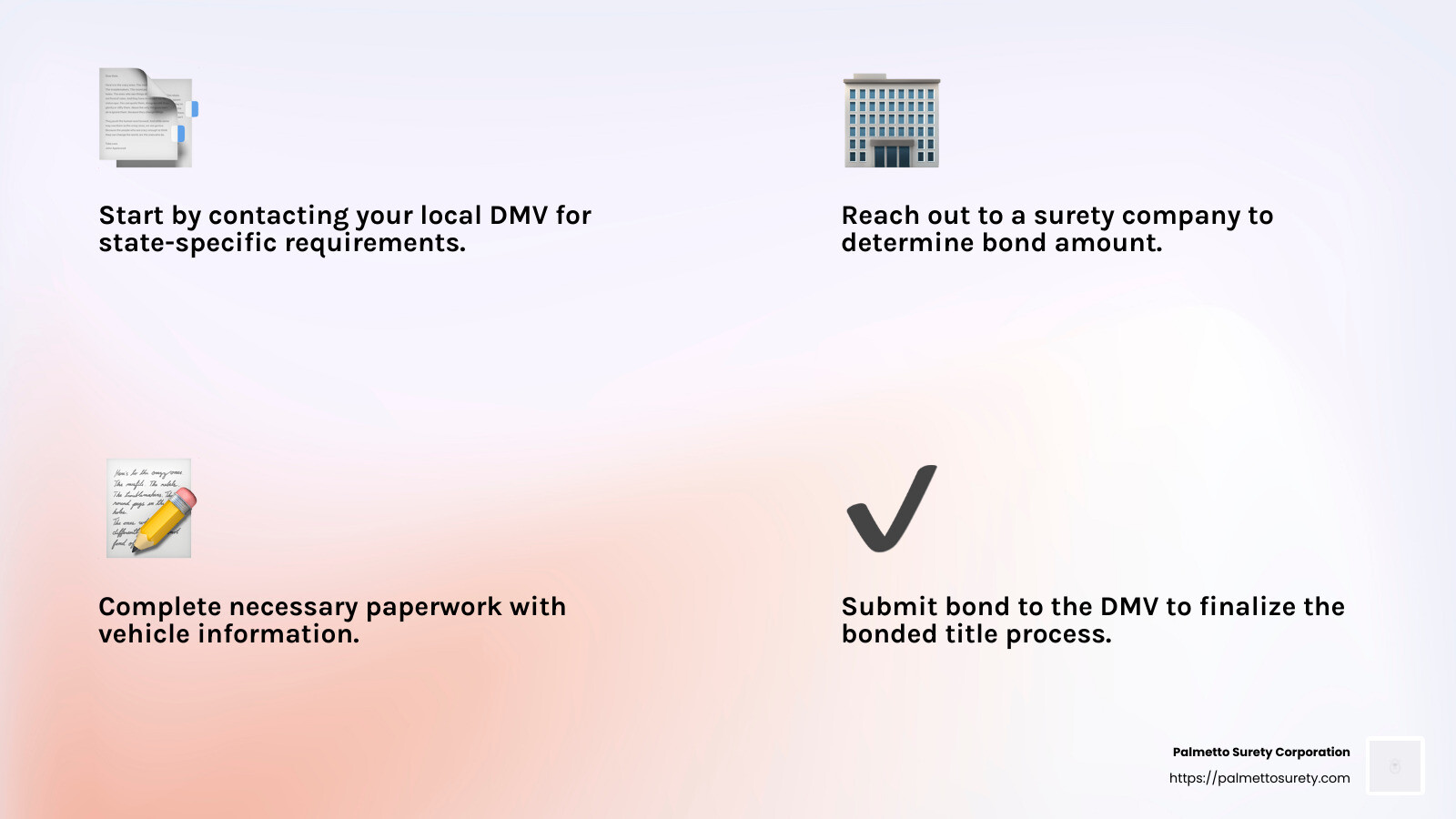
By following these steps, you can efficiently steer the process of obtaining an auto title bond, ensuring that your vehicle ownership is legally recognized.
Costs and Considerations
When you’re looking into an auto title bond, understanding the costs and considerations is crucial. Let’s break it down into simple parts:
Bond Amount
The bond amount is often based on the current value of your vehicle. Typically, it’s set at one and a half to two times the vehicle’s value. For example, if your car is worth $10,000, the bond amount might range from $15,000 to $20,000. You’re not paying this full amount upfront. Instead, you pay a small percentage of it, usually between 1% and 10%, depending on your credit score and the surety company’s assessment.
Administrative Fees
Besides the bond cost, you might encounter other administrative fees. These can include charges from the DMV for processing your application and issuing a new title. Each state might have different fees, so it’s wise to check with your local DMV for precise details. Be prepared for these additional costs to ensure a smooth process.
State Requirements
State requirements can vary significantly, impacting both the cost and process of obtaining an auto title bond. For instance, some states might require additional documentation or steps, like vehicle inspections. It’s essential to research your specific state’s regulations or consult with your DMV to avoid surprises. Knowing these requirements ahead of time can save you both time and money.
Understanding these costs and considerations can help you budget effectively and streamline the process of securing an auto title bond. Now that you have a grasp on the financial aspects, let’s address some common questions people have about bonded titles.
Frequently Asked Questions about Auto Title Bonds
What are the reasons for a bonded title?
An auto title bond is often required when there’s insufficient proof of vehicle ownership. This situation can arise if you have a missing title, which means the original title document is lost or destroyed. It can also occur if the vehicle was never titled, perhaps because it was purchased from an auction or inherited. In these cases, a bonded title provides a legal way to prove ownership and register the vehicle with the DMV.
How much does it cost to get a bonded title?
The cost of obtaining a bonded title can vary based on several factors. First, there’s the bond cost itself, which depends on the bond amount set by the state. Typically, you’ll pay a percentage of this amount, often between 1% and 10%, depending on your credit score and the surety company’s evaluation. Additionally, administrative fees may apply, including charges from the DMV for processing your application and issuing a new title. These costs can differ from state to state, so check with your local DMV for exact details.
How long does the bonded title process take?
The time it takes to get a bonded title can vary widely based on state differences and the DMV process. On average, approval time can range from a few days to several weeks. Some states have a more streamlined process, while others might require additional steps, such as vehicle inspections or extra documentation. To expedite the process, ensure you have all necessary paperwork ready and consult your local DMV for specific requirements and timelines.
Conclusion
Navigating auto title bonds can seem daunting, but with the right guidance and support, it becomes a manageable task. At Palmetto Surety Corporation, we pride ourselves on offering quick and efficient service to help you secure your auto title bond with ease.
With over 20 years of experience in the surety bond industry, our team is equipped to handle your needs swiftly. We understand the urgency often associated with obtaining a bonded title, and our streamlined process ensures that most applications are approved within hours. This efficiency allows you to focus on what matters most—getting your vehicle legally titled and back on the road.
Our cutting-edge technology and dedicated support team work tirelessly to provide you with the best service possible. Whether you’re in Georgia, Florida, Louisiana, Mississippi, South Carolina, Tennessee, or Texas, our local expertise ensures that you’re always in good hands.
For more information on how we can assist you with your auto title bond needs, visit our Palmetto Surety Corporation service page. Experience the peace of mind that comes with knowing your bond is handled by experts who prioritize your needs and deliver exceptional service every step of the way.
Reach out to us today and let us help you open up the mystery of auto title bonds!


