


Notary Bond vs. Insurance: Top 3 Crucial Insights 2025
Notary bond vs. insurance: Understanding the differences between these two types of protection is crucial for notaries:
- Notary Bond:
- Purpose: Protects the public from errors or misconduct by the notary.
-
Parties: Involves the notary (obligor), the public (obligee), and the surety company.
-
Insurance:
- Purpose: Protects the notary from financial losses due to claims against them.
- Coverage: Includes errors and omissions, safeguarding the notary against lawsuits for unintentional mistakes.
Navigating the responsibilities of being a notary can be challenging, especially when it comes to protecting both yourself and the public. This is where understanding notary bond vs. insurance becomes essential. Notary bonds provide assurance to the public that the notary will uphold their duties ethically and accurately. Conversely, insurance offers notaries a safety net against potential financial liabilities stemming from mistakes or claims.
I am Haiko de Poel Jr, an expert in bridging marketing strategies with insurance solutions. With experience in notary bond vs. insurance dynamics, I’ve contributed significantly at Palmetto Surety Corporation, ensuring businesses are well-equipped with the necessary protections.
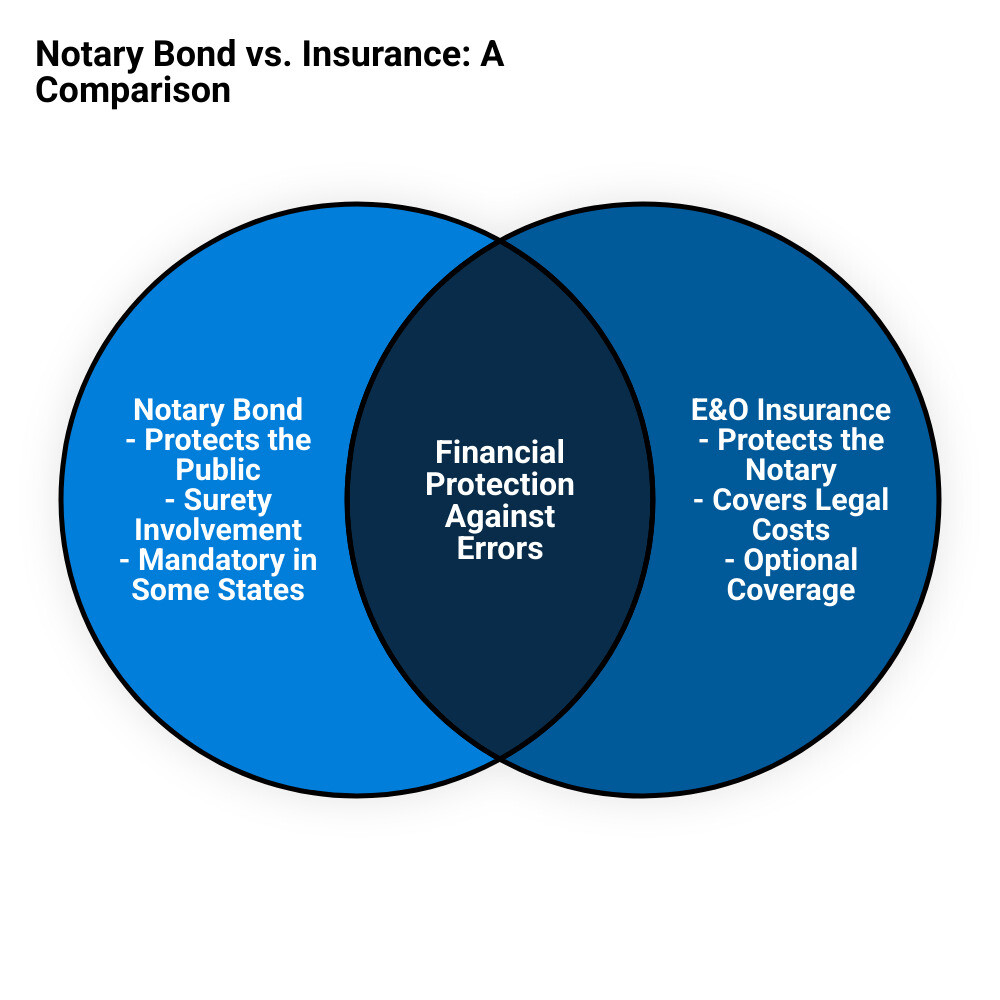
Understanding Notary Bonds
Notary bonds are an essential component of the notary profession, designed to safeguard the public from any errors or misconduct by notaries. These bonds act as a guarantee that the notary will perform their duties in accordance with legal and ethical standards. If a mistake occurs, the bond provides financial compensation to the affected party.
What is a Notary Bond?
A notary bond, often referred to as a surety bond, involves three key parties:
- The Notary (Obligor): The individual responsible for performing notarial acts.
- The Public (Obligee): The people who depend on the notary’s services for accurate and legal document signing.
- The Surety Company: The entity that issues the bond and provides financial backing.
A notary bond is a contract that ensures the notary will act in good faith. If they fail to do so, the public can make a claim against the bond for any damages caused.


How Does a Notary Bond Protect the Public?
The primary purpose of a notary bond is to protect the public. If a notary commits an error—whether intentional or not—that causes financial harm, the surety company steps in. They compensate the affected party up to the bond’s limit.
For instance, if a notary accidentally notarizes a fraudulent document, the injured party can file a claim against the bond. This ensures they receive compensation for their losses, up to the bond’s value.
Legal Requirements for Notary Bonds
In approximately 30 states, notaries are required by law to have a notary bond in place. This requirement highlights the importance of protecting the public from potential notary errors. Without a bond, the notary might face legal consequences or be unable to practice.
Why Choose Palmetto Surety Corporation?
At Palmetto Surety Corporation, we specialize in providing notary bonds that meet state requirements and offer peace of mind. Our team understands the nuances of notary bond vs. insurance and can help you navigate these essential protections. With locations in Texas, South Carolina, Mississippi, Florida, Tennessee, and Georgia, we’re here to support notaries with quick service and industry expertise.
Notary Bond vs. Insurance: Key Differences
When talking about notary bond vs. insurance, it’s crucial to understand how each serves a unique purpose. Both are essential, but they protect different parties and cover different risks.
Notary Bonds: Protecting the Public
Notary bonds are all about public protection. They act as a safety net for the public if a notary makes a negligent mistake or engages in intentional misconduct. If a notary’s error causes financial harm, the affected party can file a claim against the bond. The surety company then compensates the injured party up to the bond’s limit.
For instance, imagine a notary mistakenly notarizes a fraudulent document that leads to financial loss. The injured party can make a claim for compensation. However, the notary must repay the surety company for any claims paid, which emphasizes that this bond is not personal insurance for the notary.
E&O Insurance: Safeguarding Notaries
On the flip side, Errors & Omissions (E&O) Insurance is all about personal protection for the notary. This insurance covers the notary if they make an unintentional error or if someone files a false claim against them. It’s also there for legal defense if a notary is named in a lawsuit, even if they did nothing wrong.
E&O insurance provides financial protection by covering legal fees, court costs, and any settlements, up to the policy’s limit. Unlike notary bonds, E&O insurance does not require repayment for covered claims, making it a crucial safety net for notaries.
Financial Protection: A Dual Approach
Both notary bonds and E&O insurance offer financial protection but in different ways. A notary bond protects the public, while E&O insurance protects the notary. Together, they form a comprehensive risk management strategy, ensuring that both the public and the notary are safeguarded against potential issues.
By having both, notaries can perform their duties with confidence, knowing they have the necessary protections in place. This dual approach is vital for managing the risks associated with notarial acts and maintaining trust in the notary profession.
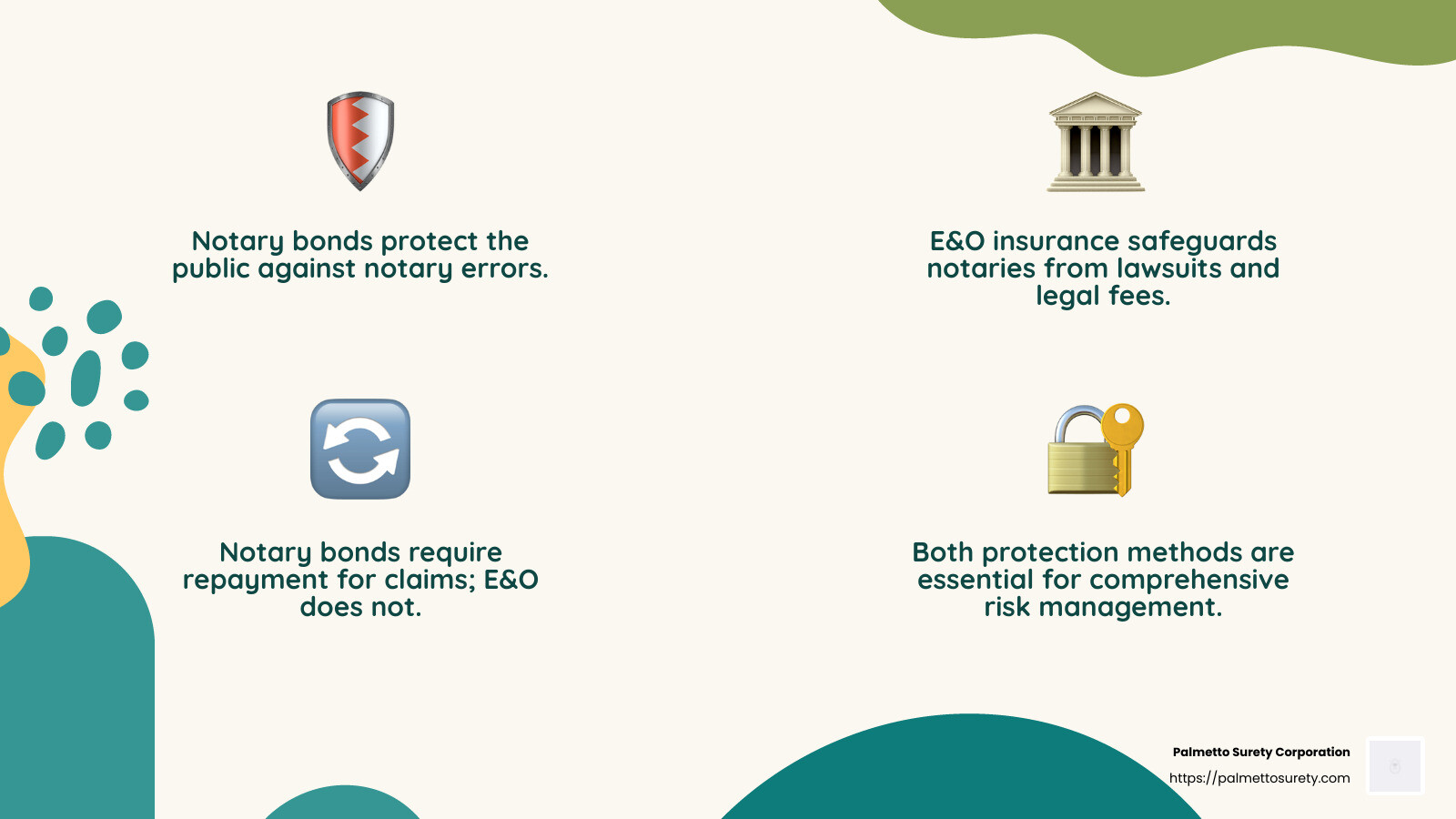
In summary, understanding the differences between notary bond vs. insurance is key to ensuring comprehensive protection in the notarial field. The next section will explore why having both notary bonds and insurance is not just beneficial but necessary.
Why Both Notary Bonds and Insurance Matter
When it comes to safeguarding both the public and notaries, having both notary bonds and insurance is crucial. These two types of protection are not just complementary—they fulfill different legal and financial needs.
Legal Requirements
Most states mandate notary bonds as part of the licensing process. This requirement ensures that notaries are accountable for their actions and that the public has a form of recourse if something goes wrong. Without a notary bond, a notary cannot legally operate in many jurisdictions.
Errors & Omissions (E&O) insurance, while not always required by law, is highly recommended. It offers an extra layer of protection for notaries, shielding them from personal financial liability in the event of a lawsuit. This insurance is especially important for notaries who handle complex or high-value transactions.
Financial Security
For the public, a notary bond provides a financial safety net against mistakes or misconduct. If a notary’s actions result in financial loss, the bond ensures that the affected party can be compensated.
For notaries, E&O insurance offers financial security by covering legal defense costs and settlements. This means notaries can avoid paying out of pocket for legal issues, which can be financially devastating.
Risk Management
Having both notary bonds and E&O insurance is a smart risk management strategy. Notary bonds protect the public, while E&O insurance protects the notary. Together, they cover a wide range of potential risks, ensuring that both parties are protected.
This dual protection allows notaries to perform their duties with confidence, knowing they have the necessary safeguards in place. It also helps maintain trust in the notary profession, as both notaries and the public are assured of protection against errors and misconduct.
In the next section, we’ll dig into common questions about notary bonds and insurance, helping you understand the nuances and benefits of each.
Frequently Asked Questions about Notary Bonds and Insurance
What is the difference between a notary bond and E&O insurance?
Notary Bonds: Think of a notary bond as a public protector. It’s like a safety net for the public, ensuring they’re compensated if a notary makes a mistake or acts improperly. This bond is required in many states, making it a legal necessity for notaries who want to operate.
E&O Insurance: On the flip side, Errors & Omissions (E&O) insurance is all about personal protection for the notary. It covers legal defense costs and settlements if the notary is sued for an error. While not always required, it’s a smart move for notaries who want to shield themselves financially.
How much does a notary bond cost?
The cost of a notary bond, often referred to as a premium, can vary based on the bond amount required by your state. Typically, these premiums are quite affordable, often ranging from $50 to $100 for a four-year term. The bond amount, which is the maximum coverage provided by the bond, usually ranges from $5,000 to $15,000, depending on state regulations.
Can I add insurance later if I don’t purchase it now?
Yes, you can opt to add E&O insurance later, but it comes with a catch. Policy activation is forward-looking, meaning you can’t get coverage for past actions. If you wait, you might face higher premiums for future coverage, especially if you’ve already encountered issues. It’s usually better to secure insurance early, ensuring you’re protected from the start.
In the next section, we’ll explore how Palmetto Surety Corporation can assist you with obtaining these essential protections quickly and efficiently.
Conclusion
Navigating notary bonds vs. insurance can be daunting, but that’s where we come in. At Palmetto Surety Corporation, we specialize in making the process simple and quick for notaries across the southeastern United States.
With over 20 years of experience, our industry expertise ensures you get the right protection custom to your needs. We understand the importance of both notary bonds and E&O insurance in safeguarding notaries and the public alike. Our team is dedicated to helping you meet legal requirements and manage risks effectively.
What sets us apart is our commitment to quick service. We know that time is of the essence, so we strive to approve most applications within hours. This efficiency lets you focus on what you do best—providing trusted notarial services—while we handle the complexities of your bonding and insurance needs.
Whether you’re just starting out or looking to improve your current coverage, Palmetto Surety Corporation is here to guide you every step of the way. Trust us to provide the protection you need, when you need it.
For more information on how we can assist you, reach out to us today. Let us help you stay protected and confident in your notarial duties.


