


How Does Bond Work: 5 Powerful Tips for Success
How Does a Bond Work? At its essence, a bond is a financial instrument representing a loan made by an investor to a borrower, typically a corporation or government. The borrower uses the funds for various purposes and commits to repaying the investor with interest over a specified period. Understanding how bonds function is crucial for both businesses and individuals, especially when engaging with financial markets or fulfilling contractual commitments.
- Bond Definition: A bond is a type of debt security where the issuer is obligated to repay the bondholder the principal amount along with interest by the maturity date.
- Types of Bonds: Bonds are available in different forms, such as corporate bonds, government bonds, and municipal bonds, each offering distinct features and risks.
- Interest and Maturity: Bonds provide interest payments, known as coupons, and have predetermined maturity dates when the principal is repaid.
I’m Haiko de Poel Jr, an expert in marketing and digital transformation, with a focus on explaining ‘how does bond work’. My career includes innovative roles at Palmetto Surety Corporation and other organizations, where I bridge the gap between complex concepts and practical applications. Let’s explore bonds to understand how they operate.

How Does Bond Work?
Bonds are a fixed-income investment. They operate like a loan between a borrower (the issuer) and an investor. The issuer could be a government, a corporation, or another entity that needs funds.
Types of Bonds
-
Government Bonds: Issued by national governments, these bonds are considered low-risk. The U.S. government issues Treasuries, which are highly trusted due to the government’s stability.
-
Corporate Bonds: These are issued by companies to raise capital for business activities. They typically offer higher yields than government bonds but come with more risk. The riskier the company, the higher the yield, especially in “junk bonds.”
-
Performance Bonds: These ensure a contractor completes a project as agreed. If the contractor fails, the bond covers the financial loss.
-
Appeal Bonds: Used in legal situations, these bonds ensure that a party pays court costs and damages if they lose an appeal.
Bond Yield and Maturity
-
Interest (Coupon): Bonds pay interest, called the coupon, at regular intervals. This is the return an investor gets for lending their money.

-
Principal: This is the original amount of money borrowed, which is returned to the investor at the bond’s maturity.
-
Maturity: The date when the bond’s principal is repaid. Bonds can have short, medium, or long-term maturities.
-
Bond Yield: This is the return an investor earns on a bond. It is affected by the bond’s price and its coupon rate. As bond prices increase, yields decrease, and vice versa.
Understanding these aspects of bonds can help investors make informed decisions about where to allocate their money, balancing risk and return. Bonds are a foundational element of many investment portfolios, providing stability and income.

In the next section, we’ll explore bail bonds, a special type of bond used in the legal system.
Bail Bonds: A Special Type of Bond
Bail bonds are a unique type of bond used primarily in the legal system to ensure that a criminal defendant appears in court as required. Unlike traditional bonds, which are financial investments, bail bonds serve as a guarantee to the court that the defendant will return for their trial.
How Bail Bonds Work
When someone is arrested, the court may set a bail amount as a condition for their release. This is where bail bond agents come in. These agents provide the court with a surety bond, which is a promise that the defendant will appear in court. In exchange for this service, the defendant or their family pays the agent a non-refundable fee, typically around 10% of the total bail amount.
In addition to the fee, bail bond agents often require collateral. This could be in the form of property, jewelry, or other valuable assets. The collateral acts as a safety net for the bail bond agent in case the defendant does not show up for court appearances. If the defendant fulfills all court obligations, the collateral is returned, but the fee is kept by the agent.
Types of Bail Bonds
-
Surety Bonds: These are the most common type of bail bond. A bail bond company provides a surety bond to the court, ensuring the defendant’s appearance. This involves the agent charging a fee and requiring collateral.
-
Cash Bonds: In this scenario, the full bail amount is paid in cash to the court. This amount is refunded after the trial, provided the defendant appears for all court dates.
-
Property Bonds: Here, the defendant or a family member uses property as collateral. The court places a lien on the property, which can be seized if the defendant fails to appear.
-
Federal Bonds: Used for federal crimes, these bonds are more expensive and complex. They require a higher fee due to the increased risk.
-
Citation Bonds: These are issued by law enforcement instead of taking the defendant into custody. The defendant signs a promise to appear in court.
-
Signature Bonds: Also known as release on recognizance, these bonds do not require a fee or collateral. The defendant simply signs a promise to appear in court.
Understanding these various types of bail bonds can help individuals and families steer the legal system more effectively, ensuring that defendants can await trial outside of jail.
In the next section, we’ll discuss how the bail bond amount is determined and the factors that influence it.
Determining Bail Bond Amount
When someone is arrested, a judge decides the bail bond amount. This decision is not random; it involves several important factors that the judge must weigh carefully.
Judge Discretion
Judges have significant leeway in setting bail amounts. They consider each case on its own merits. This means they look at the details and circumstances unique to each defendant. Although there are guidelines and schedules that suggest bail amounts for different offenses, judges can adjust these based on individual situations.
Offense Severity
The seriousness of the alleged crime plays a major role in determining bail. More severe offenses typically result in higher bail amounts. For example, violent crimes might require a higher bail to ensure the defendant returns to court. Conversely, minor offenses might have lower bail or even result in release without any bail.
Criminal History
A defendant’s past behavior is also crucial. A history of criminal activity can lead to a higher bail amount. If someone has repeatedly failed to appear in court or has a long list of prior offenses, the judge might set a higher bail to underscore the importance of attending court.
Flight Risk
Judges assess whether the defendant might flee the area to avoid trial. If the judge believes there’s a significant risk that the defendant won’t return for their court date, they might set a higher bail. Factors like lack of ties to the community or previous instances of skipping bail can influence this decision.
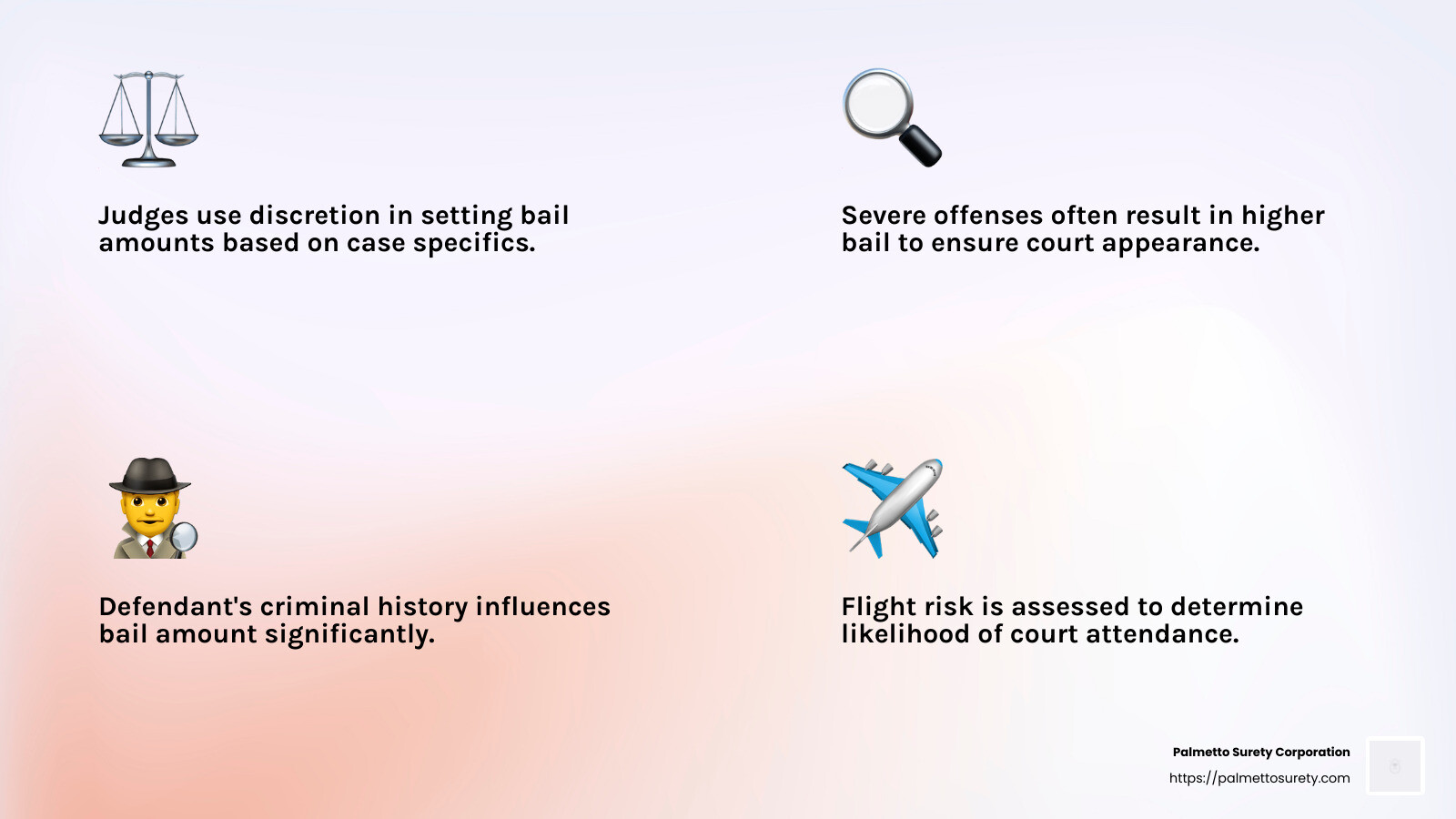
Understanding how these factors interact helps explain why bail amounts can vary so widely. It’s not just about the crime but also about the individual’s history and circumstances. This careful consideration aims to balance the rights of the defendant with the need to ensure they appear in court.
In the next section, we’ll address some frequently asked questions about bonds, including how a $5000 bond works and whether you get bail money back in Connecticut.
Frequently Asked Questions about Bonds
How does a $5000 bond work?
When a judge sets a bail amount, like $5000, it’s essentially a guarantee that the defendant will appear in court. If the defendant shows up for all scheduled court appearances, the bail is refunded, regardless of the trial’s outcome. However, if the defendant doesn’t appear, the court keeps the bail money, and a warrant is issued for their arrest.
Do you get bail money back in CT?
In Connecticut, if a defendant appears for all court dates and complies with bail conditions, the bail money is refunded once the case concludes. However, if the defendant violates any bail conditions or fails to appear, the court keeps the bail. Using a bail bond agent involves a non-refundable fee, usually 10% of the bail amount, which is not returned even if the defendant meets all conditions.
How do bail bondsmen make money?
Bail bondsmen earn money through non-refundable fees charged to defendants. Typically, this fee is about 10% of the total bail amount. For instance, on a $5000 bail, a defendant would pay the bondsman $500. The bondsman then provides the court with a surety bond, guaranteeing the full bail amount if the defendant fails to appear. Additionally, bondsmen may require collateral, such as property or valuables, to secure the bond, which they can claim if the defendant skips bail. This system ensures that bondsmen are compensated for the risk they take in guaranteeing a defendant’s court appearance.
Conclusion
At Palmetto Surety Corporation, we understand the complexities and pressures that come with needing a bail bond. Our mission is to simplify this process for you. With over 20 years of experience in providing surety bonds and bail bonds, we have honed our services to be both efficient and reliable.
Our quick service is a hallmark of what we do. We know that time is of the essence, especially when it comes to bail bonds. That’s why we strive to approve most applications within hours, ensuring that you or your loved one can secure release promptly. Our network of bail agents across the southeastern United States is ready to assist you, whether you’re in Texas, Florida, or anywhere else we operate.
Surety bonds play a critical role in various industries, from construction to healthcare. They provide a financial guarantee that businesses will fulfill their obligations. Similarly, our bail bonds offer a guarantee to the court that a defendant will appear for their trial dates, allowing them to remain free while awaiting trial.
The process of obtaining a bond doesn’t have to be daunting. With Palmetto Surety Corporation, you are in capable hands. Our expertise and commitment to service make us the go-to choice for surety and bail bonds. Whether you’re dealing with a legal issue or need a bond for business, we are here to help you steer these challenges with ease.
For more information or to start the bond process, visit our website. Our team is ready to provide the support and guidance you need.


