


Bond Refund Process: Top 5 Essential Insights 2025
Understanding the bond refund process is crucial for anyone involved in managing or interacting with surety bonds. Here’s what you need to know right away:
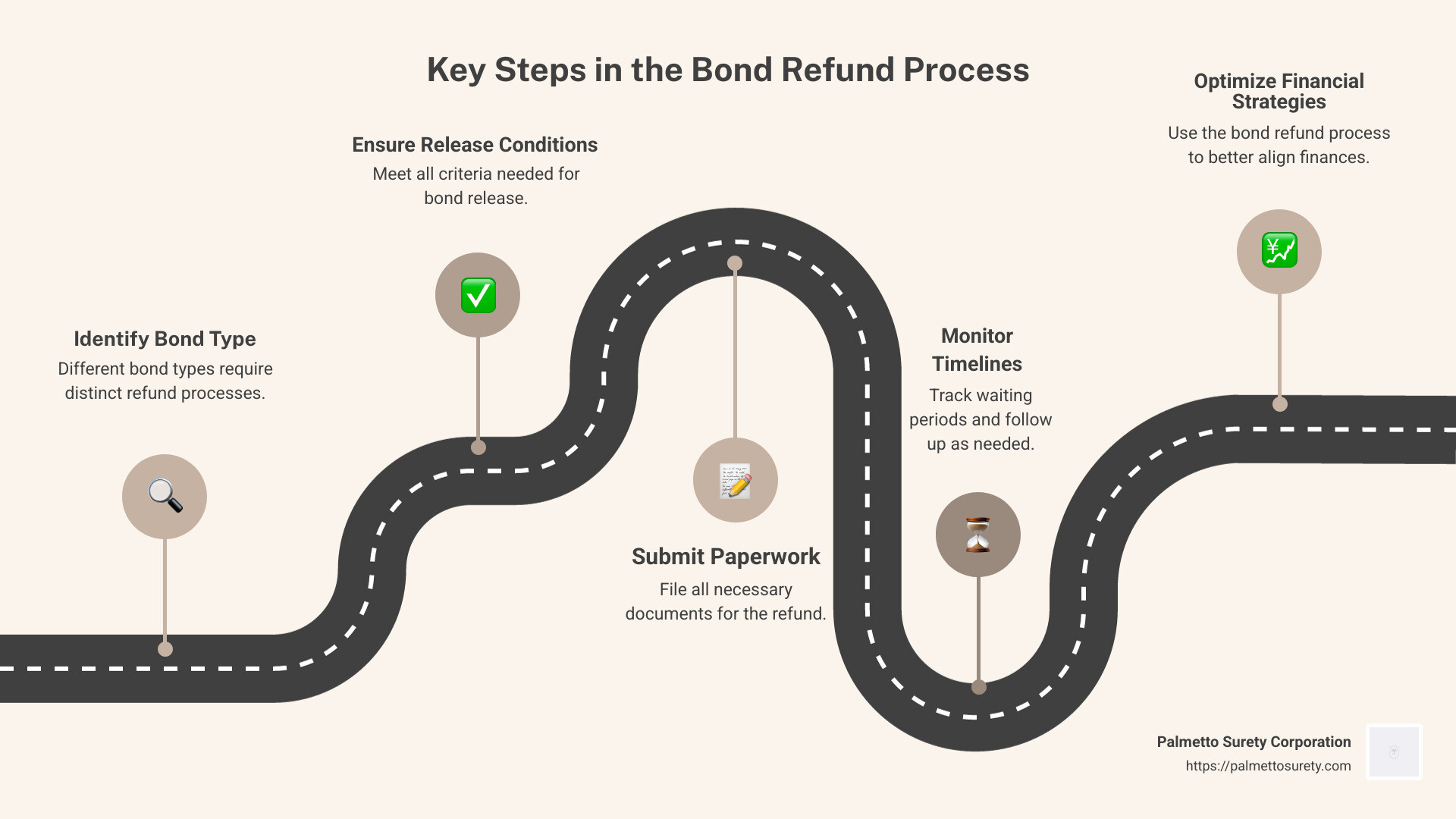
- Bond Refund Process Key Steps:
- Identify the bond type: Different types of bonds have varying refund processes.
- Follow any release conditions: Ensure all criteria for bond release are met.
- File the necessary paperwork: Submit all required documentation for the refund.
- Monitor processing timelines: Keep track of any waiting periods and follow up with relevant authorities if necessary.
Municipalities and businesses often engage in bond refunding to manage debts or revise bond terms to better align with current financial strategies. Whether refinancing existing obligations or removing restrictive covenants, the bond refund process helps entities optimize their fiscal scenarios. However, navigating this process means understanding its various steps and potential complexities.
I’m Haiko de Poel Jr., and with my experience in marketing and digital change within the financial sector, including working closely with Palmetto Surety Corporation, I am well-versed in explaining the intricacies of the bond refund process. Let’s dig deeper into this essential process and how it can benefit you.
What is a Bond Refund?
A bond refund is a financial maneuver used by issuers, like municipalities or corporations, to replace existing bonds with new ones. This process is often referred to as “refunding” or “refinancing.”
Refunding and Refinancing Explained
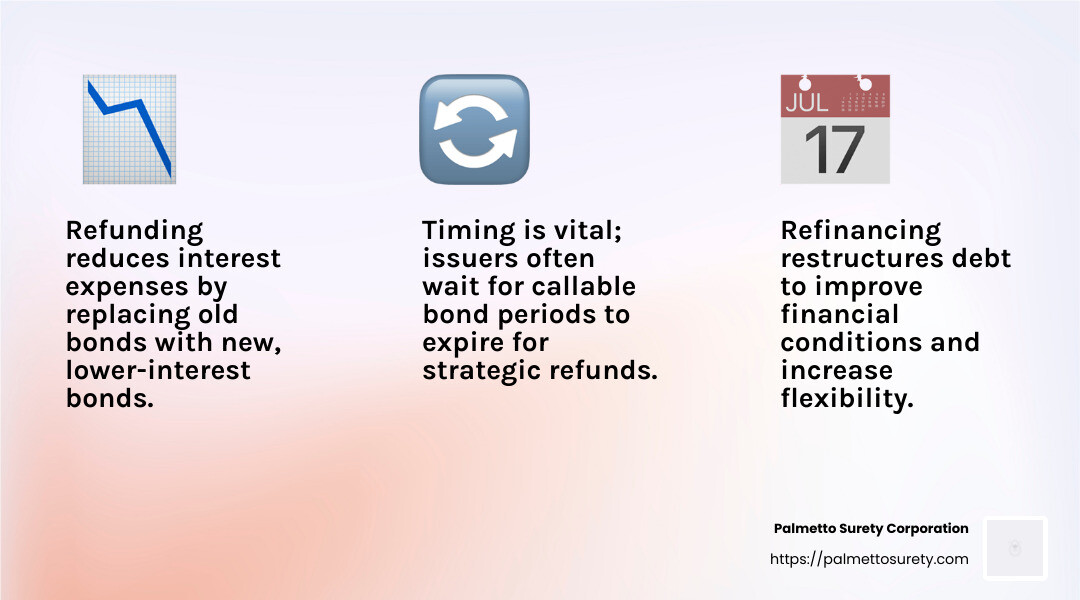
Refunding involves retiring outstanding bonds and issuing new ones, often at more favorable terms. This is usually done to take advantage of lower interest rates, reduce financing costs, or eliminate restrictive covenants.
For example, imagine a city with a $100 million bond at a 10% interest rate. If market rates drop to 6%, the city could issue new bonds at this lower rate, saving millions in interest annually.
Refinancing is similar but focuses more on restructuring debt to improve financial conditions. It’s like refinancing a mortgage to get a lower rate or better terms.
Outstanding Bonds and Their Role
Outstanding bonds are those currently in circulation. When these bonds become callable, issuers have the option to refund them. Callable bonds can be redeemed before maturity, which is a key feature in the refunding process.

Issuers must be strategic about timing. They often wait for the “call protection” period to expire before acting. During this time, they may issue pre-refunding bonds, whose proceeds are used to buy Treasury securities. These are held in escrow until the original bonds can be called.
Benefits of the Bond Refund Process
- Lower Interest Costs: By issuing new bonds at lower rates, issuers can significantly reduce interest expenses.
- Flexibility: It allows issuers to remove unwanted restrictions or covenants tied to the old bonds.
- Financial Strategy Alignment: Helps align bond terms with current financial strategies, optimizing fiscal management.
Understanding the bond refund process can be complex, but it offers considerable benefits for entities looking to optimize their debt management strategies.
Next, we’ll explore the detailed steps involved in the bond refund process and how they impact both issuers and bondholders.
The Bond Refund Process
Refunding bonds is a strategic process that can help issuers manage their debt more effectively. Let’s break down the bond refund process into easy-to-understand steps and explore the factors that can influence the outcome.
Steps in the Bond Refund Process
-
Court Order Initiation: The bond refund process often begins with a court order. This order is crucial as it authorizes the refunding action and sets the legal framework for the process.
-
Department of Finance Involvement: Once a court order is issued, the Department of Finance steps in. They are responsible for processing the refund order and ensuring that all financial obligations are met.
-
Issuance of Refund Check: After the Department of Finance processes the refund order, they issue a refund check. This check is sent to the surety or the assignee, depending on the case specifics.
-
Compliance with Court Procedures: Throughout the process, compliance with court procedures is essential. This includes attending all necessary hearings and fulfilling any legal requirements set by the court.
-
Finalization and Distribution: The final step involves the distribution of the refund check to the appropriate party. The entire process typically takes about eight weeks from the conclusion of the case.
Factors Affecting Bond Refunds
Several factors can impact whether a bond refund is successful and how long it takes:
-
Court Compliance: Compliance with court appearances and procedures is vital. Missing a court date can lead to bond forfeiture, resulting in the loss of the refund.
-
Release Conditions: Adhering to any release conditions set by the court is equally important. These might include travel restrictions, regular check-ins, or participation in specific programs.
-
Administrative Fees: The refund amount may be reduced by administrative fees. For instance, if the defendant is convicted, a 3% administrative fee might be deducted from the cash bail refund.
-
Legal and Financial Obligations: Any outstanding legal or financial obligations can also affect the refund process. It’s essential to ensure all court fees and penalties are settled before expecting a full refund.
Understanding these steps and factors can help steer the bond refund process smoothly and avoid potential pitfalls. Next, we’ll dive into the different types of bonds and their specific refund processes.
Types of Bonds and Their Refund Processes
Navigating bonds can be tricky, but understanding the refund processes for different types of bonds can make things clearer. Let’s explore how cash bail, bail bonds, and property bonds work and what you need to know about getting your money back.
Cash Bail Refunds
Cash bail is the most straightforward type of bond. It involves a full payment made to the court to secure a defendant’s release from jail. The key to getting your cash bail refund is compliance: the defendant must attend all required court appearances. If they do, the cash bail is eligible for a refund, minus any administrative fees such as a 3% deduction if the defendant is convicted. However, if the defendant fails to appear in court, the cash bail is forfeited, and no refund is given.
In short, cash bail provides a reliable way to secure a refund, as long as all court requirements are met.
Bail Bonds and Refunds
Bail bonds offer an alternative for those who cannot afford the full cash bail amount. A bail bond is essentially a loan from a bail bondsman, who charges a non-refundable premium, typically around 10% of the total bail amount. This premium is the cost for the bail bondsman’s services and is not refundable, even if the defendant attends all court appearances.
The bail bondsman may require collateral to secure the bond. If the defendant fails to appear in court, the bail bondsman can use this collateral to cover the full bail amount. Working with a reputable bail bondsman is crucial to ensure a smooth process and avoid losing the collateral.
Property Bonds and Refunds
Property bonds involve using real estate as collateral to secure a defendant’s release. This type of bond does not require a monetary payment upfront. Instead, the court places a lien on the property until the case is resolved. If the defendant attends all court appearances, the property bond is exonerated, and the lien is lifted, returning the property to its owner.
However, if the defendant fails to comply with court requirements, the court can seize the property as a penalty. Property bonds are a viable option for those unable to pay cash bail or secure a bail bond, but they carry the risk of losing valuable assets.
Understanding these different types of bonds and their refund processes can help you make informed decisions and steer the legal system more effectively. Next, we’ll answer some frequently asked questions about bond refunds.
Frequently Asked Questions about Bond Refunds
How long does it take to get a bond refund?
The bond refund process can vary depending on the type of bond and the jurisdiction. For cash bail, the process typically takes around eight weeks after the case concludes. Once the court issues a refund order, the Department of Finance usually sends out a refund check within two weeks. However, if there are delays or issues, such as unpaid court fees, it could take longer. It’s essential to keep all documentation, like the cash bail receipt, handy to expedite any inquiries.
Do you get bail money back if the case is dismissed?
Yes, if a case is dismissed, you are generally eligible to get your bail money back. In the case of a cash bail, the full amount is refunded, as long as all court appearances were attended. However, if you used a bail bondsman, the premium paid for their services is non-refundable. If no conviction occurs and the case is dismissed or the defendant is found not guilty, the court will typically order the return of the bail money.
What happens if a bond is not refunded?
If a bond is not refunded, it could be due to several reasons, such as non-compliance with court appearances or release conditions. When this happens, the bail money is forfeited. For cash bail, this means the court keeps the entire amount. For bail bonds, the bondsman may seize any collateral provided. Failing to receive a bond refund can lead to significant financial loss and may have further legal consequences if the court decides to impose additional penalties or charges. Always ensure compliance with all court requirements to avoid the risk of forfeiture.
Conclusion
Navigating the bond refund process can be complex, but working with experienced professionals can make it much smoother. At Palmetto Surety Corporation, we pride ourselves on offering quick service and expert guidance through our network of skilled bond agents. With over 20 years of experience in the industry, we understand the importance of efficiency and reliability in managing bond refunds.
Our team of bond agents is dedicated to ensuring that you receive the best possible service. We work tirelessly to process applications swiftly, often within hours, so you can focus on what truly matters. Whether you’re dealing with cash bail, bail bonds, or property bonds, our agents are here to help you steer the intricacies of the bond refund process.
For more information on how Palmetto Surety Corporation can assist you with your bond needs, visit our website. Our commitment to excellence and customer satisfaction makes us a trusted partner in the southeastern United States for all your surety bond requirements.


