


License and Bond for General Contractor: Top 2024 Guide
License and bond for general contractor are crucial components in the construction industry, ensuring that general contractors are legally authorized to operate and financially committed to meeting regulatory standards. Here’s a quick overview of their importance:
- License: Legally required to work, ensuring the contractor adheres to professional and ethical standards.
- Bond: A financial assurance that protects the public and clients from unethical or non-compliant practices.
For a general contractor, obtaining the necessary license and bond is vital not only for legal compliance but also for establishing trust with clients. These credentials demonstrate professionalism and reliability, which are essential for every successful construction project.
I’m Haiko de Poel Jr., an expert in branding and strategic growth. With extensive experience in transforming and expanding Palmetto Surety Corporation, I offer valuable insights into navigating the complexities of the license and bond for general contractor market, ensuring you are well-prepared to meet industry demands confidently.
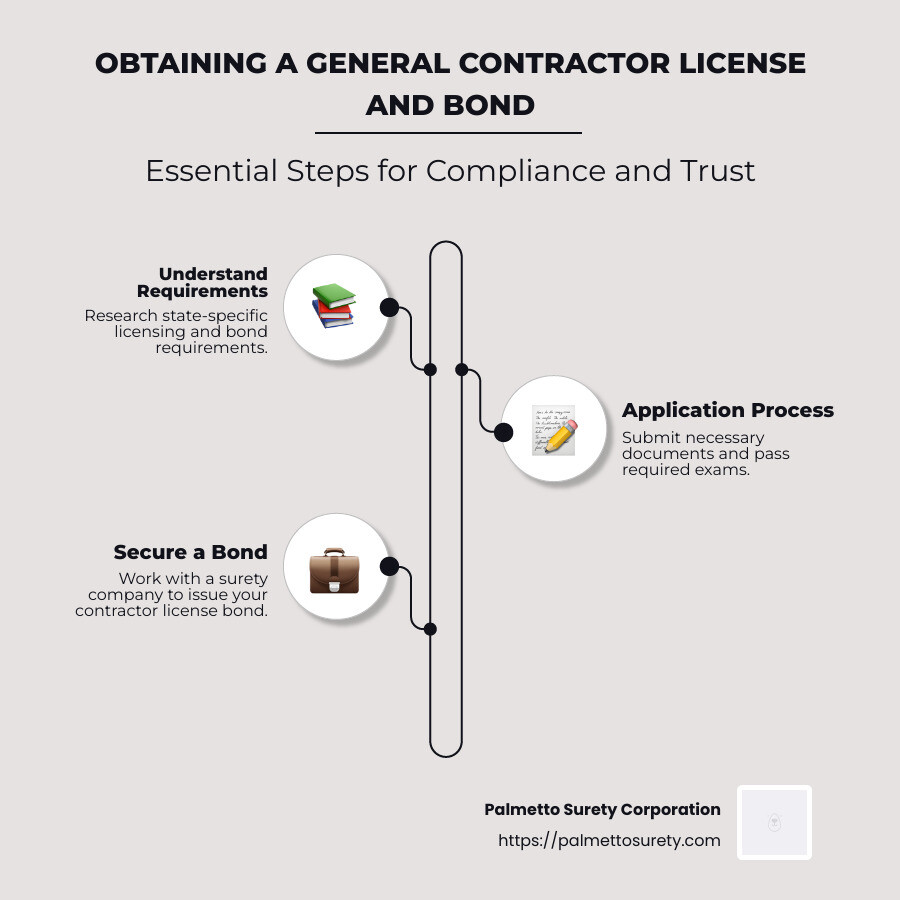
Easy license and bond for general contractor word list:
– how to become licensed and bonded contractor
– what is a contractors license bond
– how to get contractor bond
What is a General Contractor License?
A general contractor license is a certification that allows contractors to legally perform construction work. This license is issued by a state or local licensing authority and is required to ensure that contractors meet specific professional standards. The license acts as a form of quality assurance, confirming that the contractor has the necessary knowledge, skills, and financial stability to handle construction projects.
Licensing Process
The process of obtaining a general contractor license involves several steps to ensure the contractor is competent and trustworthy. Here’s what you need to know:
- Application: The first step is to apply to the relevant state or local licensing board. This usually involves filling out forms and paying an application fee.
- Exams: Most states require contractors to pass exams that test their knowledge of building codes, safety regulations, and general construction practices. Some states may also require tests for specialty trades like plumbing or electrical work.
- Financial Records: Contractors must submit financial documents such as bank statements and tax records. This helps the licensing board assess the contractor’s financial stability.
- Background Check: A criminal background check is typically required. Contractors may also need to register their fingerprints with the state licensing board.
Types of Contractor Licenses
Contractor licenses are not one-size-fits-all. They vary based on the type of work and the scope of projects a contractor intends to undertake. Here are the main types:
- General Contractor License: This license allows contractors to perform a wide range of construction activities. It is suitable for those who manage large-scale projects or multiple types of work.
- Specialty Contractor License: This is for contractors who specialize in a specific trade, such as HVAC, roofing, or plumbing. It requires additional exams and expertise in the specialty area.
- Residential Contractor License: This license is for contractors who focus on home building and renovations. It often requires knowledge of residential building codes and standards.
- Commercial Contractor License: Suitable for contractors working on non-residential projects, like office buildings or shopping centers. This license may require additional qualifications due to the complexity of commercial projects.
For any general contractor, being licensed is not just a legal obligation but a mark of credibility and professionalism. It assures clients that the contractor is qualified and adheres to industry standards, which is crucial for building trust and ensuring successful project outcomes.

What is a Contractor License Bond?
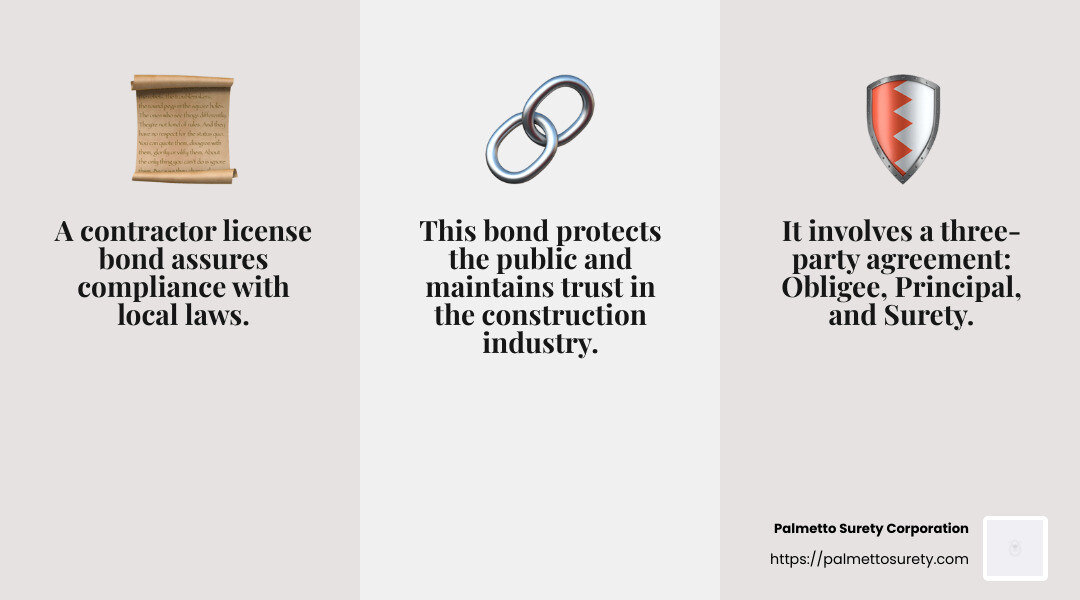
A contractor license bond is a type of surety bond that acts as a financial guarantee. It ensures that a contractor will follow local laws and ethical standards. This bond is crucial for protecting the public and maintaining trust in the construction industry.
Three-Party Agreement
A contractor license bond involves three parties:
- Obligee: This is the government agency that requires the bond. They ensure that contractors comply with regulations.
- Principal: The contractor who needs the bond. If a claim is made, the principal is responsible for reimbursing the surety company.
- Surety Company: The entity that issues the bond. They promise to pay the obligee if the principal fails to meet their obligations.
Differences Between Contractor License Bonds and Other Bonds
Contractor license bonds differ from other types of bonds, such as contract, payment, and performance bonds:
- Contract Bonds: These are specific to a project and protect the property owner. They expire once the project is completed.
- Payment Bonds: Ensure that subcontractors and suppliers are paid. They protect the financial interests of those involved in the project.
- Performance Bonds: Guarantee that the contractor will complete the project as agreed. They protect the project owner from incomplete or substandard work.
Unlike these project-specific bonds, a contractor license bond “follows” the contractor to every job, providing continuous protection to the public across multiple projects.
In summary, a contractor license bond is essential for ensuring legal compliance and protecting the public. It distinguishes itself from other bonds by offering broader, ongoing protection beyond individual projects.
Why Do General Contractors Need a License and Bond?
General contractors must have a license and bond to operate legally and ethically. These requirements aren’t just bureaucratic hoops—they are vital for public protection and financial stability in the construction industry.
Compliance with Licensing Rules
Licenses ensure that contractors meet specific standards set by local laws. These rules ensure that every contractor has the necessary knowledge and skills to do the job right. Licensing authorities often require contractors to pass exams, submit financial records, and undergo background checks. This process helps weed out those who might engage in unethical practices or pose a financial risk.
A license also holds contractors accountable. It provides a way for clients and authorities to address issues if a contractor fails to meet contractual obligations or violates local laws. This accountability is crucial for maintaining trust in the industry.
Protection for Clients and the Public
Contractor license bonds provide an extra layer of protection. They safeguard clients and the public from financial harm, fraud, and misrepresentation. For instance, if a contractor abandons a project or performs substandard work, the bond can be used to compensate the affected parties.
Here’s how it works: If a client files a valid claim against a contractor, the surety company pays the claim up to the bond’s limit. The contractor must then reimburse the surety company. This system ensures that clients aren’t left in the lurch if something goes wrong. It also encourages contractors to operate ethically and responsibly.
Licenses and bonds create a safety net. They protect everyone involved from potential financial pitfalls and ensure that contractors adhere to high standards. This is why being licensed and bonded is not just a legal formality—it’s a commitment to quality and integrity in every project.
How to Obtain a Contractor License Bond
Obtaining a contractor license bond is a crucial step for any general contractor aiming to operate legally and responsibly. The process involves several key steps, including understanding the application process, meeting underwriting criteria, and managing bond costs.
Application Process
To start, you’ll need to apply for a contractor license bond through a surety company. This involves filling out an application form and providing necessary documentation. The surety company evaluates your application based on certain underwriting criteria to determine your eligibility and the bond premium.
Underwriting Criteria
The underwriting process is where the surety determines the risk of issuing a bond to you. Key factors include:
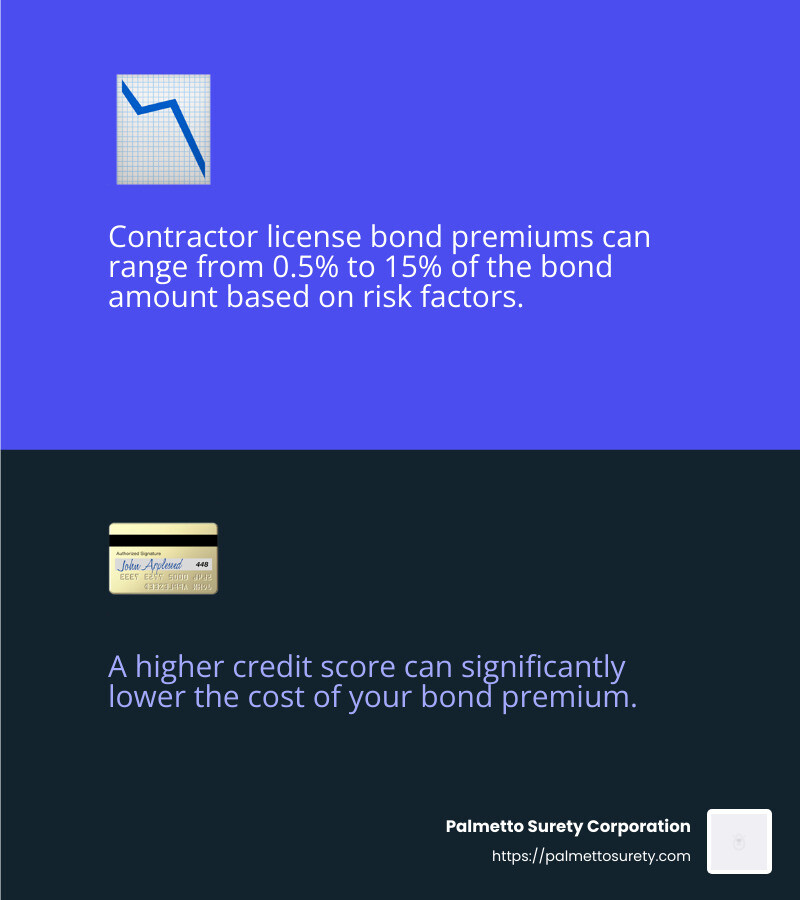
- Credit Score: A strong credit score can significantly lower your bond premium. Sureties view a high credit score as an indicator of financial responsibility.
- Financial History: Your business’s financial stability is crucial. Sureties will look at financial statements to assess risk.
- Bond Limit: This refers to the maximum amount the surety will cover in case of a claim. A higher bond limit may result in a higher premium.
These criteria help the surety assess the likelihood of you fulfilling your obligations without defaulting.
Bond Premium
The bond premium is the cost you pay to secure the bond. It is usually a percentage of the total bond amount, ranging from 0.5% to 15%, depending on your credit score and financial history.
Filing the Bond
Once the bond is secured, it must be filed with the relevant licensing board. This step is crucial for your bond to be valid and for you to be recognized as a licensed contractor.
- Electronic Filing: Many licensing boards now allow electronic filing of bonds, making the process more efficient. Ensure you follow the specific filing requirements of your state or local board to avoid delays.
- Surety Company Role: The surety company often handles the filing process, ensuring that all necessary paperwork is submitted correctly to the licensing authorities.
By understanding these steps and factors, you can steer the process of obtaining a contractor license bond with confidence. This ensures you meet all legal requirements, protect your clients, and maintain a strong reputation in the construction industry.
Costs Associated with Contractor License Bonds
Understanding the costs associated with a contractor license bond is essential for general contractors. These costs can vary significantly depending on several factors, including the bond amount, your credit score, and the state you operate in.
Bond Premium
The bond premium is the price you pay to maintain your contractor license bond. This premium is typically a small percentage of the total bond amount. Most contractors will see rates ranging from 0.5% to 5% of the bond amount. For example, if the bond amount is $20,000, the premium could range from $100 to $1,000 annually, depending on your creditworthiness and financial history.
State-Specific Rates
Bond costs can also vary by state due to different regulatory requirements and risk factors. Here are some examples of how bond costs might differ across states like California, Oregon, and Texas:
- California: In California, contractor license bonds often require a bond amount of $15,000. With good credit, contractors might pay a premium as low as $75 annually. However, those with lower credit scores could see premiums up to 5% of the bond amount.
- Oregon: In Oregon, a residential general contractor might need a bond amount of $20,000. Contractors with excellent credit could pay a minimum premium of $100 annually, as the rate starts at 0.5%.
- Texas: Texas has varied bond requirements based on the type of construction work. A commercial contractor might need a bond amount of $25,000, with premiums starting at around $125 annually for those with strong financial histories.
These examples highlight the importance of understanding local regulations and how they impact bond costs. Contractors should always check state-specific requirements to ensure they are budgeting correctly for their bond premiums.
By being aware of these costs and factors, general contractors can better manage their financial planning and ensure compliance with state regulations. This not only helps in maintaining a valid license but also builds trust with clients and the public.
Common Scenarios Covered by Contractor License Bonds
Contractor license bonds play a crucial role in ensuring that general contractors comply with legal and ethical standards. These bonds protect clients and the public from various risks associated with contractor operations. Let’s explore some common scenarios where these bonds provide vital protection.
Compliance Issues
One of the primary purposes of a contractor license bond is to ensure that contractors adhere to licensing rules and regulations. Non-compliance can lead to financial harm to clients or the public. For example, if a contractor fails to meet local building codes, a bond claim could be filed to cover the resulting damages.
Tax Payment
Contractors are required to pay taxes on their work, and failure to do so can result in a bond claim. If a contractor neglects to pay taxes owed to the government, the bond can cover the financial shortfall. This ensures that the public is not left bearing the cost of the contractor’s oversight.
Fraud and Misrepresentation
Fraudulent activities or misrepresentation by contractors can severely impact clients. If a contractor intentionally deceives a client about the scope of work or the materials used, a bond claim can be filed to recover losses. This serves as a powerful deterrent against unethical practices.
Unlicensed Work
Performing work without the necessary licenses is another scenario covered by contractor license bonds. If a contractor undertakes a project they are not licensed for, it can lead to significant issues for clients. A bond claim can help rectify the situation by providing financial compensation to the affected parties.
Bond Claim Process
If a situation arises where a bond claim is necessary, it’s important to understand how the process unfolds:
- Filing a Claim: Anyone financially harmed by a contractor’s actions can file a claim with the surety company that issued the bond. The claimant needs to provide evidence of the contractor’s non-compliance or misconduct.
- Investigation: Once a claim is filed, the surety company conducts a thorough investigation to determine its validity. This step ensures that only legitimate claims are paid out.
- Payout: If the claim is justified, the surety company compensates the claimant up to the bond’s limit. This payout provides financial relief to those affected by the contractor’s actions.
- Reimbursement: After settling a claim, the contractor (the principal) must reimburse the surety company for the full claim amount. This reimbursement reinforces the contractor’s responsibility and accountability.
Understanding these scenarios and the bond claim process is essential for general contractors. It helps them operate ethically, comply with regulations, and maintain trust with clients and the public.
Frequently Asked Questions about General Contractor License and Bond
What are the three types of bonds that can be required from a contractor?
Contractors often need to secure different types of bonds depending on the scope and nature of their work. Here are the three primary bonds contractors might encounter:
- Contractor License Bond: This bond ensures that a contractor will adhere to state and local regulations. It protects the public from any financial harm due to the contractor’s failure to comply with licensing laws.
- Performance Bond: This bond guarantees that a contractor will complete a project according to the terms and conditions outlined in the contract. If the contractor fails to deliver, the bond compensates the project owner for any financial losses.
- Payment Bond: Also known as a labor and material bond, this bond ensures that contractors will pay their subcontractors, laborers, and suppliers. It protects these parties from non-payment and ensures the financial stability of the project.
How much is a contractor license bond in California?
In California, the cost of a contractor license bond can vary based on several factors, including the contractor’s credit score and financial history. Typically, the bond amount is set at $25,000, but contractors usually pay a premium that ranges from 1% to 10% of this amount. For example, a contractor with good credit might pay around $250 annually, whereas someone with lower credit might pay up to $2,500.
How to get bonded and insured in California?
Getting bonded and insured in California involves a few key steps:
- Determine Requirements: First, check the specific bonding and insurance requirements for your type of contracting work. This can vary by city or county.
- Select a Surety Company: Choose a reputable surety company, like Palmetto Surety Corporation, to help you secure a bond. They can guide you through the application process and offer competitive rates.
- Complete the Application: Fill out the bond application with accurate financial information. The surety company will assess your credit score and financial history to determine your bond premium.
- Purchase Insurance: In addition to a bond, you’ll need general liability insurance to protect against property damage or injuries. Contact an insurance provider to discuss coverage options.
- Submit Documentation: Once you have both the bond and insurance, submit proof to the relevant licensing board to complete the licensing process.
By following these steps, general contractors can ensure they meet all legal requirements and protect their business and clients effectively.
Conclusion
In summary, becoming a licensed and bonded general contractor is a crucial step for anyone in the construction industry. The license and bond for general contractors not only fulfill legal requirements but also build trust with clients and protect the public from potential financial harm. A contractor’s license ensures that you meet all state and local regulations, while a contractor license bond provides a financial guarantee of compliance, ethical conduct, and reliability.
Being both licensed and bonded demonstrates a commitment to professionalism and accountability. It reassures clients and the public that you are operating legally and ethically. This can be a significant competitive advantage in the marketplace, as clients are more likely to hire contractors who are properly licensed and bonded.
At Palmetto Surety Corporation, we understand the complexities involved in obtaining the necessary bonds and licenses. With over 20 years of experience, we specialize in providing surety bonds custom to the needs of various industries, including construction. Our quick approval process ensures that you can secure the bonds you need efficiently, allowing you to focus on your business operations.
For more information about obtaining a contractor license bond or to get started with a free quote, visit our Palmetto Surety Corporation service page. We’re here to help you every step of the way, ensuring that you meet all your licensing and bonding needs with ease.


