


NC Contractor License Check: 5 Essential Legal Tips 2024
When you’re planning a construction project in North Carolina, conducting an NC contractor license check is crucial. It safeguards your interests by confirming that the contractor you hire is licensed and qualified. Here’s why this step is vital:
- Legal Compliance: A licensed contractor meets state regulations, ensuring your project adheres to legal standards.
- Consumer Protection: Avoid fraudulent contractors by confirming licensing, which protects you from potential scams.
- Quality Assurance: Licensed contractors are more likely to deliver work to a high standard, as they adhere to industry norms.
I’m Haiko de Poel Jr., and I’ve been deeply involved in marketing for Palmetto Surety Corporation, where I’ve developed resources to make the NC contractor license check seamless. My work ensures you stay informed and protected during your construction projects.
Why You Need to Verify a Contractor’s License
In North Carolina, hiring a licensed contractor isn’t just a good idea—it’s often the law. For any project valued at $30,000 or more, your general contractor must have a state-issued license. This legal requirement ensures that contractors meet specific standards and qualifications. Ignoring this can lead to fines and legal issues, leaving you vulnerable and potentially stuck with unlicensed and unqualified work.
Verifying a contractor’s license is a shield against scams. In 2021, the North Carolina Attorney General’s Office received over 800 reports of home improvement issues. Unlicensed contractors often promise the moon but deliver shoddy work, or worse, disappear with your money. By confirming a contractor’s license, you significantly reduce the risk of falling victim to these scams.
Safety is a top priority. Licensed contractors are required to follow safety regulations and standards. This minimizes the risk of accidents and ensures that the work is up to code. Unlicensed contractors may cut corners, leading to dangerous situations and costly repairs down the line.
Hiring a licensed contractor also protects your wallet. If a contractor leaves a project incomplete or performs substandard work, you have legal recourse to recover your losses. The Homeowners Recovery Fund, for instance, assists those who suffer financial loss due to dishonest or incompetent licensed contractors. Without a licensed contractor, you might end up paying twice for the same job, or worse, incur additional costs to fix mistakes.
Ensuring your contractor is licensed is a simple yet crucial step. It safeguards your legal standing, protects your investment, and ensures the safety and quality of your project.
How to Perform an NC Contractor License Check
Ensuring your contractor is licensed in North Carolina is simple and can be done in two main ways: online or by phone. This is a critical step to protect yourself from scams and ensure that your project is handled by qualified professionals.

Online Verification Process
The NC Licensing Board for General Contractors offers an easy-to-use online tool to verify contractor licenses. This is a quick and efficient way to check if your contractor is licensed and in good standing.
-
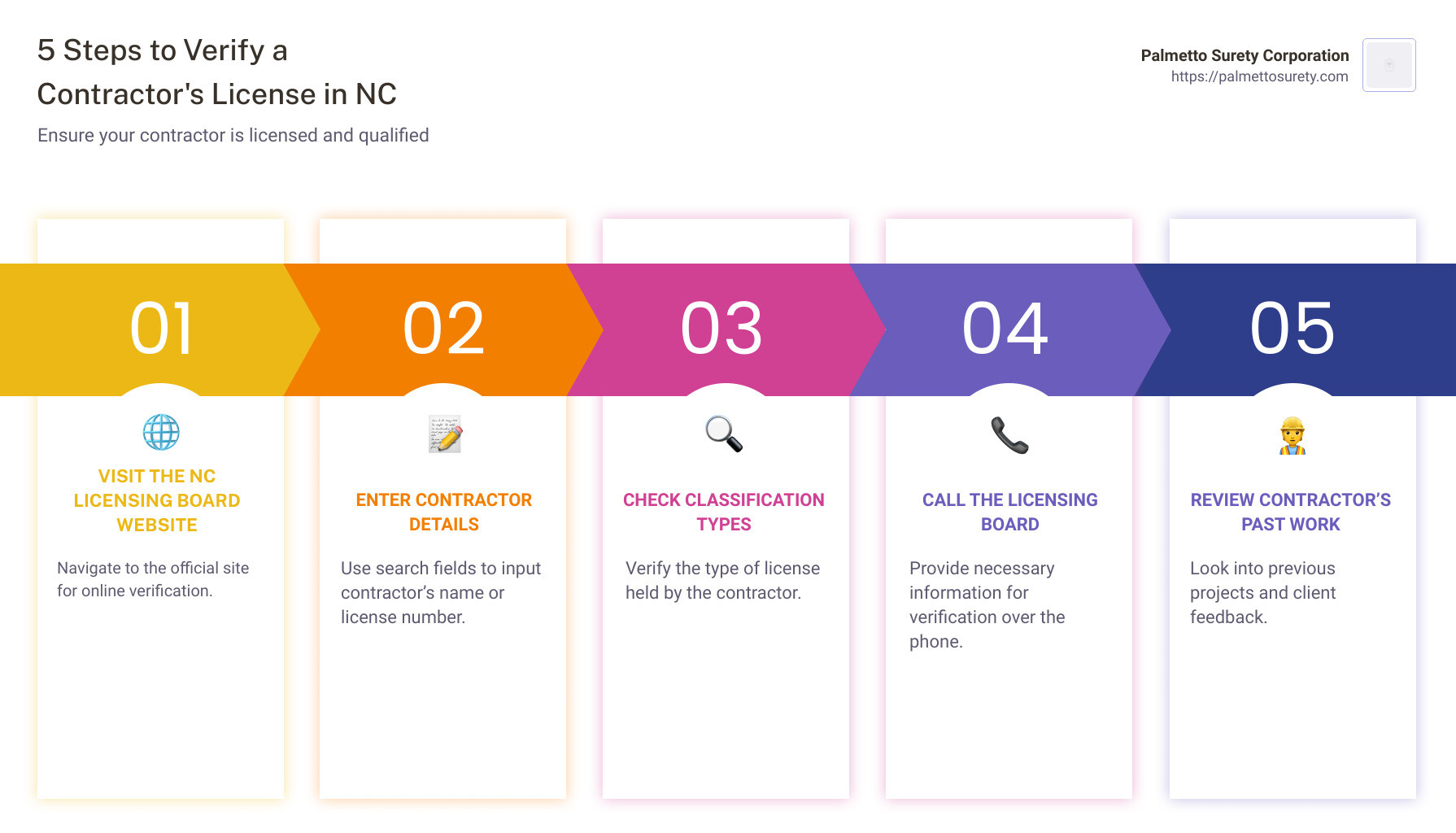
Visit the NC Licensing Board Website: Head to the official NC Licensing Board for General Contractors website. This is where you can start your verification process.
-
Use the Search Fields: The website provides various search fields. You can search by license number, company name, or even the contractor’s first and last name. All fields are optional, but at least one must be filled to initiate a search.
-
Classification Types: Understand the different classification types available, such as Intermediate, Limited, or Unlimited. This helps in knowing the scope of work the contractor is licensed to perform.
This online verification process is straightforward and can be done from the comfort of your home. It’s a great first step in ensuring your contractor is legitimate.
Phone Verification Process
If you prefer a more personal touch, or if you encounter issues online, you can verify a contractor’s license by phone.
-
Contact the NC Licensing Board: Dial the official contact number for the NC Licensing Board for General Contractors. This number is available on their website.
-
Information Needed: Be prepared to provide specific details such as the contractor’s name, license number, or company name. This information helps the representative assist you better.
-
Verification Steps: The representative will guide you through the steps to verify the contractor’s license. They can provide insights into the contractor’s licensing status and any disciplinary actions, if applicable.
Using the phone verification process offers direct interaction, which can be reassuring if you have specific questions or concerns.
Both methods ensure you are informed about your contractor’s licensing status, helping you make a safe and secure choice for your project.
Types of Contractor Licenses in North Carolina
When hiring a contractor in North Carolina, understanding the types of licenses available is crucial. This helps ensure that the contractor you choose is qualified for your specific project needs. Here’s a breakdown of the main types of contractor licenses in the state:
General Contractor License
General Contractors are responsible for managing the construction of buildings, highways, and other structures. In North Carolina, these contractors need a license if the project cost is $30,000 or more.
-
Project Types: General contractors handle a wide range of projects, including commercial, residential, and public utility constructions.
-
Licensing Requirements: To obtain a general contractor license, applicants must pass an exam and meet financial requirements. The license is further classified based on the project size they can handle: Limited, Intermediate, or Unlimited.
-
Classification Types:
- Limited License: Allows projects up to $500,000.
- Intermediate License: Covers projects up to $1,000,000.
- Unlimited License: No monetary limit on projects.
Electrical Contractor License
Electrical contractors in North Carolina are licensed to handle electrical installations and repairs. This is crucial for projects involving complex electrical systems.
- License Types:
- Limited Classification: Can undertake projects up to a specific financial limit.
- Intermediate Classification: Allows for a higher project value.
-
Unlimited Classification: No restrictions on project scope.
-
Project Scope: Includes installation, maintenance, and repair of electrical systems in residential, commercial, and industrial settings.
-
Licensing Requirements: Applicants must pass a state exam and demonstrate relevant work experience. Ensuring compliance with the National Electrical Code is also necessary.
Plumbing and HVAC Contractor License
Plumbing and HVAC contractors specialize in installing and maintaining plumbing, heating, ventilation, and air conditioning systems. These licenses are vital for ensuring safety and efficiency in building projects.
- License Types:
- Class I: Allows work on both residential and commercial systems.
-
Class II: Generally restricted to residential projects.
-
Project Scope: Includes installation and repair of water supply lines, waste disposal systems, and HVAC units.
-
Licensing Requirements: Contractors must pass exams specific to plumbing or HVAC and have relevant experience. They must adhere to state codes and standards for safety and efficiency.
Understanding these license types and requirements ensures that you choose the right professional for your project, protecting both your investment and safety.
Tips for Hiring a Licensed Contractor
When it comes to hiring a contractor, making the right choice is crucial. Here are some tips to guide you through the process and ensure you hire a reputable, licensed professional.
Get Recommendations
Start by asking friends, neighbors, or co-workers for recommendations. Personal experiences can provide valuable insights into a contractor’s reliability and quality of work. If someone you trust had a positive experience with a contractor on a recent project, it’s a good sign that the contractor is worth considering.
Check Insurance and Bonding
Before hiring a contractor, verify their insurance policies and bonds. This step is essential for protecting yourself against potential financial losses. Request a copy of the contractor’s insurance policy and contact the insurance company to confirm coverage. While not mandatory for all contractors, reputable contractors often carry liability insurance and workers’ compensation insurance to cover any on-site damages or injuries.
Get Written Estimates and Contracts
Once you’ve narrowed down your options, get detailed written estimates from at least three contractors. This will help you compare costs and understand what each contractor offers. A comprehensive estimate should include:
- Materials and Labor Costs: A breakdown of all materials and labor involved.
- Warranties and Guarantees: Information on any warranties or guarantees for the work.
- Start and Finish Dates: Clear timelines for when the project will begin and end.
Ensure you also have a written contract that outlines the project’s scope, payment schedule, and any other important details. Avoid making large upfront payments; instead, agree on a payment plan tied to project milestones. This protects you from potential scams and ensures that the contractor stays committed to completing the work as agreed.
By following these tips, you can confidently hire a licensed contractor, ensuring that your home improvement project is in capable hands.
Frequently Asked Questions about NC Contractor License Check
How much work can you do without a contractor license in North Carolina?
In North Carolina, a contractor license is required for projects where the total cost of construction is $30,000 or more. This threshold applies to general contractors, who manage projects involving the construction or improvement of buildings, highways, or other structures. For projects below this cost, a license is not mandatory, allowing homeowners or small project managers to hire unlicensed individuals. However, it’s important to note that hiring a licensed contractor can provide peace of mind due to their expertise and adherence to state regulations.
How to look up a contractor’s license in NC?
Performing an NC contractor license check is a straightforward process, ensuring that your contractor is licensed and legitimate. You have two main options:
-
Online Verification: Visit the North Carolina Licensing Board for General Contractors (NCLBGC) website. Use their search tool by entering the contractor’s name, license number, or company name to verify their license status. This online resource provides quick access to details about the contractor’s license type and any disciplinary actions.
-
Phone Verification: For those who prefer speaking to a representative, you can call the NCLBGC at (919) 571-4183. Be prepared to provide the contractor’s name or license number to get accurate information.
Both methods are effective for ensuring your contractor has the proper credentials, protecting you from potential fraud or substandard work.
Do contractors have to be licensed in North Carolina?
Yes, contractors must be licensed in North Carolina if they are working on projects where the cost meets or exceeds the $30,000 threshold. This applies to various types of projects, including building construction, highway repairs, and public utility work. Licensing is crucial as it ensures contractors have the necessary skills and knowledge to comply with state codes and safety standards. For specialized work, like electrical, plumbing, or HVAC projects, contractors are required to have specific licenses, ensuring they are qualified to perform such tasks safely and effectively.
By verifying a contractor’s license, you not only comply with state regulations but also safeguard your investment, ensuring the work is completed to high standards.
Conclusion
Verifying a contractor’s license is crucial for protecting yourself as a homeowner or project manager. It ensures that the contractor you hire is qualified, experienced, and adheres to state regulations. This step can save you from potential scams and substandard work, which are unfortunately common, with over 800 reports of home improvement issues received by the North Carolina Attorney General’s Office in 2021 alone.
Consumer protection is at the heart of this process. By confirming a contractor’s license, you ensure that they have met the necessary qualifications and are accountable to the North Carolina Licensing Board for General Contractors. This accountability is vital for maintaining safety and quality standards in your project.
At Palmetto Surety Corporation, we understand the importance of such verifications. As a leading provider of surety bonds, we are committed to supporting you with quick and efficient services. Our expertise in providing surety bonds helps guarantee that contractors fulfill their obligations, offering an added layer of financial security for your projects.
For more information on securing your contractor’s performance and ensuring compliance, explore our surety bond services. Our team is ready to assist you in navigating the complexities of contractor licensing and surety bonds, ensuring peace of mind for your next project.
By taking these steps, you not only protect your investment but also contribute to a safer and more reliable construction industry in North Carolina.


