Bond Amount: Top 3 Powerful Insights for 2024
Bond amount is a key term in the legal process, especially within the bail system. If you’re looking for insights on this topic, here’s what you need to know:
- Bond amount: The financial guarantee set by a court, required for a defendant’s release from jail.
- Purpose: Ensures the defendant appears in court for their trial.
- Payment methods: Cash, bail bond, or collateral.
- Influences: Crime severity, flight risk, and criminal history.
When someone is arrested, understanding the intricacies of the bail bond process is essential. This process not only affects the ability to secure release from jail but also impacts how they prepare for their upcoming court appearance. Fundamentally, a bond amount helps determine the conditions under which a defendant can regain their freedom while awaiting trial. In Texas, for example, bail decisions are influenced by factors like flight risk and the nature of the charges.
I’m Haiko de Poel Jr, an expert in simplifying complex topics such as bond amount. With experience in marketing and strategic roles in companies like Palmetto Surety Corporation, I’ve helped reshape how businesses manage surety and bail bonds efficiently.
What is a Bond Amount?
The bond amount is essentially a financial promise made to the court. It ensures that a defendant will appear for their trial. This amount is set by a judge and can be paid in different ways, such as cash, a bail bond, or property. The bond amount is a key part of the bail process, which allows a person to be released from jail while they await their court date.
Types of Bonds
-
Personal Bond: This is sometimes called a “release on recognizance.” Here, the defendant doesn’t have to pay money upfront. Instead, they promise to appear in court. If they fail to do so, they may have to pay the full bond amount later.
-
Bail Bond: This is where a bail bondsman comes into play. The defendant or their family pays a nonrefundable fee, usually about 10% of the total bond amount, to the bondsman. The bondsman then pays the court, allowing the defendant to be released.
-
Property Bond: In this case, the defendant uses their property as collateral. The property must have enough equity to cover the bond amount. If the defendant doesn’t show up in court, the court can take ownership of the property.

Factors Influencing Bond Amount
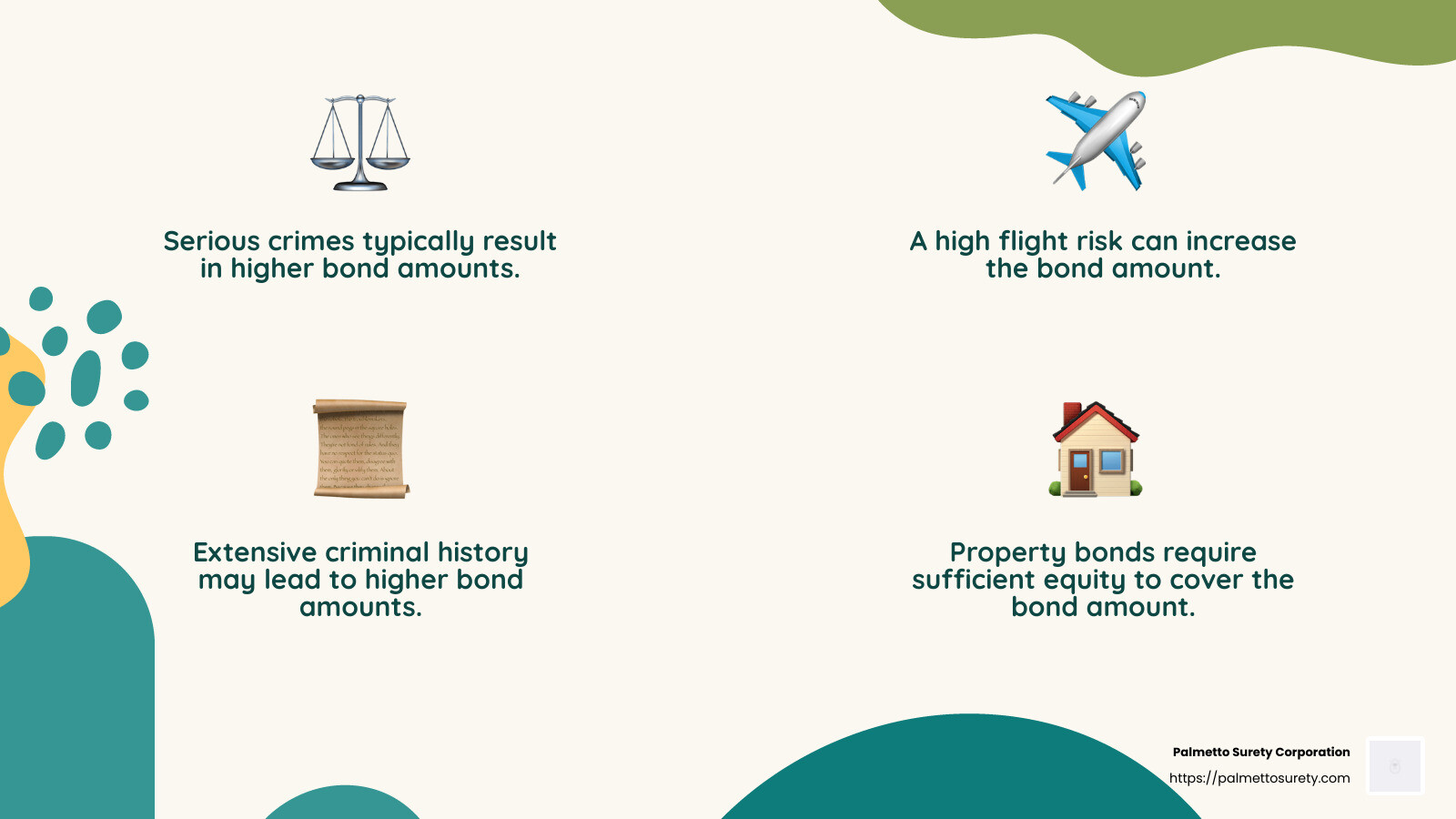
Several factors can influence the bond amount set by the court:
-
Seriousness of the Offense: More severe crimes usually mean higher bond amounts. For example, a minor theft might have a lower bond than a serious assault charge.
-
Flight Risk: If the court believes the defendant might try to escape and not show up for their trial, they might set a higher bond. Past behavior, like skipping court dates, can influence this decision.
-
Criminal History: A defendant with a long criminal record might face a higher bond amount. This is because their past actions suggest they might not comply with court requirements.
Understanding these factors helps in navigating the bail system effectively. For instance, in Texas, bail amounts can vary significantly based on these criteria. This variation ensures that the bond amount is custom to each individual’s circumstances, balancing the need for public safety with the rights of the accused.
How the Bail System Works
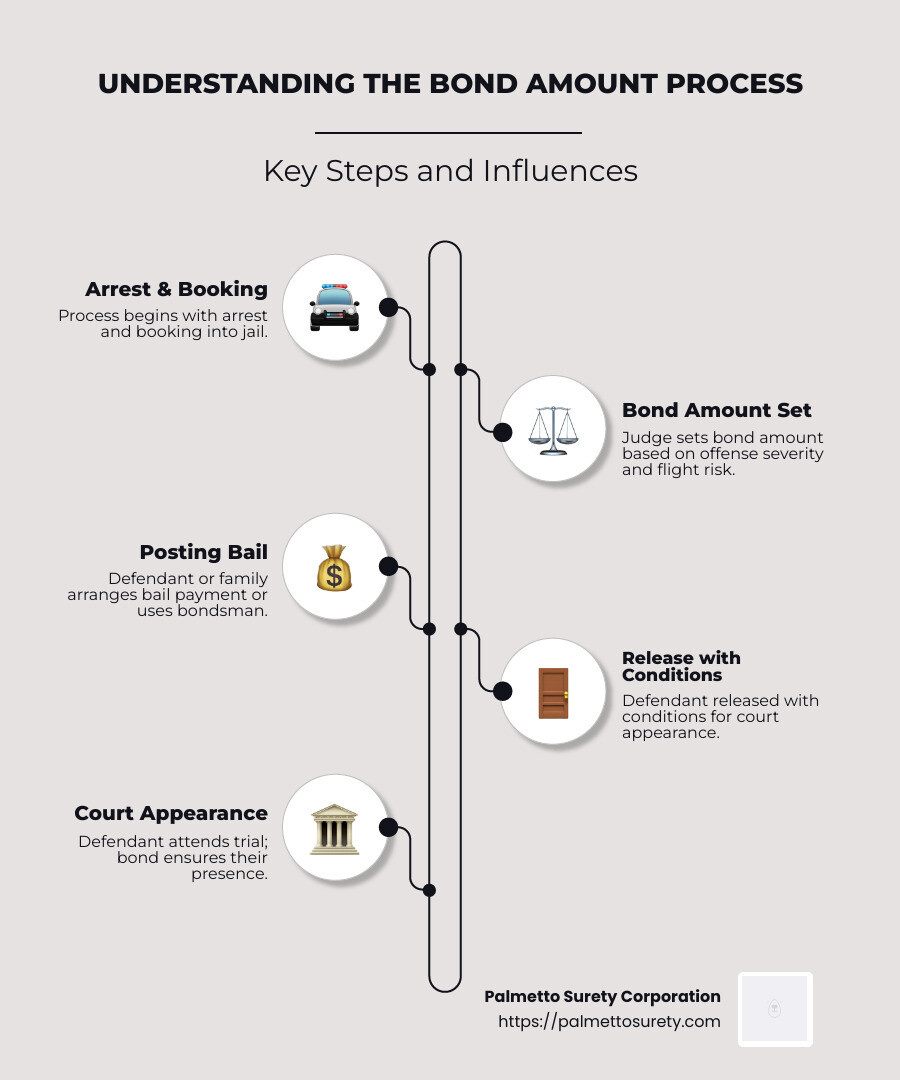
Once someone is arrested, they enter the bail system. This process involves several key steps, including booking, setting a trial date, and determining the bail amount. Let’s break down how each part works.
Setting Bail
After an arrest, the first step is booking. This is where details of the arrest are recorded, and the individual is placed in jail. Soon after, a judge will decide on the bail amount, which is the money required to secure release from jail until the court date.
The judge considers several factors when setting bail, such as the seriousness of the offense, the defendant’s flight risk, and their criminal history. Sometimes, a bail schedule is used to guide the judge on typical bail amounts for specific offenses. However, the judge has the discretion to adjust these amounts based on the circumstances.
In some cases, the defendant must attend a bail hearing to determine the bail amount. This hearing allows the defendant to present reasons for a reduced bail, such as being a low flight risk with strong community ties.
Posting Bail
Once the bail amount is set, the next step is posting bail. There are a few ways to do this:
-
Cash Bail: The full bail amount is paid in cash to the court. This is straightforward but can be challenging for those without access to large sums of money.
-
Bail Bond: This is where a bail bondsman can help. By paying a nonrefundable fee, usually 10% of the bail amount, the bondsman guarantees the full amount to the court. This option is more accessible for many people, as it requires less upfront cash.
-
Property Bond: In some cases, a defendant can use property as collateral. The property must have enough equity to cover the bail amount. If the defendant fails to appear in court, the court may seize the property.
Conditions of Release
Once bail is posted, the defendant is released from jail but must adhere to specific court conditions and bond conditions. These conditions might include regular check-ins, travel restrictions, or maintaining employment.
Failing to comply with these conditions can lead to re-arrest. Additionally, missing a court date can result in a warrant for arrest and forfeiture of the bail or bond.
Understanding these steps can help steer the bail process more effectively. It’s crucial to meet all conditions and attend all court appearances to avoid further legal trouble.
Costs Associated with Bonds
When navigating the bail system, understanding the costs associated with bonds is crucial. These costs can vary significantly depending on the type of bond and the specific requirements involved.
Bail Bond Fees
A bail bond is a common method for posting bail when the full amount is unaffordable. Typically, a bail bondsman charges a nonrefundable fee of about 10% of the total bail amount. For example, if the bail is set at $10,000, the fee would be $1,000. This fee is the cost of the service provided by the bail bondsman and is not returned, even if the defendant appears at all required court dates.
In addition to the standard fee, there might be additional fees for administrative services or if the defendant is considered a higher risk. These fees are regulated by state regulations, which can vary, so understand the specific rules in your state.
Property Bonds
A property bond offers another way to secure release from jail. Instead of cash, real estate is used as collateral. The property must have sufficient equity—meaning its market value exceeds any debts owed on it—to cover the bail amount. This option can be beneficial for those with valuable assets but limited cash.
The court process for a property bond involves more documentation than a cash bond. The defendant or their representative must provide proof of ownership and the property’s equity. This might include deeds, mortgage statements, and appraisals. The court then places a lien on the property, which means if the defendant fails to appear in court, the property could be seized to cover the bail.
Understanding these costs and processes can help individuals make informed decisions when dealing with the bail system. Whether opting for a bail bond or a property bond, knowing the associated fees and requirements is key to navigating the system efficiently.
Frequently Asked Questions about Bond Amounts
What is the amount of bond?
The bond amount is the money a court requires to ensure a defendant returns for their court date. It’s like a financial promise. Judges set this amount based on factors like the seriousness of the offense and whether the defendant is a flight risk.
Fun Fact: In some places, the bond amount can be similar to four weeks’ rent. This comparison is often used in rental agreements to help tenants understand what a bond might feel like financially.
How much should you pay for a $1000 bond?
When a bond is set at $1,000, a bail bonds company typically charges a $100 fee. This fee is 10% of the bond amount, which is standard in the industry. This fee is nonrefundable, meaning you won’t get it back even if the defendant shows up for all court dates.
Tip: Always check if there are additional fees or state regulations that might affect the total cost.
What does a $50 bond mean?
A $50 bond usually refers to a savings bond. This isn’t related to bail but instead is a type of investment. When you buy a savings bond, you’re essentially lending money to the government, which will pay you back with interest over time.
Quick Example: If you buy a $50 savings bond, you might pay $25 upfront and receive the full $50 when it matures, plus any interest earned. The face value is the amount you get back when the bond matures.
Understanding these terms and how they apply to different situations can help you steer financial and legal systems more effectively.
Conclusion
At Palmetto Surety Corporation, we pride ourselves on offering quick service and efficient approval for all your surety bond needs. With over 20 years of experience, we’ve streamlined the process to ensure that most applications are approved within hours. This means you can focus on what matters most—getting back to your life or business without unnecessary delays.
Our expertise spans various industries, including construction, manufacturing, transportation, and healthcare. We understand the unique needs of each sector and tailor our services to meet those needs effectively. Our commitment to excellence ensures that whether you’re securing a bond for a court appearance or a commercial project, you’re in capable hands.
We invite you to explore our services and see how our dedicated team can assist you. Whether you’re a bail agent, a contractor, or a small business owner, Palmetto Surety Corporation is here to support you every step of the way. Experience the difference that our efficient and reliable service can make.