


The Top 3 Things Contractors Need to Know About Insurance and Bonds in 2024
Understanding Contractors Insurance and Bond
As a contractor, have the right protections in place before starting any project. Contractors insurance and bond are two critical components that shield you and your clients from potential financial losses. While they may sound similar, they serve different purposes: insurance protects your business, whereas bonds protect the party hiring you.
When evaluating contractors insurance and bond, here’s what you need to know:
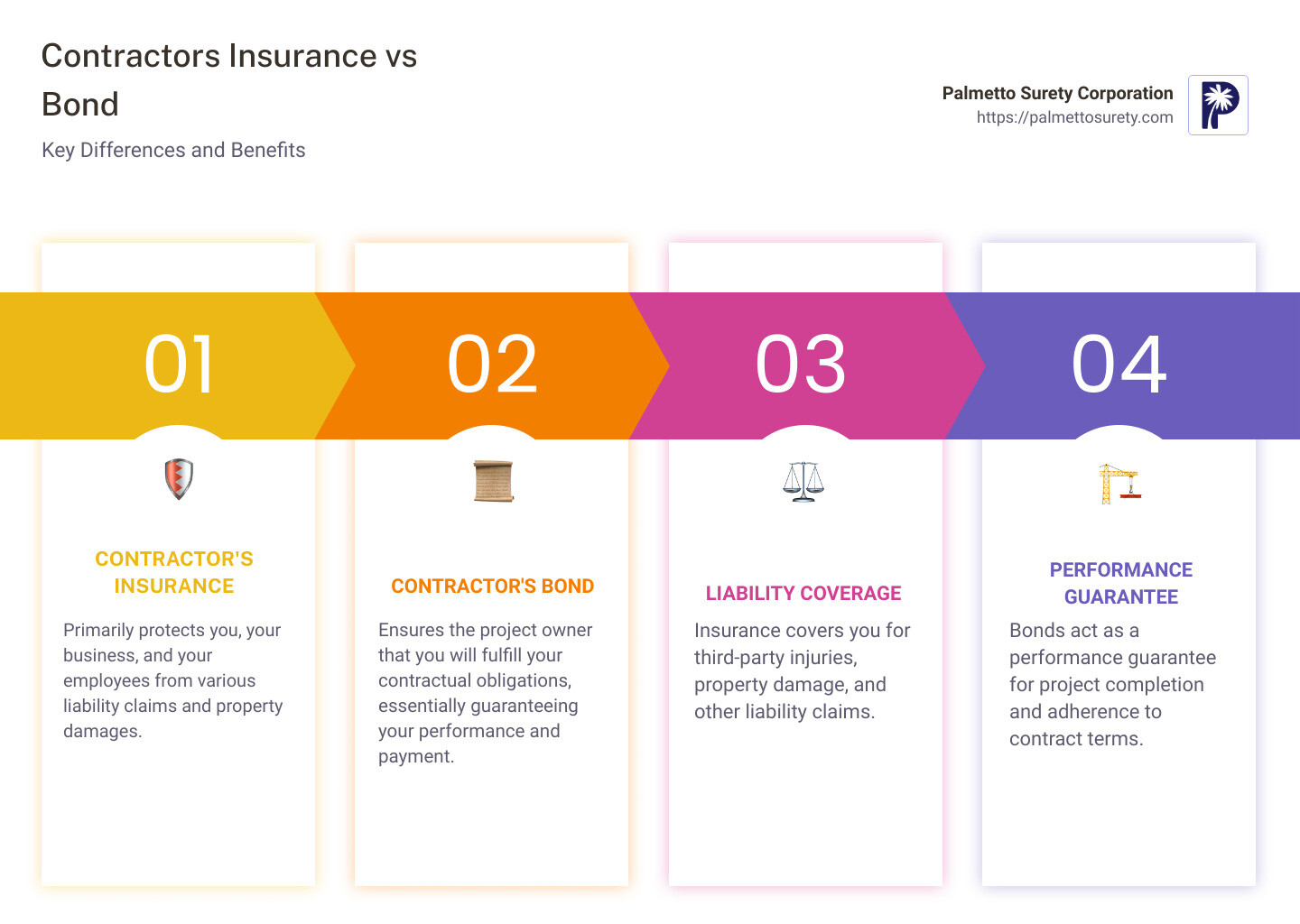
- Contractors Insurance: Primarily protects you, your business, and your employees from various liability claims and property damages.
- Contractors Bond: Ensures the project owner that you will fulfill your contractual obligations, essentially guaranteeing your performance and payment.
I’m Haiko de Poel Jr., and I’ve spent years helping businesses understand their insurance and bond needs as a fractional Chief Marketing Officer. My experience with contractors insurance and bond at Mass Impact and Palmetto Surety Corporation has equipped me with the knowledge to make these topics easy to understand.
Stay tuned to learn more about the vital details and differences between insurance and bonds for contractors.
What is Contractors Insurance?
Contractors insurance is vital for protecting your business from unexpected financial losses. It includes various policies custom to cover different risks involved in construction work. Let’s break down the essential types of insurance every contractor should consider:
General Liability Insurance
General Liability Insurance provides coverage for third-party injuries and property damage. This policy kicks in if someone who isn’t an employee gets hurt or if you accidentally damage someone else’s property on the job.
Example: Imagine a client visits your job site and trips over a loose power cord, injuring themselves. General liability insurance would cover their medical bills and any legal fees if they decide to sue.
Commercial Property Insurance
Commercial Property Insurance protects your tools, equipment, and office space from damage. This includes items you own, rent, or lease.

Example: If a fire destroys your office, this policy helps cover the cost of replacing your office equipment and repairing the damage.
Workers Compensation
Workers Compensation Insurance covers medical bills, wage losses, and death benefits for employees who get injured or sick on the job. This insurance is required in most states if you have employees.
Example: An employee suffers a cut while unloading materials at a job site. Workers compensation will pay for their medical treatment and a portion of their lost wages while they recover.
Builders Risk Insurance
Builders Risk Insurance covers property damage during construction due to theft, vandalism, or natural forces like storms. It’s essential for protecting the materials and structure from start to finish.
Example: A storm damages partially completed construction. Builders risk insurance would cover the cost of repairs and replacement of damaged materials.
Inland Marine Insurance
Inland Marine Insurance covers high-value assets and materials during transportation or temporary storage. It also includes coverage for specialized equipment that general property insurance might not cover.
Example: If your tools are stolen while being transported to a job site, inland marine insurance would cover the loss.

Understanding these coverages ensures you are well-protected against the various risks in the construction industry. Next, let’s dive into what contractor bonds are and how they differ from insurance.
What is a Contractor Bond?
A contractor bond is a type of surety bond used to guarantee that a contractor will fulfill their obligations as outlined in a contract. It involves three main parties: the principal (the contractor or service provider), the obligee (the project owner or client), and the surety provider (the insurance company issuing the bond).
Types of Contractor Bonds
There are three primary types of contractor bonds: construction bonds, license bonds, and fidelity bonds. Each serves a different purpose but all aim to protect the obligee from financial loss.
Construction Bonds
Construction bonds are essential for public projects and are often required by state and federal governments. These bonds ensure that public funds are protected from misuse and that the project will be completed as per the contractual agreement.
Example: If a construction company fails to meet the quality standards or deadlines for a public project, a claim can be made against the bond to cover the financial losses.
Key Points:
– Purpose: Financial protection for public projects.
– State Requirements: Often mandatory for projects over a certain cost threshold.
– Types: Include performance bonds, payment bonds, and bid bonds.
License Bonds
License bonds are required for businesses that need a license to operate, such as plumbers, electricians, and vehicle dealers. These bonds ensure that the licensed business adheres to state regulations and standards.
Example: If a licensed plumber causes damage due to negligence, the license bond can cover the cost of repairs.
Key Points:
– Purpose: Protect customers and ensure compliance with state regulations.
– State Regulations: Mandatory for obtaining a business license.
– Types: Include contractor license bonds and permit bonds.
Fidelity Bonds
Fidelity bonds protect businesses from losses caused by employee misconduct, such as theft or fraud. These bonds are particularly important for companies where employees handle large sums of money or valuable assets.
Example: If an employee embezzles funds from a company, a fidelity bond can compensate for the financial loss.
Key Points:
– Purpose: Protect against employee dishonesty.
– Coverage: Covers theft, fraud, and other misconduct.
– Job Standards: Ensures employees meet ethical and professional standards.
Understanding these types of bonds helps you see how they protect both the client and the contractor in different scenarios. Next, let’s explore the key differences between insurance and bonds.
Contractors Insurance and Bond: Key Differences
Insurance Coverage
Insurance is a contract between the insurer and the policyholder. It provides financial protection for the contractor’s business. If something goes wrong, the insurance company covers the costs.
Here’s how it works:
- Protection: Insurance protects the policyholder (you) from financial losses due to accidents, injuries, or property damage.
- Claims Process: If an event occurs that your policy covers, you file a claim. The insurance company investigates and, if valid, pays the claim.
- Reimbursement: You don’t have to pay the insurer back for covered claims, but you might see higher premiums at your next renewal.
Example: If a client’s property is damaged during a project, your general liability insurance would cover the repair costs.
Bond Coverage
A bond is a three-party agreement between the principal (you), the obligee (your client), and the surety provider (the bond company). It ensures that you fulfill your contractual obligations.
Here’s how it works:
- Protection: Bonds protect the obligee (your client) if you fail to meet the terms of the contract.
- Claims Process: If you fail to complete the work as agreed, the obligee files a claim with the surety provider. The surety investigates and, if valid, pays the claim.
- Reimbursement: Unlike insurance, you must reimburse the surety provider for the claim amount. It’s like a line of credit.
Example: If you don’t finish a project on time, the client can file a claim. The surety provider pays the client, and you must repay the surety.
Key Points:
- Insurance: Direct contract between insurer and policyholder. Protects you from financial losses.
- Bond: Three-party agreement. Protects the client if you fail to meet contract terms. You must repay claims.
Understanding these differences helps you see why having both contractors insurance and bond is crucial for your business.
Why Contractors Need Both Insurance and Bonds
For many contractors, having both insurance and bonds isn’t just a good idea—it’s the law. Depending on your state and the type of projects you undertake, you may be required to have specific types of insurance and bonds to obtain licenses and permits. For example, workers compensation insurance is often mandated for businesses with employees. Similarly, public projects often require contractors to provide various construction bonds like performance bonds and payment bonds.
Financial Protection
Accidents happen. Tools get damaged. Employees get hurt. Without proper insurance, these incidents can drain your finances. General liability insurance can cover costs for third-party injuries or property damage, while commercial property insurance protects your tools and equipment. On the other hand, bonds provide financial protection to your clients. If you fail to complete a project or meet contractual obligations, a bond ensures your client can recover their losses.
Customer Trust
Being both bonded and insured can significantly boost your credibility. Customers feel more secure knowing that if something goes wrong, they have financial recourse. This trust can be a deciding factor when clients choose between you and a competitor who isn’t bonded or insured.
Business Credibility
Having contractors insurance and bond demonstrates professionalism and commitment to quality. It shows that you take your responsibilities seriously and are prepared for unforeseen events. This credibility can make you more competitive, especially for larger projects that require stringent compliance with legal and financial standards.
In summary, both insurance and bonds are essential for legal compliance, financial protection, customer trust, and overall business credibility. Contractors who invest in these protections are better positioned to succeed and grow their businesses.
Frequently Asked Questions about Contractors Insurance and Bond
What is the difference between a contractor being bonded and insured?
Bonded means a contractor has a surety bond. This bond protects the client if the contractor fails to meet their contractual obligations. If a contractor does poor work or doesn’t complete the project, the client can file a claim with the surety company to cover the costs of fixing the issues. However, the contractor must repay the surety company for any payouts.
Insured means a contractor has insurance policies, like general liability insurance. This insurance covers accidental property damage or injuries caused by the contractor’s work. If someone gets hurt or something gets damaged, the insurance company pays for the costs, and the contractor doesn’t have to pay the insurer back.
What is a contract bond in insurance?
A contract bond is a type of surety bond used in construction. It guarantees that a contractor will fulfill their contractual obligations. If the contractor defaults, the bond covers the financial losses. There are several types of contract bonds:
- Bid Bond: Ensures that the winning bidder will sign the contract and provide the required performance and payment bonds.
- Performance Bond: Guarantees that the contractor will complete the project according to the terms of the contract.
- Payment Bond: Ensures that subcontractors and suppliers will be paid for their work and materials.
- Maintenance Bond: Covers workmanship and material defects for a specified period after the project is completed.
What are the four types of bonds in construction?
The four main types of bonds in construction are:
- Bid Bond: This bond ensures that if a contractor’s bid is accepted, they will enter into the contract and provide the necessary performance and payment bonds. If the contractor fails, the bond covers the difference between their bid and the next lowest bid.
- Agreement to Bond: This is a commitment from a surety company to issue the required performance and payment bonds if the contractor is awarded the contract.
- Performance Bond: This bond guarantees that the contractor will complete the project as per the contractual terms. If the contractor defaults, the surety company steps in to complete the project or compensates the project owner.
- Labor and Material Payment Bond: Ensures that the contractor will pay subcontractors, laborers, and suppliers. If the contractor fails to pay, the bond covers the unpaid amounts.
Understanding these bonds and insurance policies is crucial for contractors to protect their business and build trust with clients.
Conclusion
In summary, contractors insurance and bond are essential tools for any construction business. They provide financial protection, legal compliance, and help build trust with clients. While insurance covers accidents and property damage, bonds ensure that contractual obligations are met, protecting the client from poor workmanship or non-compliance.
Palmetto Surety Corporation stands out as a leading provider in this field. We offer quick approval and efficient service, making it easy for contractors to get the coverage they need without hassle. Our advanced underwriting platform simplifies the process, allowing you to focus on your projects with peace of mind.
Whether you’re a small business or a large construction company, having the right insurance and bonds in place is vital. It not only safeguards your business but also improves your credibility and competitiveness.
For more detailed information and to secure your business today, explore Palmetto Surety Corporation.


