


Bail Bonding License: Top 5 Steps for Success in 2024
Understanding the Importance of a Bail Bonding License
If you’re considering a career as a bail bond agent, obtaining a bail bonding license is your first critical step. This license allows you to operate legally within the bail bonds industry, ensuring that those accused of crimes can post bail and await trial while remaining free.
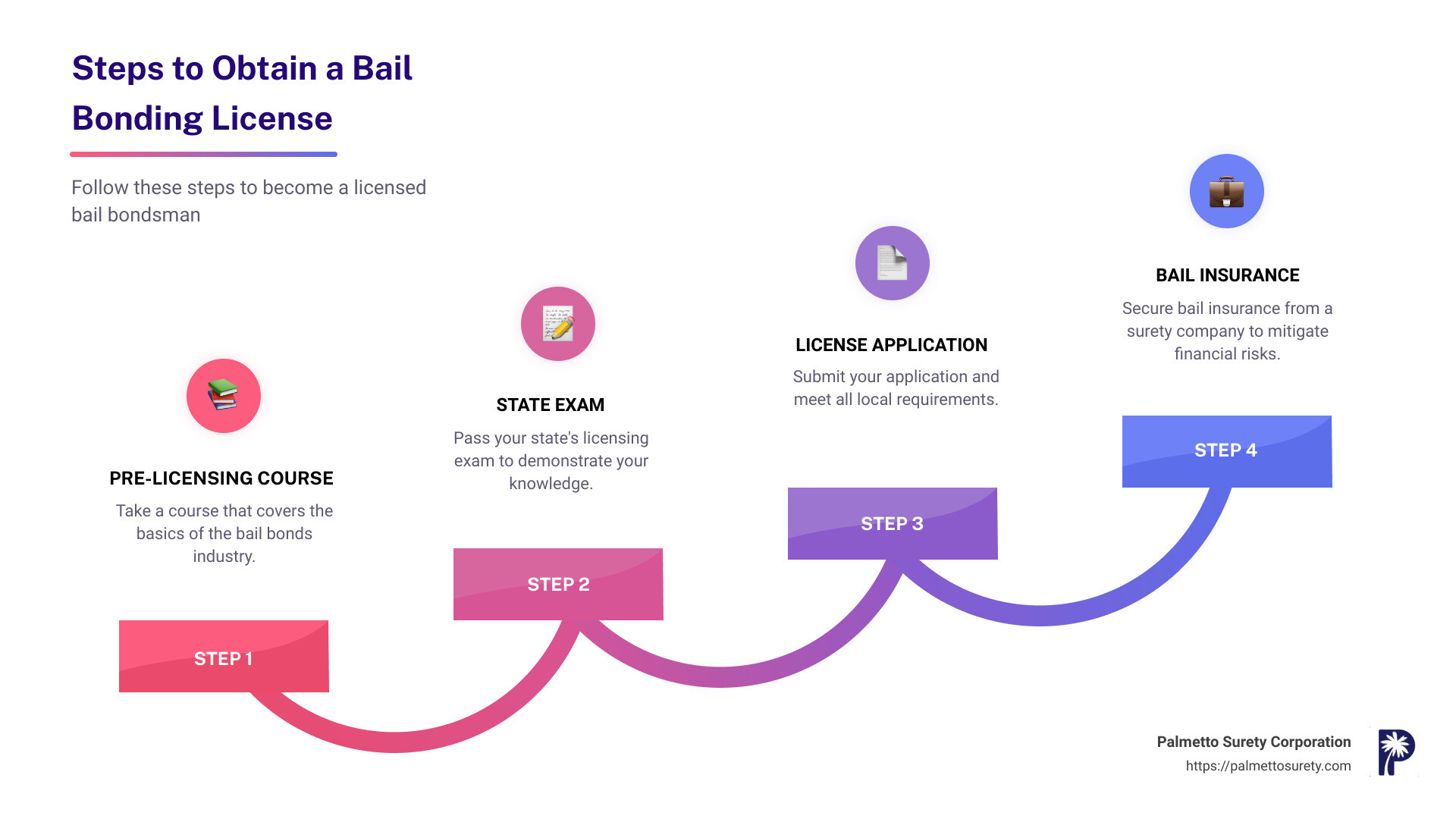
Key Points to Know about Getting a Bail Bonding License:
- Pre-Licensing Course: Start by taking a course to learn the basics about the bail bonds industry.
- State Exam: Pass the state licensing exam that tests your knowledge on bail bond law and procedures.
- License Application: Apply for the state license, ensuring you meet all the local requirements.
- Bail Insurance: Secure bail insurance from a surety company to mitigate financial risks.
Navigating the steps to get your bail bonding license may seem daunting, but knowing the proper procedures and requirements simplifies the process.
I’m Haiko de Poel Jr., and I have experience in marketing strategy and digital transformation at Palmetto Surety Corporation, a leading provider in the bail bonds industry. I’ll guide you through each step, ensuring you understand what’s needed.
Check Local State Regulations and Requirements
Before you start your journey towards obtaining a bail bonding license, it’s crucial to understand the specific regulations and requirements in your state. Each state has its own set of rules, eligibility criteria, and regulatory bodies that oversee the licensing process. Let’s break this down.
States with Restrictions
First, it’s important to know that not all states allow private bail bondsmen. Some have strict regulations or outright bans. As of now, the following states have restrictions:
- Washington D.C.
- Kentucky
- Massachusetts
- Illinois
- Maine
- Wisconsin
- Nebraska
- Oregon
If you reside in one of these states, you might need to explore alternative career options within the legal or insurance fields.
Research Methods
Understanding the local requirements involves a bit of research. Here’s how you can easily find the information you need:

State Websites
Most states have a Department of Insurance or a similar regulatory body that oversees bail bondsmen. Visiting these websites will provide you with the most accurate and up-to-date information.
- Example: If you’re in Virginia, you can visit the Virginia Department of Insurance to get detailed information about bail bonding licenses.
Contact Information
Sometimes, the information on the website might not be clear or complete. In such cases, it’s a good idea to contact the department directly. Look for a “Contact Us” section on the website, which usually provides phone numbers and email addresses.
Google Search Tips
If you’re having trouble finding the right portal, a simple Google search can be very effective. Use keywords like “bondsman requirements + [your state]” to find relevant pages quickly.
Example Search Query: “bondsman requirements Texas”
Eligibility Criteria
Each state has its own set of eligibility criteria that you must meet to qualify for a bail bonding license. Common requirements include:
- Age: Typically, you must be at least 18 years old.
- Residency: You usually need to be a U.S. citizen and a resident of the state where you are applying.
- Criminal History: Most states disqualify individuals with felony convictions or misdemeanors involving moral turpitude.
- Education: A high school diploma or equivalent is often required.
- Training: Some states mandate completion of a pre-licensing course.
Example: In Texas, you must submit a detailed application, including personal information, financial statements, and letters of recommendation. You also need to provide fingerprints and a photograph.
Navigating these requirements might seem complex, but breaking it down step by step makes it manageable. Always start by checking your local state regulations to ensure you’re on the right path from the beginning.

Next, let’s define your career goals to determine the best path forward in the bail bondsman industry.
Define Your Bail Bondsman Career Goals
Before jumping into the bail bondsman industry, it’s crucial to define your career goals. Here’s a breakdown to help you decide whether to seek employment or start your own agency.
Employment Options
Starting with a Job: If you’re new to the bail bond industry, seeking employment might be the best first step. Working for an established bail bond agency can provide valuable hands-on experience. You’ll learn the ins and outs of the business, understand client interactions, and navigate the legal landscape more effectively.
Benefits:
– Mentorship: Gain insights from experienced professionals.
– Lower Initial Costs: No need to immediately invest in office space or marketing.
– Networking: Build connections in the industry.
Starting an Agency
Launching Your Own Business: If you have some experience or are confident in your entrepreneurial skills, starting your own bail bond agency can be rewarding but requires more preparation and investment.
Steps to Start an Agency:
1. Register Your Business: Form an LLC or corporation with your Secretary of State.
2. Tax Compliance: Obtain a Tax Identification Number from the IRS.
3. Office Space: Secure a location for your business operations.
4. Surety Bonds: Obtain a suitable surety bond to back your bail bonds.
5. Licensing: Ensure all business licenses and permits are in place.
Cost Considerations:
– Initial Setup: Costs for office space, surety bonds, and business registration.
– Ongoing Expenses: Marketing, rent, utilities, and employee salaries.
Career Planning
Long-Term Goals: Whether you choose employment or starting an agency, have clear long-term goals. Do you see yourself expanding to multiple locations? Do you aim to specialize in high-value bonds?
Flexibility: The bail bondsman career allows for flexibility. Many start with employment and transition to owning an agency once they have enough experience and capital.
By carefully considering your career goals and the pros and cons of each path, you can make an informed decision that sets you up for success in the bail bondsman industry.
Attend Bondsman Training and Pass Examination
Bondsman Education Requirements
Before you can get your bail bonding license, you need to complete a training course. Each state has its own rules about this.
In some states, like Texas, you must take at least 8 hours of classroom instruction. This training covers bail bond laws, practices, and what a bail bondsman does. Even if your state doesn’t require it, taking a course can help you pass the exam and give you a strong foundation.
Cost: Training courses can cost around $500. This investment is worth it for the valuable knowledge you’ll gain.
Where to Find Courses: Many courses are available online or at local community colleges. Always choose a state-approved course to ensure it meets licensing requirements.
Examination Overview
After completing the training, you must pass a state exam. Here’s what you need to know:
- Format: The exam usually has up to 100 multiple choice questions.
- Time Limit: You’ll have 1-2 hours to complete the test.
- Passing Score: You need at least 70% to pass.
- Cost: The exam fee ranges from $40 to $80.
- Retake Policy: If you fail, you may have to wait up to a year to retake it.
Testing Centers: Exams are typically held at qualified centers like Pearson Vue.
Preparation Tips:
– Study Guides: Use study guides and practice tests.
– Review Classes: Attend review classes if available.
– Stay Updated: Laws can change, so make sure your study materials are current.
By completing the required training and passing the exam, you’ll be one step closer to getting your bail bonding license.
Apply and Pay for Your Bail Bonding License
Application Requirements
Once you’ve passed your exam, it’s time to apply for your bail bonding license. This process can vary by state, but generally, you will need to:
- Submit an Application Form: Most states offer digital application forms on their Department of Insurance or criminal justice websites.
- Include Test Scores: Attach proof of your passing exam scores.
- Provide Financial Statements: Submit a complete, sworn financial statement.
- Letters of Recommendation: Include three letters from reputable individuals who have known you for at least three years. These letters should confirm your honesty and competency.
- Photograph and Fingerprints: Provide a recent photograph and a set of fingerprints taken by a designated law enforcement officer.
- Declaration of Compliance: Sign a declaration that you will adhere to state laws and board rules.
- Additional Documents (if applicable): If you have been licensed in another county, you must list those counties and disclose any unpaid judgments related to bail bonds.
Submission Methods: Applications must usually be submitted in person at a designated office. Ensure you check your state’s specific submission requirements.
License Costs and Renewal
The cost of obtaining a bail bonding license varies by state, generally ranging from $50 to $700. For example, Texas requires a $500 filing fee.
Renewal Periods: Licenses typically need renewal every one to three years. Renewal applications must often be submitted at least 31 days before the license expires.
Continuing Education: Some states require continuing education classes, usually around six hours, to qualify for renewal. These classes help ensure you stay updated on any changes in laws and best practices.
Processing Times: Once your application is submitted, it usually takes 2-3 weeks to receive your license by mail, provided there are no delays.
By following these steps and ensuring all required documents are in order, you’ll be well on your way to securing your bail bonding license.
Frequently Asked Questions about Bail Bonding License
What Can Stop Me from Being a Bondsman?
Several factors can disqualify you from obtaining a bail bonding license. Here are some key restrictions:
- Criminal History: If you have a recent criminal record, especially involving felonies or misdemeanors related to moral turpitude, you may be disqualified.
- Age: You must be at least 18 years old.
- Residency: Only U.S. citizens or legal residents can apply.
- Education: A high school diploma or equivalent is usually required.
- Exam Failure: Failing the bondsman exam can delay your application. Some states may require you to wait a year before retaking the exam.
Is Being a Bail Bondsman Profitable?
The profitability of being a bail bondsman varies based on several factors:
- Employment vs. Agency: Working for an established bail bond company usually offers a stable salary but limits your earning potential. Starting your own agency allows you to set your fees, potentially leading to higher earnings.
- Experience: More experienced bondsmen can charge higher fees and handle more complex cases, increasing their income.
- Average Earnings: Generally, you can expect to earn between $50,000 to $80,000+ per year, depending on your experience and whether you run your own agency.
How Long Does the Licensing Process Take?
The timeline for obtaining your bail bonding license involves several steps:
- Application Review: After submitting your application, the review process can take a few weeks.
- Processing Times: Typically, you should receive your license by mail within 2-3 weeks, provided all your documents are in order and there are no delays.
- License Issuance: Once approved, your license will be mailed to you, allowing you to start your career as a bail bondsman.
Understanding these common questions can help you navigate the process of becoming a licensed bail bondsman. Next, let’s dive into the application requirements and associated costs.
Conclusion
Becoming a licensed bail bondsman is a rewarding but complex journey. From understanding state-specific regulations to completing the necessary training and passing the exam, each step is crucial. This guide has walked you through the essentials to help you navigate the process with confidence.
At Palmetto Surety Corporation, we are committed to supporting you every step of the way. With over twenty years of experience, we provide exceptional customer support and cutting-edge technology to make the process of obtaining your bail bonding license as smooth as possible. Our services are designed to meet your needs, whether you’re starting your own agency or joining an existing one.
Final Thoughts
Obtaining a bail bonding license opens the door to a career that is both challenging and fulfilling. It requires dedication, but with the right resources and support, you can succeed. The key to success lies in thorough preparation and understanding the requirements specific to your state.
Contact Information
If you have any questions or need further assistance, don’t hesitate to reach out to us at Palmetto Surety Corporation. We’re here to help you achieve your career goals in the bail bonding industry.
Phone: 866-372-0827
Website: Palmetto Surety Corporation
Thank you for choosing Palmetto Surety Corporation. We look forward to supporting your journey to becoming a licensed bail bondsman.


