


Introduction to Transfer Bonds
Navigating the complexities of the legal system can feel like an uphill battle, especially when you’re dealing with a labyrinth of terms and procedures. Is acquiring a transfer bond one of those challenges presently on your plate? We’re here to make the process easier for you. Welcome to your beginner’s guide to understanding transfer bonds in South Carolina.
Transfer bonds, in a nutshell, are bail bonds obtained for individuals who are arrested but detained in another state. As experts in the field, we at Palmetto Surety Corporation know that these bonds are an essential tool for ensuring the defendant’s return to the arresting state for court proceedings.
Quick Answer: Transfer Bonds How-to
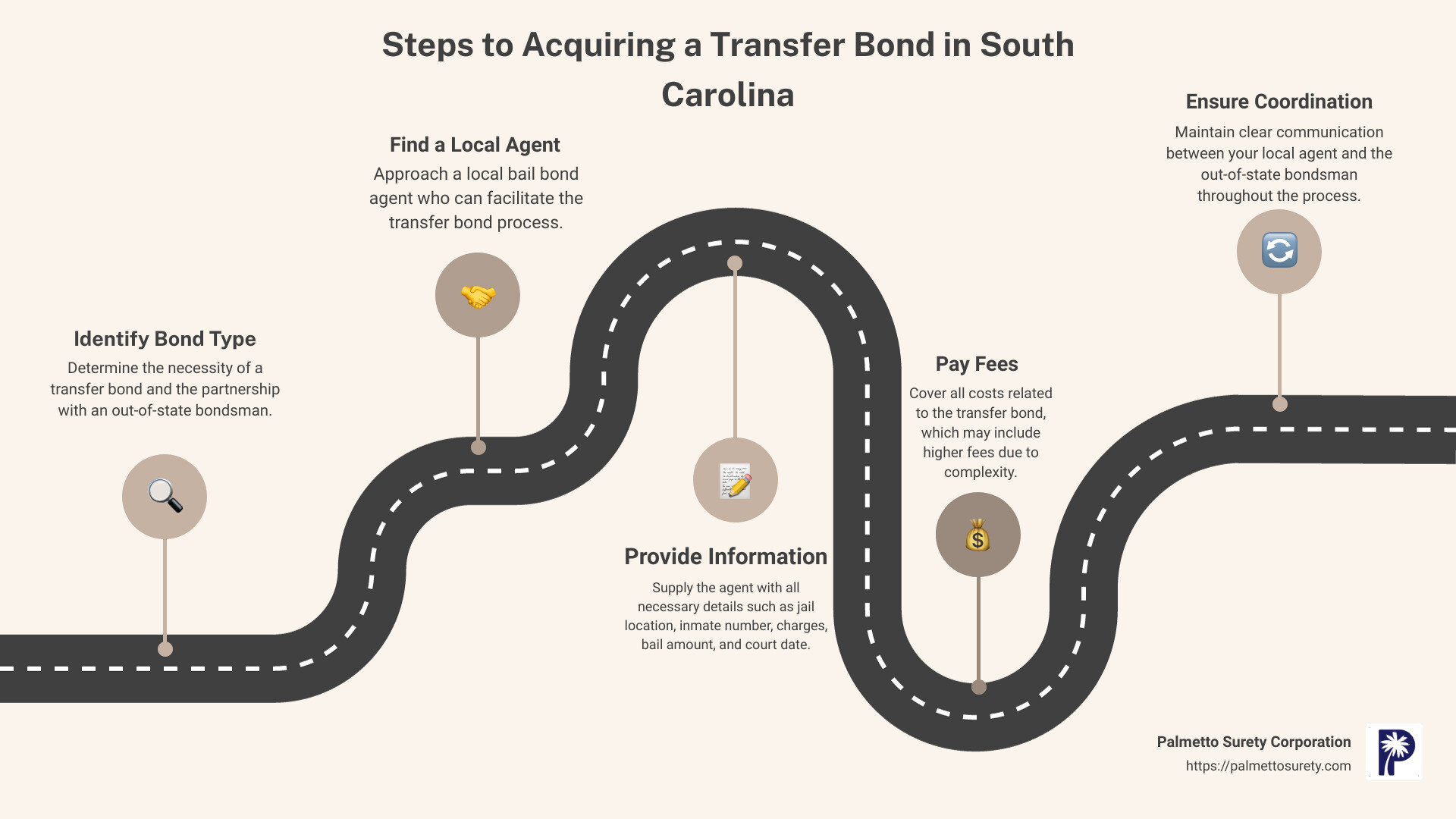
- Identify the type of bond needed. Usually, a local bond company must partner with an out-of-state bondsman to facilitate a transfer bond.
- Approach a local agent and provide all necessary information for bond application.
- Pay fees for the transfer bond. Transfer bonds typically cost more than standard bonds, due to the logistical complexities involved.
- Ensure coordination between the local agent and out-of-state agent is smooth throughout the process.
It’s imperative to comprehend how transfer bonds can help in legal matters outside your state. This alleviates unnecessary worry and helps you navigate the procedure with confidence.
In the subsequent sections, we’ll delve deeper into transfer bonds in South Carolina, helping you understand each step of the process and your responsibilities along the way. We stand ready to guide you each step of the way with our industry-leading knowledge and expertise. Let’s begin this informational journey together.
Understanding the Bail Bond Process in South Carolina
In South Carolina, the bail bond process is a legal procedure that ensures the appearance of a defendant in court when charged with a crime. This process is vital because it allows the accused to maintain their freedom while their case is pending in the court system.
How Bail Bonds Work in South Carolina
The bail bond process in South Carolina begins when a defendant is arrested and a bond court judge sets their bail amount. This amount is determined based on a variety of factors, including the severity of the crime, the defendant’s previous criminal history, and their flight risk.
Once the bail amount is set, the defendant or a co-signer has the option to pay the full bail amount directly to the court, or they can seek the services of a bail bondsman. A bail bondsman is a professional who provides a guarantee to the court that the defendant will appear at all required court dates. In exchange for this guarantee, the bail bondsman typically charges a fee, usually around 10% of the total bail amount.
If the defendant fails to appear in court, the bail bondsman is responsible for paying the full bail amount to the court. However, the co-signer (typically a family member or friend of the defendant) is also held financially responsible and must repay the bondsman the full bail amount.

Role of a Bail Bondsman in South Carolina
As a bail bondsman, our role at Palmetto Surety Corporation is to assist individuals in navigating the complicated legal process and ensuring their right to freedom until proven guilty. We provide financial assistance by posting the bond on behalf of the defendant, allowing them to be released from jail until their court date.
In addition to posting bail, we also provide support and guidance throughout the legal process. We maintain contact with the defendant to ensure they understand their court obligations and help them stay on track with court dates and other related matters. We also work with the co-signer to ensure they understand their responsibilities and potential financial obligations should the defendant fail to appear in court.
We are licensed professionals who abide by strict regulations and ethical standards. We continually enhance our knowledge and skills to provide the best possible service to our clients.
In the next section, we will delve into the specific process of transferring a bail bond, helping you understand each step and what role we play in this process. At Palmetto Surety Corporation, we’re here to guide you through every step of the bail bond process, including transfer bonds in South Carolina, USA.
The Process of Transferring a Bail Bond
Now that we’ve gained a basic understanding of bail bonds in South Carolina, let’s delve into the specific process of transferring a bail bond.
Steps Involved in Transferring a Bail Bond
The transfer bond process can be a bit complex. However, with the assistance of a reputable surety company like us at Palmetto Surety Corporation, it can be simplified into manageable steps:
-
Initial Contact: The process begins when a family member or loved one of the defendant contacts us, requesting a transfer bond.
-
Information Collection: We will collect all necessary details about the case, including the jail location, inmate number, charge, bail amount, and court date.
-
Establishing a Local Agent: We will coordinate with a local agent in the state where the defendant is being held.
-
Processing the Paperwork: The local agent will then submit the necessary paperwork and handle the financial aspects of the bail bond.
-
Release of the Defendant: Once the bond is approved and posted, the defendant is released and can return to South Carolina.
Throughout the process, we ensure that all legal obligations are met and that the process is handled as swiftly as possible.
Role of a Local Agent in Transfer Bonds
A local agent plays a critical role in the transfer bond process. This agent acts as a representative of the defendant in the state where they are currently detained. They are responsible for submitting the necessary paperwork and handling the financial aspects of the bail bond.
Working with a local agent is beneficial because they have a thorough understanding of the local laws and regulations, ensuring that the process is carried out correctly and efficiently.
Responsibilities of an Out-of-State Bondsman
The out-of-state bondsman, in this case us at Palmetto Surety Corporation, coordinate with the local agent to ensure the process runs smoothly. We take responsibility for the overall process, including the financial aspect of the bail bond.
In addition, we have an obligation to the court to ensure that the accused will appear for all court dates. If the defendant fails to comply with the conditions of their bail, we are responsible for handling reports of noncompliance.
The process of transferring a bail bond is a coordinated effort between us, the local agent, and the family of the defendant. With our expertise in handling transfer bonds in South Carolina, USA, we are well-equipped to guide you through this process, ensuring a swift and smooth release for your loved one.
Key Information Needed for Transfer Bonds
When applying for transfer bonds in South Carolina, USA, there are some key pieces of information that we at Palmetto Surety Corporation need to ensure a successful process. Let’s go through these important details one by one.
Details about the Jail Location
Knowing the exact location of the jail where the defendant is detained is crucial. This information includes the name of the jail, its full address, and contact number. The reason we need this is to communicate effectively with the jail officials and expedite the release process.

Detainee or Inmate Number
Another vital piece of information is the detainee or inmate number. This unique identifier is assigned to the defendant upon booking into the jail. It allows us to locate the defendant quickly within the correctional system, speeding up the process of posting the bail bond.
Charge and Bail Amount
Knowing the exact charges against the defendant and the set bail amount is also necessary. This information helps us determine the type and size of the bond required. The severity of the charges often influences the bail amount.
Court Date
Finally, we need to know the defendant’s court date. This is the date when the defendant is required to appear in court. It’s an essential piece of information as missing a court date can result in forfeiture of the bail bond and additional legal consequences for the defendant.
At Palmetto Surety Corporation, we’re committed to providing our clients with a seamless experience during the transfer bond process. Our team of experts like Haiko de Poel Jr, are always ready to assist and provide guidance every step of the way. For more information about the process, visit our comprehensive guide on our website.
The next section will cover the costs and responsibilities associated with transfer bonds in South Carolina, USA, so stay tuned!
Costs and Responsibilities Associated with Transfer Bonds
Understanding the obligations and costs related to transfer bonds in South Carolina, USA, is crucial for all parties involved. This knowledge ensures the smooth operation of the transfer bond process and guarantees that all obligations are met quickly and efficiently.
Transfer Bond Execution Fee
The first financial aspect to consider in a transfer bond process is the execution fee. This fee is paid to the bail bond company for arranging the bond and initiating the out-of-state release. The cost can vary depending on the company and the specific circumstances of the case. We at Palmetto Surety Corporation pride ourselves on offering affordable services and flexible payment plans.
Responsibilities of the Family Member Applying for the Bond
A significant part of the transfer bond process falls on the family member applying for the bond. Similar to surety bonds, they are required to submit the necessary paperwork and assume full responsibility for the accused while they are out on bail. This includes ensuring the accused follows all the conditions set by the court and attends all court appearances.
Responsibilities of the Bail Bond Company
The bail bond company, such as Palmetto Surety Corporation, also plays a crucial role in the transfer bond process. They are responsible for initiating the out-of-state release and handling the financial aspect of the bail bond. This includes ensuring the bond is paid in full and managing any potential risks.
At Palmetto Surety Corporation, we are dedicated to providing reliable and respectful service each time. With our 16 years of experience, we know exactly how to handle transfer bonds quickly and efficiently. With us, you can rest assured that all aspects of the transfer bond process will be handled professionally and in a timely manner.
Join us in the next section, where we’ll delve into the legal obligations and requirements for bail bond licensees in South Carolina.
Legal Obligations and Requirements for Bail Bond Licensees in South Carolina
To ensure the highest standards of professionalism and accountability, bail bond licensees in South Carolina must adhere to specific legal obligations and requirements. These requirements are in place to protect all parties involved in the bail bond process. In this section, we’ll go over these obligations and requirements in detail.
Handling Reports of Noncompliance with Defendants’ Bail Conditions
As a bondsman, it’s crucial to handle reports of noncompliance diligently. If a defendant violates the terms and conditions of their bail bond, bondsmen are expected to act swiftly and in accordance with the law. Under the S.C. Code Ann. § 38-53-50, bondsmen who ignore or disregard such reports risk having their bonds estreated by the court and facing administrative disciplinary action. As our expert Haiko de Poel Jr emphasizes, ensuring compliance with bail conditions protects the bondsman, the defendant, and the broader community.
Pre-Licensing Education Requirements for Bondsmen
Before becoming a professional bondsman, surety bondsman, or runner, you must complete at least thirty hours of education in subjects pertinent to the duties and responsibilities of a bondsman. This education will cover all laws and regulations related to being a professional or surety bondsman or runner, as outlined in Section 38-53-85(A)(1) of the South Carolina Code of Laws. Such courses are offered by approved providers.
Initial Application Requirements for Professional Bondsmen
After completing your pre-licensing education and passing the Bondsman exam, you are ready to apply for your license. The application process includes the payment of an initial licensing fee of $400 via NIPR. You will also need to get your fingerprints taken through IdentoGo. Once the testing provider has uploaded your exam results to our system, you can apply and pay the initial licensing fee.
Renewal Application Requirements for Bondsmen
Maintaining your bondsman license involves a renewal process. To renew your license, you are required under code 38-53-90 to undergo a state and federal background check. This requirement must be completed no later than May 31, as indicated in our South Carolina Renewals post.
By following these legal obligations and requirements, you can ensure that your practice as a bail bond licensee in South Carolina is not only successful but also operates within the bounds of the law. The next section will wrap up our guide on transfer bonds in South Carolina, so stay tuned!
Conclusion: Importance of Understanding Transfer Bonds in South Carolina
Let’s recap the main takeaways from our guide.
Transfer bonds are a critical tool for ensuring that a loved one detained out-of-state can be released promptly. The process entails an in-state bail bondsman working with an out-of-state bail bondsman to secure the defendant’s release. The family member applying for the bond and the initiating bail bond company bear the responsibility for the financial aspect of the bail bond.
In South Carolina, obtaining a bail bond involves a series of steps. They include understanding the type of bond required, filling out the bond application, and paying the necessary fees. The process is streamlined and made more efficient with the help of experienced bail bond companies like ours, Palmetto Surety Corporation.
Final Thoughts on Transfer Bonds in South Carolina
Understanding transfer bonds in South Carolina is crucial, particularly if you find yourself in a situation where a loved one is detained in another state. The process might be more complex and time-consuming compared to local bail bonds, but it’s a necessary measure to ensure the defendant’s freedom while awaiting trial.
Our team at Palmetto Surety Corporation is committed to providing our clients with efficient and reliable service. We’re here to guide you through the complexities of the transfer bond process, helping you reunite with your family members as soon as possible.
A knowledgeable and experienced bail bond company is your best ally when dealing with transfer bonds. It is our hope that this guide has equipped you with the necessary information to navigate this process with confidence.
For a comprehensive understanding of surety bonds and the services we provide, browse through our website. Our team of experts is always prepared to lend a hand and address your queries.

Knowledge is power, and understanding the intricacies of transfer bonds in South Carolina puts you in a position of power.


