


Bid and Performance Bonds: Top 5 Essential Insights 2024
Introduction
When navigating the construction industry, bid and performance bonds are essential tools. These bonds provide a safety net for project owners, ensuring that contractors fulfill their commitments and complete projects on time.
Quick Answer:
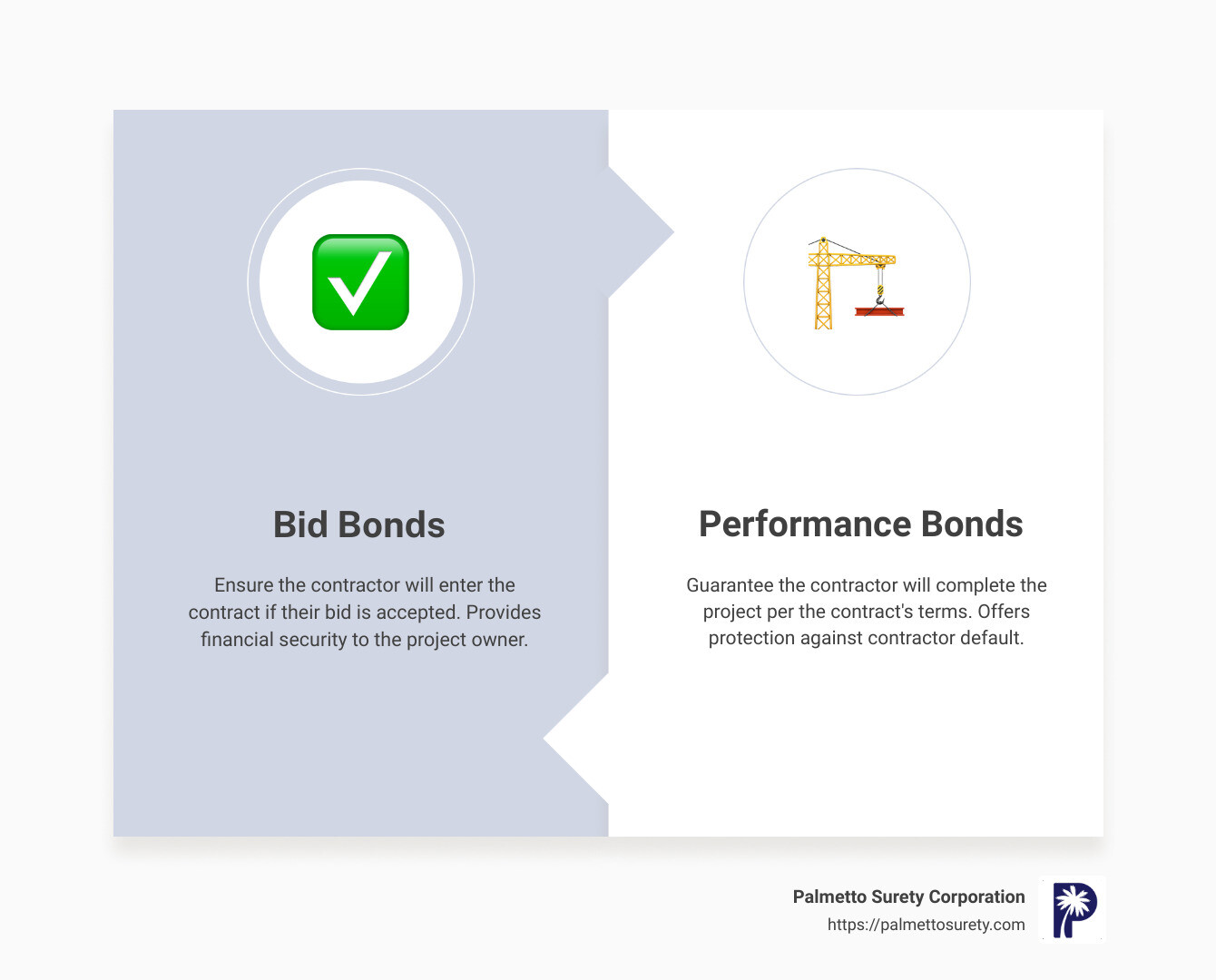
- Bid Bonds ensure the contractor will enter the contract if their bid is accepted.
- Performance Bonds guarantee the contractor will complete the project per the contract’s terms.
In construction, every project carries risks, from a contractor backing out after winning a bid to failure in completing the work. That’s where bid and performance bonds come in. These bonds protect project owners and instill confidence in the contractor’s ability to deliver.
What are Bid and Performance Bonds?
Bid Bonds and Performance Bonds are types of Surety Bonds used in the construction industry. They protect project owners by ensuring contractors fulfill their obligations.
Bid Bonds
A Bid Bond is submitted with a contractor’s bid for a project. It guarantees that the contractor will enter into the contract and provide a Performance Bond if their bid is accepted. Typically, bid bonds are about 10% of the bid amount.
Why are Bid Bonds Important?
- Assurance: They assure project owners that the contractor is serious and capable.
- Financial Protection: If the winning contractor fails to honor the bid, the owner can claim the bid bond amount to cover the difference between the first and second bidder.
Example:
Imagine a contractor bids on a government project and wins. If they refuse to sign the contract, the project owner can claim the bid bond to cover the cost of hiring the next lowest bidder.

Performance Bonds
A Performance Bond guarantees that the contractor will complete the project according to the terms of the contract. These bonds are usually 10% to 20% of the contract amount and provide financial protection if the contractor defaults.
Why are Performance Bonds Important?
- Project Completion: Ensures the project is completed as per the agreed terms.
- Risk Mitigation: Reduces the risk of financial loss for the project owner.
Example:
If a contractor fails to finish a project, the bond company will either complete the project or compensate the owner up to the amount of the bond.
Surety Bonds
Both bid and performance bonds fall under the broader category of Surety Bonds. A surety bond is a three-party agreement between:
- Principal: The contractor who must perform the obligation.
- Obligee: The project owner who needs the protection.
- Surety: The bond company providing the financial guarantee.
Contract Bonds
Contract Bonds include both bid and performance bonds and are essential in construction contracts. They ensure that contractors are financially capable and committed to completing projects.
Key Takeaways:
- Bid Bonds ensure contractors enter into the contract if their bid is accepted.
- Performance Bonds guarantee project completion per contract terms.
- Surety Bonds are a three-party agreement providing financial security.
- Contract Bonds encompass various bonds, including bid and performance bonds.
Understanding bid and performance bonds can help you navigate construction projects with confidence. These bonds provide a safety net, ensuring projects are completed on time and to the required standards.

Next, we’ll dive into the key differences between bid and performance bonds, helping you understand their unique roles in construction projects.
Key Differences Between Bid and Performance Bonds
While both bid bonds and performance bonds are crucial in the construction industry, they serve different purposes and offer unique protections. Understanding these differences can help you manage your projects more effectively.
Bid vs. Performance Bonds
Bid Bonds are submitted during the bidding process. They guarantee that if a contractor wins the bid, they will enter into the contract and provide a performance bond. This protects the project owner from the risk of a contractor backing out after being awarded the project.
Performance Bonds, on the other hand, come into play after the contract is awarded. They guarantee that the contractor will complete the project according to the terms and conditions. This protects the project owner from financial loss if the contractor fails to fulfill their obligations.
Scope and Coverage
Scope:
– Bid Bonds: Focus on the bidding phase, ensuring the contractor will honor their bid.
– Performance Bonds: Cover the entire project duration, ensuring completion per contract terms.
Coverage:
– Bid Bonds: Typically cover about 10% of the bid amount. This is intended to cover the difference between the contractor’s bid and the next lowest bid if the contractor fails to honor their bid.
– Performance Bonds: Generally cover 100% of the contract amount. This ensures that the project owner can hire another contractor to complete the work if the original contractor defaults.
Project-Specific vs. Multiple Projects
Project-Specific:
– Bid Bonds: Are specific to a single project bid. Each new bid will require a new bid bond.
– Performance Bonds: Are also specific to a single project. They guarantee the completion of that particular project.
Multiple Projects:
– For ongoing relationships or multiple projects, contractors might need to secure multiple bonds. Each project will typically require its own set of bid and performance bonds, ensuring each project is individually protected.
Practical Example
Imagine a contractor bidding on a government project. They submit a bid bond to assure the project owner they will enter into the contract if selected. Once awarded the contract, they provide a performance bond to guarantee the project’s completion. If the contractor fails at any stage, these bonds provide financial security to the project owner, covering the costs of hiring another contractor or any other financial losses.
Understanding these key differences helps ensure you are adequately protected at every stage of your construction projects.
Next, we’ll explore the role of bid and performance bonds in construction projects and how they provide financial protection and risk management.
The Role of Bid and Performance Bonds in Construction Projects
Bid and performance bonds play a crucial role in the construction industry, providing multiple layers of security and assurance for project owners. Let’s break down their key roles:
Financial Protection
Bid and performance bonds offer significant financial protection to project owners. These bonds ensure that if a contractor fails to meet the terms of the contract, the owner won’t suffer a financial loss. For instance, if a contractor defaults, the surety bond company steps in to cover the costs of completing the project. This might involve hiring a new contractor or providing the necessary funds to finish the work.
Project Completion Guarantee
One of the primary functions of performance bonds is to guarantee the completion of a project. This means that the project owner can be confident that the work will be finished according to the agreed terms. If the original contractor cannot complete the job, the surety bond company will find another contractor to do so or compensate the owner up to the bond amount.
Risk Management
In the inherently risky construction industry, bid and performance bonds are essential tools for managing risk. They ensure that only qualified contractors, who have been vetted for their character, capacity, and capital, are allowed to bid on and undertake projects. This reduces the likelihood of project delays, financial losses, and other issues that can arise from contractor default or incompetence.
Owner Assurance
For project owners, having bid and performance bonds in place provides a significant level of assurance. It shows that the contractor is serious about their bid and capable of completing the project. This assurance is especially important for government contracts and large private projects, where the stakes are high, and the potential for financial loss is significant.
In summary, bid and performance bonds are indispensable in ensuring financial protection, guaranteeing project completion, managing risks, and providing assurance to project owners. These bonds make it possible for construction projects to proceed smoothly and confidently, knowing that there are safeguards in place to handle any potential issues.
Next, we’ll delve into how to obtain these bonds, including the criteria and processes involved.
How to Obtain Bid and Performance Bonds
To obtain bid and performance bonds, you need to follow a specific process and meet certain criteria. Here’s a clear guide to help you understand the steps involved.
Surety Bond Facility
First, establish a Surety Bond Facility. This facility allows contractors to bid on projects requiring bid and performance bonds. It sets job size limits and provides the necessary bonds for various contracts throughout the year.
Working Capital Loan Guarantee
For U.S. exporters, obtaining a bond can be challenging due to the need for cash collateral. The EXIM’s Working Capital Loan Guarantee can help. This guarantee provides assurance to your lender, enabling them to issue a standby letter of credit for a bid or performance bond. This support can be the key to winning international contracts.
Underwriting Criteria
To qualify for bid and performance bonds, you must meet specific underwriting criteria. These include:
- Character: Do you have a good track record, solid references, and integrity?
- Capacity: Do you have the skills, experience, and knowledge to perform the contract? Have you completed similar projects before?
- Capital: Do you have the financial strength and working capital to complete the project and support other ongoing projects?
Application Process
The application process for obtaining bid and performance bonds involves several steps:
- Complete and Sign the Contractor’s Questionnaire: This document provides detailed information about your business and project experience.
- Submit Bond Request and Contract Documents: Provide the bond request along with all relevant contract documents.
- Provide Financial Statements: Include your most recent business financial statements and a current personal financial statement.
For emerging contractors, the process can be simplified using systems like First Bond. This system makes it easier to meet financial requirements and reduces the paperwork needed for the application.
By following these steps and meeting the necessary criteria, you can secure the bid and performance bonds required for your construction projects.
Next, we’ll answer some common questions about these bonds, including the differences between various types of bonds.
Common Questions About Bid and Performance Bonds
What is the difference between a surety bond and a performance bond?
A surety bond is a broad term that refers to a three-party agreement involving the principal (the contractor), the obligee (the project owner), and the surety (the bond issuer). Surety bonds cover various obligations, from contract performance to payment of suppliers.
A performance bond, on the other hand, is a specific type of surety bond. It guarantees that the contractor will complete the project as per the terms of the contract. If the contractor fails, the surety company steps in to either complete the project or compensate the project owner.
In short, all performance bonds are surety bonds, but not all surety bonds are performance bonds.
What is the difference between supply bond and performance bond?
A supply bond ensures that a supplier will deliver the promised materials or equipment according to the contract terms. It protects the project owner from losses if the supplier fails to fulfill their obligations.
A performance bond guarantees that the contractor will complete the construction project according to the contract terms. This bond covers the entire scope of the project, including labor, materials, and workmanship.
While both bonds provide protection, a supply bond focuses on the delivery of materials, and a performance bond covers the completion of the entire project.
What is the difference between advance payment bond and performance bond?
An advance payment bond protects the project owner if a contractor fails to fulfill their obligations after receiving an advance payment. It ensures that the advance payment will be returned if the contractor does not deliver as agreed.
A performance bond guarantees the completion of the project according to the contract terms. It provides financial protection to the project owner if the contractor fails to complete the work.
The key difference is that an advance payment bond secures the project owner’s upfront payment, while a performance bond ensures the overall completion of the project.
Conclusion
In the complex world of construction, bid and performance bonds are essential tools for ensuring project success and financial security. These bonds not only protect project owners from financial loss but also provide contractors with a way to demonstrate their reliability and commitment.
At Palmetto Surety Corporation, we understand the intricacies and importance of these bonds. With over two decades of experience, we have streamlined the process of obtaining surety bonds, making it easier for contractors to meet bond requirements and secure their projects.
Our comprehensive approach includes:
- Technology: Our state-of-the-art platform allows you to purchase, print, and manage your surety bonds effortlessly.
- Support: Our dedicated support team is available 24/7 to assist with any questions or concerns.
- Underwriting: We offer expert underwriting services to ensure you get the bond that fits your needs.
We invite you to explore our Surety Bonds page to learn more about how we can help you secure the bonds you need for your construction projects. With Palmetto Surety Corporation, you can focus on what you do best—building—while we handle the rest.

Ready to get started? Contact us today to find out how we can assist you with your bid and performance bonds. Together, we can build a future of success and security.


