Georgia Surety Bond Requirements: 2024 Guide to Compliance
Introduction
Georgia surety bonds are crucial for many businesses. Understanding them helps ensure compliance and smooth operation. In this guide, we’ll explain the roles of the Obligee, Principal, and Surety, and why these bonds are important.
Georgia surety bond requirements can seem complex, but they’re essential for many professionals and businesses operating in the state. Here’s the quick rundown:
- Principal: The person or business needing the bond.
- Obligee: The entity (often a government organization) requiring the bond.
- Surety: The company that provides the bond.
In Georgia, surety bonds operate as legally binding agreements between these three parties. Their purpose is to ensure the principal follows the laws and regulations tied to a specific task, providing assurance to the obligee that the job will get done correctly.
Surety bonds come in many types, from construction and commercial bonds to court and license/permit bonds. Government contracts, in particular, often require these bonds to guarantee performance and adherence to local laws.
Understanding Surety Bonds in Georgia
Surety bonds in Georgia involve three key parties: the principal, the obligee, and the surety. Let’s break down each role to understand how they work together.
Three Parties Involved
- Principal: This is the person or business that needs the bond. For example, a contractor who wants to bid on a government construction project.
- Obligee: This is the entity requiring the bond. Often, it’s a government agency that wants to ensure the principal completes the job according to the contract terms.
- Surety: This is the insurance company that issues the bond. The surety guarantees to the obligee that the principal will fulfill their obligations.
Insurance Contract
A surety bond is essentially an insurance contract between these three parties. However, unlike traditional insurance that protects the policyholder, a surety bond protects the obligee.
Surety Agreement
The surety agreement outlines the terms under which the surety will pay the obligee if the principal fails to meet their obligations. If a claim is made, the surety will initially pay the obligee. The principal must then reimburse the surety, making the financial risk significant for the principal.

For instance, if a contractor (principal) does not complete a construction project as agreed, the government agency (obligee) can file a claim. The insurance company (surety) will cover the costs up to the bond amount, but the contractor will need to repay the surety.

Surety bonds are crucial in ensuring that projects are completed as promised and that regulations are followed. This system provides peace of mind to obligees and holds principals accountable for their commitments.
Types of Surety Bonds Required in Georgia
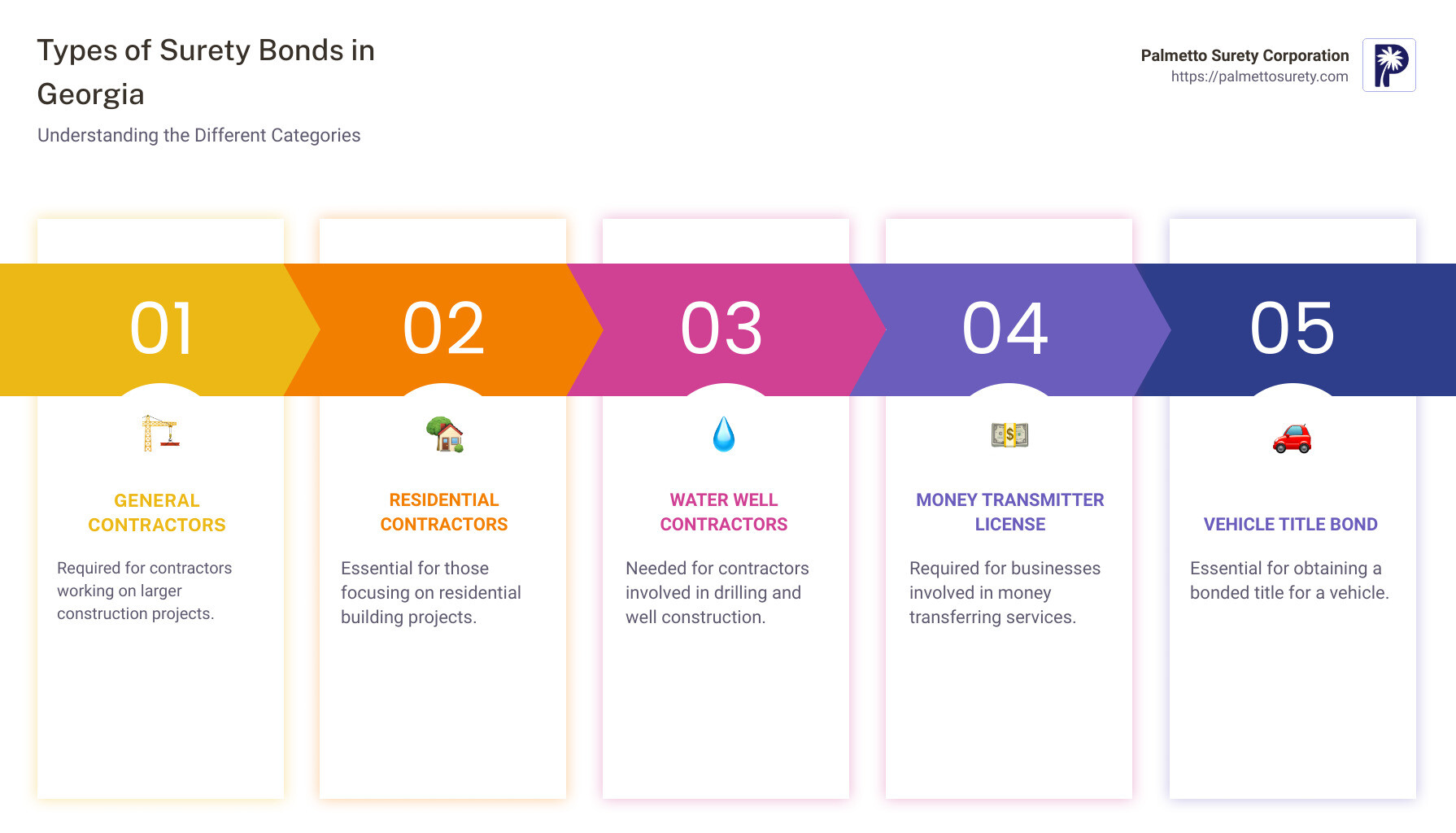
In Georgia, surety bonds are essential for various industries and roles. They ensure that businesses and professionals follow the law and fulfill their obligations. Here are the main types of surety bonds required in Georgia:
General Contractors
General contractors need surety bonds to work on construction projects. These bonds guarantee that contractors will complete their work according to the contract terms. If they fail, the obligee can file a claim to cover the costs of completing the project.
Residential Contractors
Residential contractors must also have surety bonds. These bonds protect homeowners by ensuring that contractors will follow building codes and complete projects as agreed. This helps prevent issues like unfinished work or violations of safety standards.
Water Well Contractors
Water well contractors need surety bonds to operate in Georgia. These bonds ensure that contractors will install and maintain water wells according to state regulations. They protect consumers from poor workmanship and non-compliance with safety standards.
Money Transmitter License
Businesses that transmit money need a surety bond to get a money transmitter license in Georgia. This bond ensures that the money transmitter will handle funds responsibly and comply with financial regulations. It protects consumers from fraud and financial loss.
Vehicle Title Bond
If you don’t have the necessary documents to get a Georgia vehicle title, you can apply for a title based on a surety bond. This bond guarantees that you are the rightful owner of the vehicle. It’s a way to get a title when proof of ownership is missing.
Construction Bonds
Construction bonds are crucial in the building industry. They include:
- Bid Bonds: Ensure that contractors honor their bids and sign contracts if awarded.
- Performance Bonds: Guarantee that contractors complete projects as per the contract.
- Payment Bonds: Ensure that subcontractors and suppliers get paid.
- Supply Bonds: Guarantee the delivery of materials according to the contract.
Commercial Bonds
Commercial bonds cover various business activities. They include:
- Utility Bonds: Ensure payment for utility services.
- Lottery Bonds: Required for businesses selling lottery tickets.
- Private Business Bonds: Protect consumers from fraud and malpractice.
License and Permit Bonds
These bonds are necessary for businesses to get licenses and permits. They ensure that businesses comply with state regulations. Examples include bonds for appraisal management companies and public adjusters.
Court Bonds
Court bonds are required in legal proceedings. They include:
- Fiduciary Bonds: Ensure that fiduciaries manage assets responsibly.
- Judicial Bonds: Required in court cases to ensure compliance with court orders.
- Plaintiff’s Attachment Bonds: Protect defendants from wrongful attachment of property.
- Executor Bonds: Ensure that executors manage estates according to the law.
Surety bonds are vital for many industries in Georgia. They provide protection and ensure compliance with laws and regulations. Understanding the different types of bonds can help you determine which ones you need for your business.
How to Obtain a Surety Bond in Georgia
Getting a surety bond in Georgia involves several steps. Here’s a simple guide to help you understand the process and what you need:
Application Process
-
Identify the Type of Bond Required
The first step is to determine which type of bond you need. This will be specified by the obligee (the party requiring the bond). For example, if you’re a contractor, the obligee might be a government agency requiring a construction bond. -
Choose a Surety Company
You’ll need to find a surety company to underwrite and issue your bond. Choose a reputable company known for its excellent service and support. -
Submit an Application
The application process is quick and hassle-free. You’ll need to provide some basic information about yourself and your business.
Credit Score
Your credit score plays a significant role in the approval process. Surety companies use it to assess risk. A higher credit score can lead to lower premium rates. If your credit score is low, you might still get a bond, but it could be more expensive.
Financial Statements
Providing financial statements is often necessary, especially for larger bonds. These documents help the surety company evaluate your financial stability. Be prepared to submit balance sheets, income statements, and cash flow statements.
Industry Experience
Experience in your industry can also impact the bonding process. Surety companies look favorably on principals with a proven track record in their field. This experience reassures the surety that you are capable of fulfilling your obligations.
Liquid Assets
Having liquid assets can improve your chances of obtaining a bond. Liquid assets are assets that can be quickly converted to cash, such as savings accounts or stocks. They provide a safety net for the surety company in case of a claim.
Electronic Surety Bonds (ESB)
In Georgia, certain bonds, like those for money transmitters, must be submitted electronically through the Nationwide Multistate Licensing System (NMLS). This system streamlines the bonding process and ensures compliance with state regulations.
Once your application is approved, you’ll receive an indemnity agreement. This agreement must be notarized and returned to the surety company. After that, the bond will be issued, and you’ll have proof of bonding to present to the obligee.

Navigating the surety bond process in Georgia doesn’t have to be complicated. By understanding the requirements and working with a trusted surety company, you can secure the bonds you need for your business. Next, let’s explore the cost factors involved in obtaining surety bonds in Georgia.
Cost of Surety Bonds in Georgia
When it comes to Georgia surety bond requirements, understanding the costs involved is crucial. The cost of a surety bond in Georgia depends on several factors. Let’s break them down:
Bond Amount
The bond amount is the total coverage required by the obligee. This amount represents the maximum compensation that can be claimed against the bond. For example, a freight broker bond in Georgia requires a bond amount of $75,000.
Premium Rates
The premium rate is a percentage of the bond amount that the principal pays to obtain the bond. In Georgia, this typically ranges between 1% and 10% of the bond amount.
- Low-risk bonds often have lower premium rates.
- High-risk bonds usually require higher premiums due to the increased risk of claims.
For instance, a business service bond might start at just $125 for a 1-year term, while a freight broker bond might start at $938.
Underwriting
Underwriting is the process by which the surety company assesses the risk of issuing a bond. This involves evaluating several factors to determine the premium rate:
- Personal Credit Score: A higher credit score generally results in lower premiums.
- Professional Experience: More experience can lead to better rates.
- Business Financials: Strong financial statements can lower the cost.
- Assets & Liquidity: Higher assets and liquidity reduce the risk for the surety company.
Low-Risk vs. High-Risk Bonds
- Low-Risk Bonds: These bonds are for principals with good credit scores, solid financials, and a clean claim history. They usually have lower premium rates.
- High-Risk Bonds: These are for principals with poor credit or a history of claims. They require more stringent underwriting and higher premiums.
Factors Impacting Cost
Several factors can impact the cost of obtaining a surety bond in Georgia:
- Bond Amount: Higher bond amounts mean higher premiums.
- Bond Type: Different bonds have different risk levels.
- Credit Score: Lower scores mean higher premiums.
- Professional Experience: More experience can reduce costs.
- Business Financials: Strong financials lead to lower premiums.
- Assets & Liquidity: More assets and liquidity can lower the cost.
Requesting an online quote is the best way to determine your exact surety bond cost in Georgia. Companies like SuretyBonds.com offer fast, easy, and accurate service to help you find the lowest rate.
Understanding these cost factors can help you budget effectively and ensure you meet all Georgia surety bond requirements. Next, let’s discuss the renewal process and compliance with state regulations.
Renewal and Compliance
Renewal Process
Renewing your surety bond in Georgia is straightforward but requires timely action. Renewal periods vary depending on the type of bond, but most surety bonds need annual renewal. Here’s what you need to know:
- Notification: You will receive a renewal notice from your surety bond provider before the expiration date.
- Review: Ensure all information on the bond is current and accurate.
- Payment: Pay the renewal premium. This can often be done online for convenience.
- Confirmation: Once payment is confirmed, you’ll receive a renewed bond certificate.
Example: A contractor in Georgia must renew their surety bond annually to maintain their license. Missing the renewal deadline can lead to penalties and even suspension of the license.
Compliance with Laws and Regulations
Maintaining compliance with state laws and regulations is crucial. Non-compliance can result in severe penalties, including the loss of your bond and business license. Here are key points to consider:
- State Licensing Board for Residential and General Contractors: Contractors must adhere to specific guidelines set by this board. This includes maintaining an active surety bond and complying with all construction-related regulations.
- Department of Revenue Motor Vehicle Division: For vehicle title bonds, compliance involves submitting all required documentation and ensuring the bond amount is accurate. Failure to comply can delay the issuance of a vehicle title.
Important Tips:
– Regularly review state regulations relevant to your industry.
– Keep all documentation up to date and easily accessible.
– Maintain open communication with your surety bond provider to ensure you meet all requirements.
Case Study: A money transmitter in Georgia must maintain a surety bond with a minimum coverage of $250,000. If the business fails to comply with state regulations, the Department can enforce penalties, including the revocation of the license.
Staying compliant not only protects your business but also builds trust with clients and regulatory bodies. Always double-check your obligations and renew your bonds on time to avoid any legal issues.
Next, we will answer some frequently asked questions about surety bonds in Georgia.
Frequently Asked Questions about Surety Bonds in Georgia
Is a surety bond required in Georgia?
Yes, many businesses and professionals in Georgia are required to have a surety bond to operate legally. For example, contractors, auto dealers, and appraisal management companies all need specific bonds. These bonds ensure that the bonded party complies with state regulations and protects consumers from malpractice.
Example: An auto dealer must secure an auto dealer bond to get their license. This bond protects consumers from fraud or unethical practices by the dealer.
What are the three parts of a surety bond?
A surety bond involves three key parties:
- Principal: The individual or business required to obtain the bond.
- Obligee: The entity requiring the bond, often a government agency.
- Surety: The company that issues the bond and guarantees the principal’s obligations.
Example: If a contractor fails to complete a project per the contract terms, the obligee (project owner) can claim the bond. The surety pays the claim and then seeks reimbursement from the contractor.
How much does a bonded title cost in Georgia?
The cost of a bonded title in Georgia varies but typically ranges from 1% to 10% of the bond amount. The bond amount is usually set by the state, often around 1.5 times the vehicle’s value.
Example: If your vehicle is valued at $10,000, you may need a bond worth $15,000. The premium you pay could range from $150 to $1,500, depending on your credit score and other factors.
For more detailed information on specific bond requirements and costs, you can contact our experts.
Conclusion
Understanding Georgia surety bond requirements can be complex, but it’s crucial for many businesses and individuals in the state. Whether you’re a contractor, a vehicle owner needing a bonded title, or someone involved in legal proceedings requiring a bond, knowing the ins and outs can save you time, money, and stress.
At Palmetto Surety Corporation, we are committed to making this process as straightforward as possible. With over two decades of experience, we offer personalized service, cutting-edge technology, and 24/7 support to meet all your surety bond needs.
Our expertise spans various industries and bond types, ensuring that you get the best rates and service. From application to issuance, we guide you every step of the way to ensure compliance with Georgia’s bonding regulations.
For more information or to get started on your surety bond, visit our Surety Bonds page.