


Bail Bonds in Louisiana: Top 5 Trusted Services 2025
When You Need Fast Release from Louisiana Jails
Bail bonds in Louisiana can get you or your loved one released from jail quickly when you can’t afford to pay the full bail amount upfront. Here’s what you need to know immediately:
Quick Louisiana Bail Bond Facts:
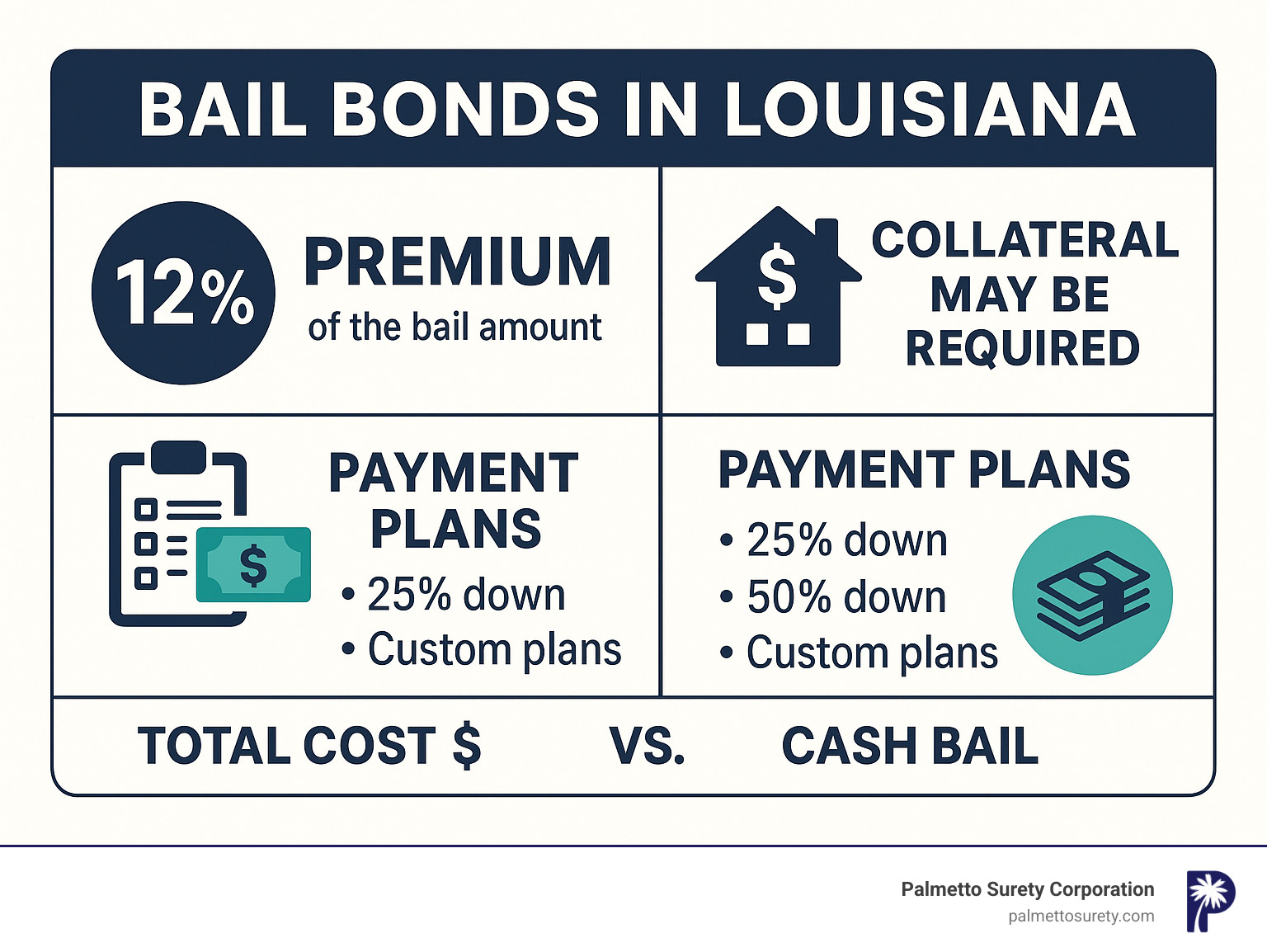
– Standard fee: 12% of total bail amount (non-refundable)
– Available 24/7: Most bondsmen operate around the clock
– Collateral options: Property, vehicles, jewelry accepted
– Release time: Usually 2-6 hours after posting bond
– Payment plans: Zero-interest financing often available
Getting arrested in Louisiana creates immediate stress for families. The first phone call from jail often leaves loved ones scrambling to understand their options.
The good news? You don’t need to pay the full amount. Louisiana bail bondsmen post the entire bail for a 12% fee, allowing release while you keep most of your money for legal defense and daily expenses.
Louisiana operates under specific statutes like La. R.S. 22:1574 that regulate bail bond agents through apprenticeship programs and continuing education requirements. This ensures you’re working with trained professionals who understand both the legal system and your urgent need for release.
I’m Haiko de Poel Jr, and through my work at Palmetto Surety Corporation and National Pretrial, I’ve helped connect families with reliable bail bonds in Louisiana services across the state.
Everything You Need to Know About Bail Bonds in Louisiana
Nobody expects to need bail bonds in Louisiana, but when that call comes from jail, understanding your options makes all the difference. Louisiana’s bail system gives families multiple ways to secure release without breaking the bank.

Bail is the dollar amount a judge sets as insurance that someone will show up for their court date. A bail bond is having someone else put up that deposit for you.
Instead of finding $15,000 in cash, you can pay a bondsman just 12% of the total bail amount – that’s $1,800. The bondsman then promises the court they’ll cover the full amount if your loved one doesn’t appear.
Louisiana Code of Criminal Procedure Article 334 gives judges flexibility when setting bail amounts. They consider charge severity, prior court appearances, and community ties – having a job, family, and roots in Louisiana all work in your favor.
The state’s standardized 12% premium means legitimate bondsmen can’t play games with pricing. What varies is flexibility with payment plans and collateral acceptance.
| Bond Type | Upfront Cost | Refundable? | Best For |
|---|---|---|---|
| Cash Bond | Full bail amount | Yes (minus fees) | Those with liquid assets |
| Surety Bond | 12% premium | No | Most families |
| Property Bond | $200 filing fee + equity | Varies | Property owners |
| Personal Recognizance | $0 | N/A | Low-risk defendants |
What are bail bonds in Louisiana?
Bail bonds in Louisiana exist because most families can’t write a check for thousands of dollars on a moment’s notice – especially when facing attorney fees and other legal expenses.
Many parishes use bail schedules for common charges. A first-time DWI might automatically get $2,500 bail, while simple drug possession could be $1,000. More serious felonies require individual hearings.
The flight-risk evaluation asks: “Will this person actually come back to court?” Someone with deep community roots, steady employment, and family nearby poses less flight risk than someone with no local connections.
Public safety concerns focus on whether release could endanger victims, witnesses, or the community. This becomes especially important in domestic violence cases or situations involving threats.
Key differences: bail vs bail bond in Louisiana
The biggest difference comes down to money and timing. Cash bail directly with the court gets refunded when the case ends (minus court costs), but ties up cash flow for months or years.
With a bail bond, you keep most of your money for hiring an attorney and maintaining your household. The 12% fee is gone forever, but you’re trading it for financial flexibility when you need it most.
Collateral requirements also differ significantly. Cash bail demands the full amount upfront. Bondsmen accept house equity, vehicle titles, or other valuable assets to secure the remaining 88% of the bail amount.
Release speed often favors the bond route. Experienced bondsmen know the jail staff, understand the paperwork, and can steer the system efficiently.
Types of Louisiana Bail Bonds at a Glance

Louisiana provides several paths to secure release, and the right choice depends on your financial situation and case circumstances.
Cash bonds mean paying the full bail amount directly to the court. You get it all back when the case ends (minus small court fees), but your money stays locked up until then.
Surety bonds through licensed bondsmen are what most families choose for bail bonds in Louisiana. You pay the 12% fee, and the bondsman handles everything else.
Property bonds let homeowners use their house equity instead of cash. Your property becomes collateral, but this involves more paperwork and court approval time.
Personal recognizance bonds cost nothing upfront because the court trusts the defendant to return based on their word alone. These are reserved for minor charges and people with deep community roots.
Personal Surety Bond Undertakings (PSBU) allow a financially stable friend or family member to guarantee the defendant’s appearance for just a $200 filing fee. However, that person must prove they have enough assets to cover the full bail amount if needed.
For a clearer picture of what you might pay, our Louisiana Bail Bond Calculator breaks down the numbers based on your specific bail amount.
Cash & Surety Options for bail bonds in Louisiana
The choice between cash and surety bonds often comes down to what you can afford to tie up versus what you can afford to lose. Cash bonds return every penny when the case concludes, but that money sits in the court system for months or years.
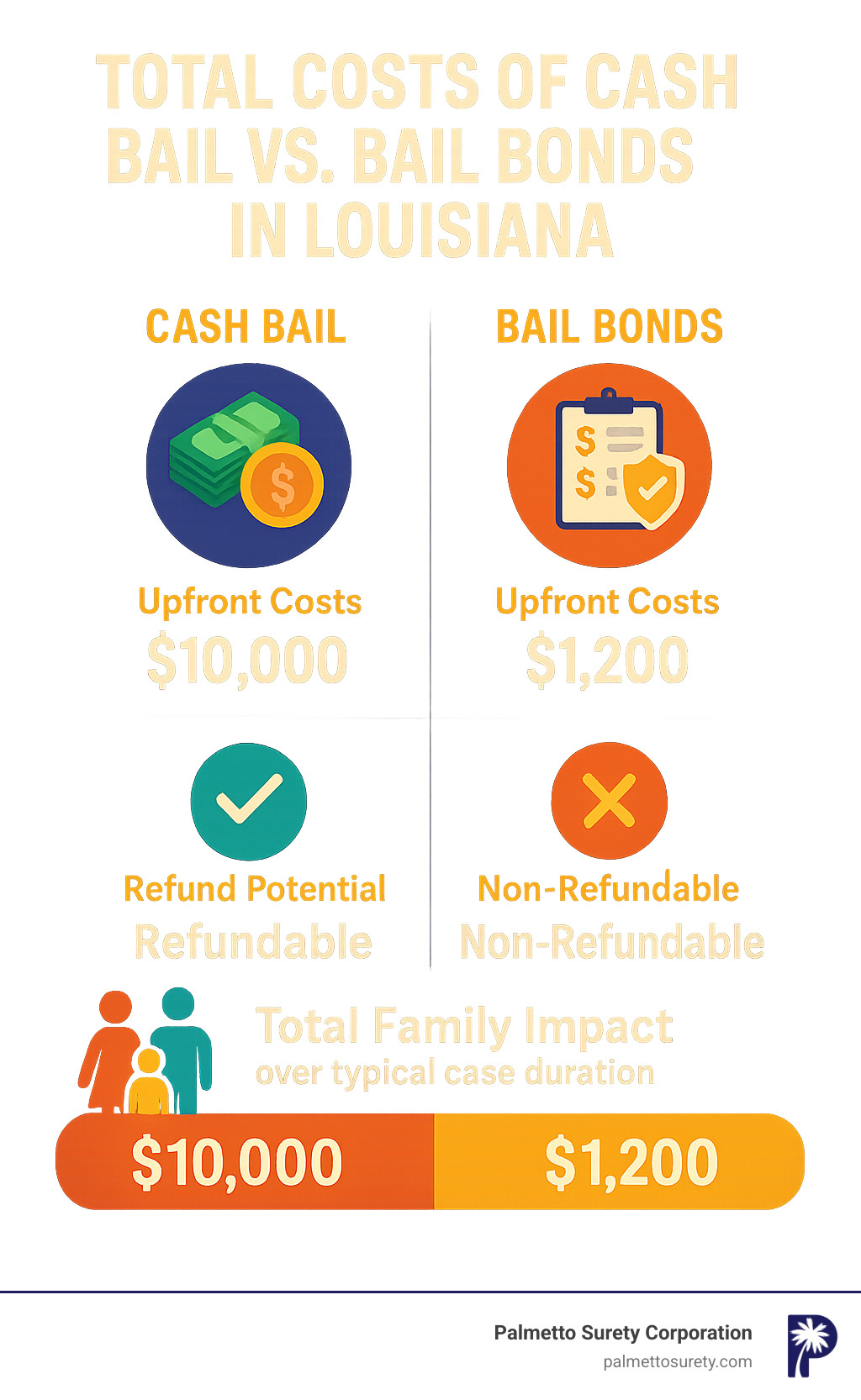
Imagine bail set at $15,000. Pay cash, and you’re out $15,000 until the case ends. Choose a surety bond, and you pay $1,800 to the bondsman (money you’ll never see again), but you keep the other $13,200 for life’s necessities.
Surety bonds shine with payment flexibility. Most Louisiana bondsmen offer payment plans that let you spread the 12% fee over several months with zero-interest terms.
Property & PSBU Alternatives
Property bonds appeal to homeowners who want to avoid both the cash tie-up of direct payment and the non-refundable fees of surety bonds. Your home’s equity becomes the guarantee, but the court places a lien on the property until the case resolves.
PSBU arrangements work when you have a financially stable family member willing to guarantee the defendant’s appearance. That person pays just $200 to file paperwork and attends a court hearing to prove they have sufficient assets.
Personal Recognizance & Specialty Bonds
Personal recognizance bonds represent the court’s ultimate expression of trust – no money required, just a promise to return. Courts typically reserve these for defendants with strong community ties facing minor charges.
DWI cases often involve specialty conditions like ignition interlock devices. Weapons charges may require surrendering all firearms. These specialized requirements make experienced bondsmen valuable for ensuring compliance.
Immigration considerations complicate everything. ICE detainers can keep defendants in custody even after state bail is posted, requiring federal immigration bonds with different procedures.
Choosing the Right Louisiana Bail Bond Service

When your loved one is in jail at 2 AM, you need someone who answers the phone, knows the system, and treats your family with respect during one of the most stressful times imaginable.
While Louisiana regulates bail bonds in Louisiana to ensure basic standards, the difference between bondsmen can be significant. Some will have you out in two hours with a clear payment plan, while others might leave you waiting with confusing paperwork.
Twenty-four-seven availability isn’t just a nice feature – it’s essential. Arrests don’t wait for business hours. The best services have real people answering phones at 3 AM on Sunday, ready to start paperwork immediately.
License verification under La. R.S. 22:1574 apprenticeship requirements ensures agents complete proper training. Don’t hesitate to ask for license numbers – legitimate bondsmen expect this.
Payment flexibility separates professionals from those just looking for quick cash. The best bondsmen offer zero-interest payment plans, accept various payment methods, and work with reasonable down payments.
Collateral flexibility matters when cash is tight. Professional bondsmen accept vehicles, jewelry, electronics, and property as collateral while clearly explaining what happens when the case ends successfully.
At Palmetto Surety Corporation, our 20+ years in the surety industry has taught us that families remember how they were treated during crisis moments. We partner with bondsmen across Louisiana who meet high standards.
Questions to ask before hiring for bail bonds in Louisiana
Smart families ask questions before signing anything, even when stressed and wanting their loved one home immediately.
“What exactly will this cost me?” should be your first question. The premium is 12% of the bail amount – period. Get the total cost in writing before signing anything.
Ask “Are there any additional fees beyond the 12%?” Some bondsmen add document fees or travel expenses not mentioned initially. Professional bondsmen provide complete fee schedules upfront.
Payment plan details vary dramatically. Some require half down, others accept 25%. Ask about the payment schedule, late payment policies, and early payment benefits.
Collateral requirements need clear explanation. What exactly do they need? What happens to your property when the case ends successfully? Get these terms in writing.
Release timeframes should be realistic based on the specific jail. Experienced bondsmen know that different parishes process differently, and weekend releases take longer.
Payment Options & Cost Breakdown
Louisiana’s competitive market has created innovative payment solutions that make bail bonds in Louisiana accessible to more families.
Credit card payments are widely accepted, though some bondsmen charge 3-4% processing fees. They provide payment protection and allow immediate payment when time matters most.
Digital payment options like CashApp have revolutionized the industry. These systems work 24/7 and often process faster than traditional banking.
Zero-interest payment plans are the most family-friendly innovation. Typical structures include 25% down with the balance over six months or 50% down with three months to pay.
The key is understanding total costs upfront. A $10,000 bail means $1,200 to the bondsman regardless of payment method. Payment plans don’t change this total – they just make it manageable.
For deeper understanding of how surety companies provide stability for families, our guide on Bail Bond Insurance explains the financial structure that makes this system possible.
Step-By-Step: The Louisiana Bail Bond Process
Understanding each step of Louisiana’s bail bond process helps families prepare and reduces anxiety during an already stressful situation.
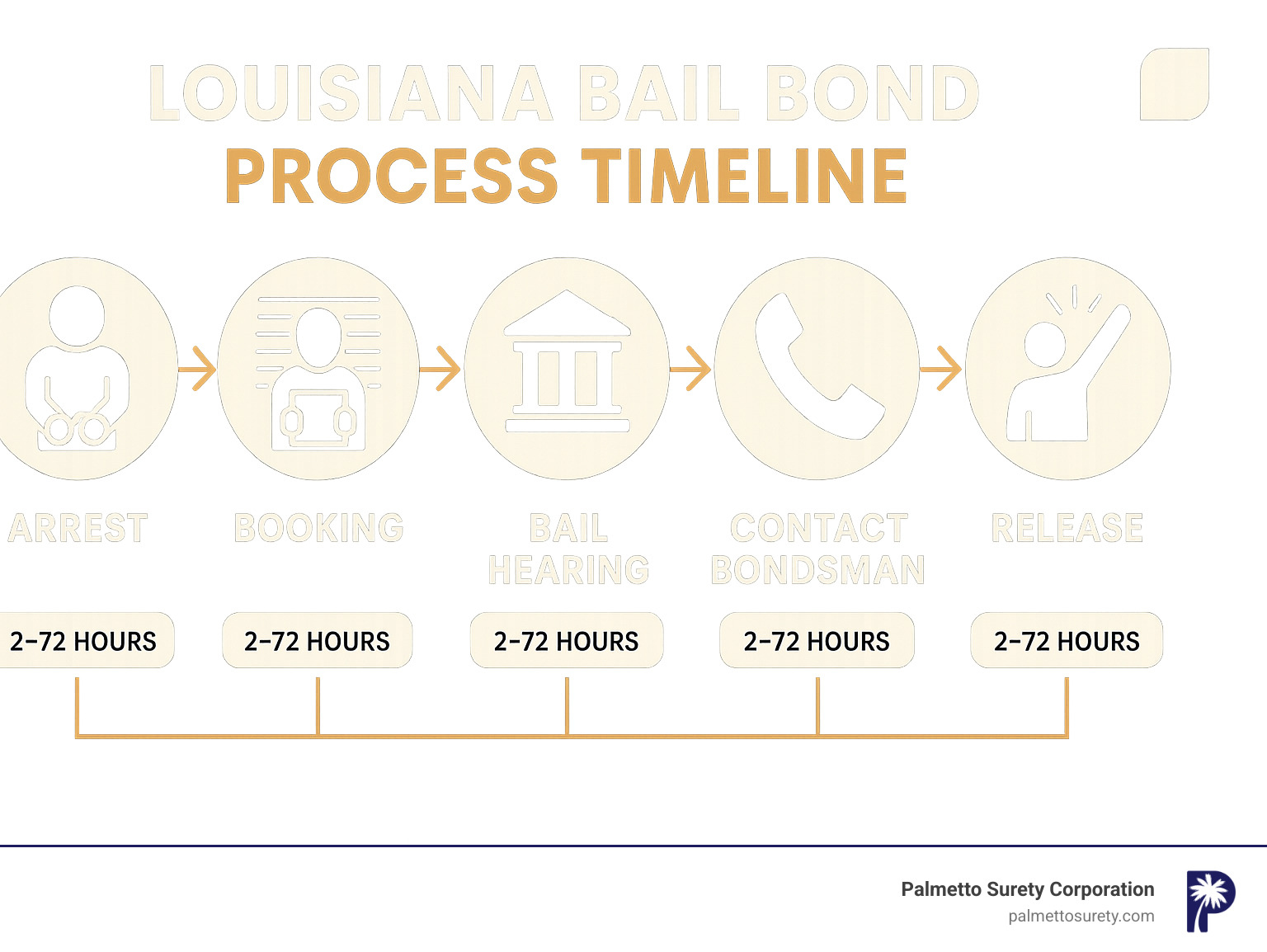
Booking begins immediately after arrest. Police transport the defendant to jail for photographing, fingerprinting, and system entry. This typically takes 2-4 hours, during which the defendant cannot be released regardless of bail arrangements.
Bail hearings occur within 72 hours for felonies, though misdemeanors often follow preset bail schedules allowing immediate release once booking completes.
Contacting a bondsman should happen as soon as you know the bail amount. Provide the defendant’s full name, booking number, jail location, and charges.
Paperwork completion involves signing the bail bond agreement and indemnity contracts. Read these carefully – you’re agreeing to pay the full bail amount if the defendant flees.
Release processing begins once the bondsman posts the bond with the jail. This typically takes 2-6 hours depending on jail procedures and staffing levels.
Court appearances are mandatory. Missing even one court date triggers a bench warrant and bond forfeiture.
From Arrest to Release
Arrest and transport to jail can take 1-3 hours depending on distance and whether multiple arrests occurred.
Booking procedures include medical screening, property inventory, and database searches for outstanding warrants. Defendants with active warrants face holds that prevent release regardless of bail arrangements.
Magistrate hearings for felonies typically occur within 48-72 hours. The magistrate reviews charges and sets bail based on statutory guidelines.
Family notification often relies on the defendant’s one phone call. Collect calls from jail are expensive, so families should accept charges and gather information quickly.
Bondsman contact should include all relevant information: defendant’s full legal name, date of birth, booking number, charges, and jail location.
Staying Compliant After Release
Release on bail comes with conditions that defendants must follow strictly. Violations can result in immediate re-arrest and forfeiture of the entire bond amount.
Travel restrictions typically limit defendants to their home parish without court permission. International travel usually requires surrendering passports.
Drug and alcohol testing may be required for substance-related charges, with positive results triggering immediate consequences.
Court date reminders are the defendant’s responsibility, though many bondsmen provide courtesy reminders. Missing court dates by even minutes can trigger bench warrants.
Check-in requirements with bondsmen help ensure compliance. Modern electronic check-in systems make this convenient through smartphone apps.
Contact restrictions in domestic violence cases strictly prohibit communication with alleged victims. Violations often result in additional charges and immediate re-arrest.
Frequently Asked Questions about Bail Bonds in Louisiana
How is the bail amount determined?
Louisiana judges follow specific guidelines that balance your right to reasonable bail with protecting the community.
Crime severity plays the biggest role. Simple marijuana possession might carry $1,000 bail, while armed robbery could result in $75,000 or more. Many Louisiana parishes maintain bail schedules for common charges.
Your criminal history matters enormously. First-time offenders often receive lower bail amounts, while someone with multiple arrests faces much higher amounts.
Flight risk factors include whether you have strong ties to Louisiana – steady employment, family connections, property ownership, or long-term residence. Someone who just moved to Louisiana faces higher bail than someone who’s lived there for twenty years.
Public safety concerns become critical in cases involving domestic violence, weapons, or threats against specific people.
What happens if a defendant misses court?
Missing court in Louisiana creates immediate problems that affect everyone involved in the bail bonds in Louisiana process.
The moment you don’t show up, the judge issues a bench warrant for your arrest. Any police officer who encounters you for any reason must arrest you immediately.
Bond forfeiture happens simultaneously. The court declares the entire bail amount due immediately. Your bondsman becomes liable for the full amount and will look to your family’s collateral to cover it.
Your bondsman has legal authority to find and arrest you under Louisiana law. Many hire licensed bounty hunters who specialize in locating people who’ve skipped bail.
Additional criminal charges often result from missing court. Failure to appear charges can be misdemeanors or felonies depending on your original charge level.
How much does a bail bond cost and is it refundable?
The cost structure for bail bonds in Louisiana is straightforward but often misunderstood.
Every legitimate bondsman charges exactly 12% of the bail amount – this rate is set by Louisiana law. If bail is $15,000, you’ll pay $1,800 regardless of which bondsman you choose.
The 12% premium is never refundable, even if you’re found innocent or charges are dropped. This money compensates the bondsman for assuming the risk of posting your full bail amount.
Collateral works differently than the premium. If you put up your car title as collateral, you get that back when the case ends successfully. However, if you flee and the bondsman loses money, they can sell your car to recover losses.
Payment plans don’t reduce the total cost but make bonds accessible to more families. Many Louisiana bondsmen offer zero-interest plans requiring 25-50% down with the balance spread over 3-6 months.
Comparing costs with cash bail shows the trade-off clearly. Posting $15,000 cash directly gets refunded when your case ends, but ties up money you might need for attorney fees. Paying $1,800 to a bondsman preserves $13,200 for other needs but that $1,800 is permanently gone.
Conclusion
When your family faces the stress of an arrest in Louisiana, understanding your bail bond options transforms a crisis into a manageable situation. Bail bonds in Louisiana offer more than just financial relief – they provide a pathway back to normalcy while you steer the legal system.
The beauty of Louisiana’s bail bond system lies in its accessibility. Instead of scrambling to find tens of thousands of dollars, families can secure release for just 12% of the bail amount. This speedy release typically happens within hours, allowing your loved one to return home, keep their job, and maintain stability during legal proceedings.
Working with experienced bondsmen brings legal compliance benefits that go far beyond just posting bail. These professionals understand Louisiana’s complex court procedures and help defendants avoid technical violations that could land them back in jail.
Perhaps most importantly, bail bonds help preserve community ties that courts value highly. Defendants who remain employed, care for their families, and stay connected to their communities often receive more favorable treatment during sentencing.
At Palmetto Surety Corporation, our network advantage means Louisiana families connect with bondsmen who meet our rigorous standards for professionalism and reliability. Our two decades in the surety industry have taught us that competence and compassion matter equally when families face their most challenging moments.
The 12% premium represents far more value than its cost suggests. Consider what staying in jail costs: lost wages, potential job loss, family disruption, and psychological toll. Bail bonds preserve both financial resources and family stability during an already difficult time.
Louisiana’s bail bond system exists because lawmakers recognized that justice shouldn’t depend on wealth. Whether you’re facing charges in New Orleans, Baton Rouge, or any Louisiana parish, professional bail bond services ensure that financial circumstances don’t determine your ability to prepare a proper defense.
For families seeking to understand the broader bail bond industry, our comprehensive guide on Bail Bond Agencies explains how professional agencies operate and what standards you should expect from qualified providers.
An arrest doesn’t define your future – how you respond to it does. Louisiana’s bail bond system provides second chances and ensures that everyone receives fair treatment under the law, regardless of their bank account balance.


