


Nursing Home Surety Bonds: Top 3 Essential Tips 2025
Protecting Patient Funds: The Basics of Compliance
Nursing home surety bonds are essential financial guarantees that protect residents’ funds in long-term care facilities. If you’re searching for information about these bonds, here’s what you need to know:
Quick Guide to Nursing Home Surety Bonds:
* Required by federal regulation (Section 483.10(c)(7) of Code of Federal Regulations)
* Typically cost 1-5% of the total bond amount
* Protect patient trust funds from mismanagement
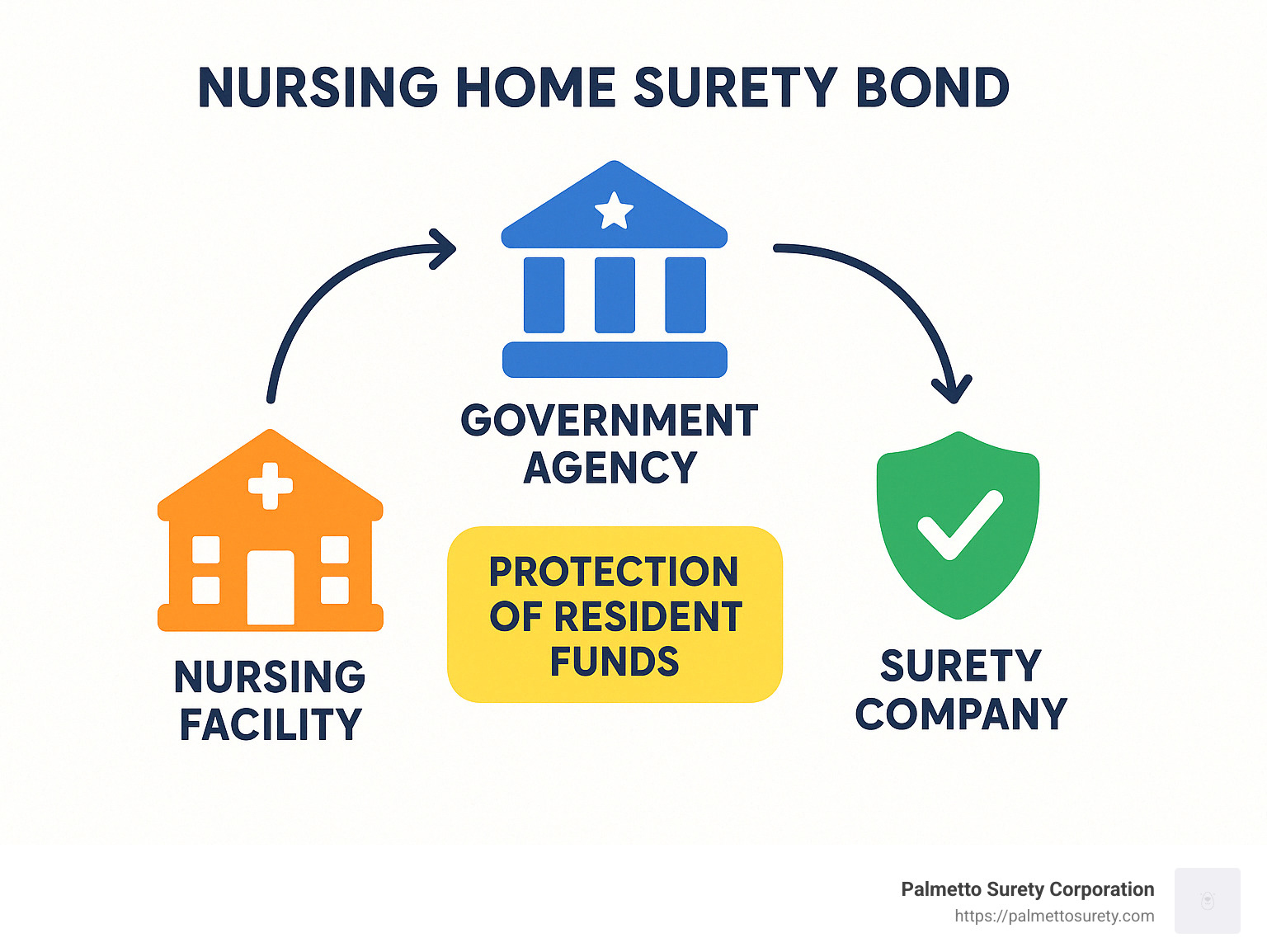
* Involve three parties: the nursing facility, government agency, and surety company
* Bond amount must equal or exceed all resident funds held
Nursing home surety bonds serve as a safety net for vulnerable residents whose personal funds are managed by long-term care facilities. These bonds aren’t insurance policies—they’re legally binding agreements that ensure nursing homes handle resident trust funds ethically and responsibly.
When a facility accepts the responsibility of managing residents’ money, the government steps in with regulations requiring financial safeguards. These bonds provide a mechanism for residents to recover their funds if mismanagement occurs.
The bond creates a three-way relationship:
1. The nursing facility (principal) promises to handle funds properly
2. The government agency (obligee) requires the bond for regulatory compliance
3. The surety company (surety) guarantees payment if the facility fails to meet obligations
I’m Haiko de Poel Jr, and through my work at Palmetto Surety Corporation, I’ve helped countless long-term care facilities steer the complexities of nursing home surety bonds while ensuring they maintain proper compliance with state and federal regulations.
Understanding Nursing Home Surety Bonds
When families entrust their loved ones to a nursing home, they’re not just handing over care responsibilities—they’re often entrusting financial resources too. This is where nursing home surety bonds come into play, serving as a crucial safety net for vulnerable residents.

These bonds—sometimes called patient trust fund bonds or resident trust fund bonds—aren’t complicated once you understand their purpose. Simply put, they’re financial guarantees that ensure nursing homes properly manage the personal funds of their residents.

What makes these bonds special is their focus. Unlike insurance that protects the business itself, nursing home surety bonds specifically protect the residents and their money. This distinction matters because it places the emphasis exactly where it should be—on safeguarding the financial resources of people who may no longer be able to manage them independently.
As one regulatory document explains, “To paraphrase Washington statute 74.46.020, a nursing facility is an institution that provides 24-hour nursing care to three or more residents that are unable to properly care for themselves.” These facilities don’t just provide physical care—they often become financial stewards too.
Every nursing home surety bond creates a three-way relationship:
The Principal (the nursing home) purchases the bond and promises to handle resident funds responsibly. They’re the ones with the primary obligation to do the right thing.
The Obligee (usually a state healthcare agency) requires the bond as part of licensing. They’re looking out for residents by making sure facilities have proper financial safeguards.
The Surety (the bond provider like us at Palmetto Surety Corporation) issues the bond and stands ready to step in if something goes wrong. We’re essentially vouching for the nursing home’s financial trustworthiness.
This structure creates a safety net with built-in accountability. If a facility mismanages resident funds—whether through honest mistakes or deliberate actions—we step in to make things right for the affected residents, up to the bond amount. The facility remains ultimately responsible, however, and must pay us back for any claims we cover.
The legal requirement for these bonds comes straight from Section 483.10(c)(7) of the Code of Federal Regulations, which requires nursing facilities to “establish and maintain a system that assures a full, complete, and separate accounting” of each resident’s personal funds. The regulation specifically mandates surety bonds as protection.
It’s worth noting that nursing home surety bonds are different from other bonds a facility might need. These bonds specifically protect resident trust funds—Social Security payments, pensions, personal savings, and other assets that residents have entrusted to the facility’s care.
In our 20+ years at Palmetto Surety Corporation, we’ve seen how these bonds provide peace of mind to everyone involved. Facility administrators can demonstrate their commitment to ethical practices, while residents’ families can rest easier knowing their loved ones’ financial resources have an extra layer of protection.
Legal Requirements and Regulations for Nursing Home Surety Bonds
When it comes to protecting your residents’ funds, navigating the regulatory landscape can feel like walking through a maze. Let’s break down these requirements so you can feel confident your facility is fully compliant.
Federal Regulations
At the federal level, nursing home surety bonds are governed by Section 483.10(c)(7) of the Code of Federal Regulations. In plain English, this regulation requires that:
“The facility must purchase a surety bond, or otherwise provide assurance satisfactory to the Secretary, to assure the security of all personal funds of residents deposited with the facility.”
This requirement isn’t optional for facilities participating in Medicare and Medicaid programs. Think of it as the foundation of resident financial protection – a baseline that all nursing homes must meet.
State Variations
While federal regulations set the stage, states often add their own requirements to the mix. These state-specific rules can significantly affect your bond requirements.
For example, across the states where Palmetto Surety Corporation operates, we see notable differences:
In Georgia, your bond must equal or exceed the total resident funds you’re managing at any given time. Meanwhile, South Carolina takes a different approach, basing bond requirements on your facility’s bed count and the volume of resident funds. And if you’re operating in Florida, you’ll need to steer the Agency for Healthcare Administration (AHCA) requirements, which are particularly stringent.
These variations aren’t just bureaucratic details – they directly impact how much your bond will cost and what steps you’ll need to take to obtain one.
Licensing Requirements
Your nursing home surety bond isn’t just another piece of paperwork – it’s often a critical component of your facility’s license to operate. Without the proper bond in place, you might face serious consequences:
Your initial license application could be denied, or your existing license might not be renewed. During surveys, you could receive citations or deficiencies. In worst-case scenarios, you might even face fines or other penalties that affect your bottom line.
Your bond is just one piece of the licensing puzzle, alongside background checks, facility inspections, financial assessments, and insurance coverage requirements. Each element works together to ensure resident protection.
Recent Regulatory Developments
The world of nursing home surety bonds doesn’t stand still. Regulations evolve, and sometimes external factors create unexpected compliance challenges.
For instance, during 2020, many facilities were caught off guard when resident stimulus checks suddenly increased the total funds they were holding. This pushed some facilities above their bond coverage limits, creating compliance issues virtually overnight.
This real-world example highlights why it’s so important to stay vigilant about both regulatory changes and the actual amount of resident funds you’re managing. What was compliant yesterday might not be compliant today.
Compliance Verification
State survey agencies don’t just take your word for it when it comes to bond compliance. During annual inspections and complaint investigations, you’ll need to demonstrate:
Your bond documentation is current and valid, your bond amount adequately covers all resident funds, you’re properly accounting for all trust funds, and you’re meeting all related financial management regulations.
At Palmetto Surety Corporation, we’ve guided facilities throughout Georgia, Florida, Louisiana, Mississippi, South Carolina, Tennessee, and Texas through these complex requirements for over two decades. We understand that compliance isn’t just about avoiding penalties – it’s about honoring your commitment to protect the financial well-being of those entrusted to your care.
For comprehensive guidance on nursing home regulatory requirements, the Interpretive Guidance for Nursing Homes provides valuable insights that can help ensure your facility maintains proper compliance.
The Importance of Nursing Home Surety Bonds
When it comes to caring for our elderly loved ones, financial security is just as important as physical wellbeing. Nursing home surety bonds aren’t just paperwork—they’re a vital safeguard that protects vulnerable residents while building trust throughout the entire care ecosystem.
Protecting Vulnerable Residents
Many nursing home residents no longer manage their own finances due to cognitive decline, physical limitations, or lack of family support. They trust facilities with their life savings, monthly Social Security checks, and other income sources.
Nursing home surety bonds create a financial safety net that catches residents if things go wrong. Without this protection, a resident might lose access to funds needed for personal items, special services, or small pleasures that make life worth living. As one resident’s daughter told me, “Knowing Mom’s money is protected gives me one less thing to worry about during an already stressful time.”
Building Trust with Families
Making the decision to move a parent or spouse into a nursing facility ranks among life’s most difficult choices. Families already worry about quality of care—they shouldn’t have to worry about financial exploitation too.
When a facility has a proper nursing home surety bond in place, it sends a powerful message: “We take our responsibility seriously.” This commitment to financial integrity often serves as a proxy for overall quality in the minds of family members.
“The first question I asked when touring facilities wasn’t about the food or activities,” one family member shared with us at Palmetto Surety. “I wanted to know how they protected my father’s money. Their clear explanation about their surety bond told me volumes about their professionalism.”
Ensuring Financial Accountability
Unlike insurance policies that simply pay for losses, nursing home surety bonds create real accountability. If a facility mismanages resident funds, the surety company pays the claim—but then seeks reimbursement from the facility. This structure creates powerful incentives for nursing homes to:
- Implement rock-solid accounting systems
- Train staff thoroughly on proper fund management
- Conduct regular internal audits
- Keep resident funds completely separate from operational accounts
This accountability benefits everyone. Residents enjoy better protection, facilities develop stronger financial controls, and regulatory agencies gain an additional layer of oversight.
Providing a Clear Recovery Mechanism
Without a nursing home surety bond, a resident whose funds were mismanaged might face a lengthy, expensive legal battle—something few elderly individuals have the resources or remaining lifespan to pursue. The bond creates a straightforward path to recovery through claims against the surety company.
I’ve seen how this streamlined process makes all the difference. In one case, a facility accidentally commingled resident funds with operational accounts during a software transition. Because they had a proper bond in place, affected residents recovered their money quickly while the facility worked out the accounting issues with the surety company.
Supporting Regulatory Oversight
State agencies simply don’t have enough inspectors to monitor every aspect of nursing facility operations. Nursing home surety bonds create an additional layer of protection through the surety company’s underwriting process and ongoing risk assessment.
When we at Palmetto Surety underwrite a bond, we carefully evaluate a facility’s financial controls and management practices. This extra scrutiny helps identify potential issues before they affect residents—something regulators appreciate as an extension of their oversight capabilities.
The importance of nursing home surety bonds extends far beyond checking a regulatory box. These bonds create a circle of protection around vulnerable residents while strengthening the overall quality and integrity of elder care. They embody our collective commitment to treating our seniors with the dignity and respect they deserve, especially when it comes to preserving their financial independence and security.
Costs Associated with Nursing Home Surety Bonds
When it comes to planning your facility’s compliance budget, understanding what you’ll pay for nursing home surety bonds is essential. As someone who’s helped countless facilities steer these waters at Palmetto Surety Corporation, I can tell you that while costs follow certain patterns, several factors will influence your specific premium.
Premium Rate Structure
The cost of a nursing home surety bond typically runs between 1% and 5% of the total bond amount annually. This percentage—what we in the industry call the “rate”—determines what you’ll pay each year to maintain your bond.
To put this in perspective, if your facility needs a $10,000 bond with a 1% rate, you’d pay just $100 annually. A larger $50,000 bond with a 3% rate would cost $1,500 per year, while a $100,000 bond at 5% would run $5,000 annually.
Factors Affecting Premium Rates
Where your facility lands on that 1-5% spectrum depends on several key factors:
Your facility’s credit history and financial strength makes the biggest difference in your premium rate. I’ve seen facilities with excellent credit scores (typically 700+) and solid financial statements consistently secure rates at the lower end of the spectrum, often around 1-1.5%.
The bond amount required also influences your rate. While larger bonds sometimes qualify for slightly lower percentage rates, the total premium will still be higher simply because you’re covering a larger amount. It’s like buying in bulk—you might get a better rate, but you’re still spending more overall.
State-specific requirements vary considerably across the Southeast. Some states where we operate, like Georgia, require bonds that equal or exceed the total resident funds held at any given time. Others, like South Carolina, base requirements on your facility’s bed count and resident fund volume.
Your facility’s history and experience matters too. I’ve worked with nursing homes that had previous claims against their bonds or regulatory issues, and they typically face higher rates due to the increased perceived risk. It’s similar to how your driving record affects your car insurance premiums.
Different surety companies also apply varying underwriting criteria, which affects how they calculate premiums. At Palmetto Surety Corporation, we work hard to balance competitive rates with appropriate risk assessment for each unique facility.
Typical Cost Examples
Based on our experience with clients across the Southeast, here’s what you might expect to pay for a $50,000 nursing home surety bond:
| Credit Score Range | Approximate Annual Premium | Percentage Rate |
|---|---|---|
| Excellent (700+) | $500 – $750 | 1% – 1.5% |
| Good (650-699) | $750 – $1,250 | 1.5% – 2.5% |
| Fair (600-649) | $1,250 – $2,000 | 2.5% – 4% |
| Poor (Below 600) | $2,000 – $2,500 | 4% – 5% |
Cost vs. Value Consideration
I always encourage facility administrators to think of nursing home surety bonds as investments rather than expenses. The true value extends beyond the premium cost—these bonds protect your residents, improve your reputation, and demonstrate your commitment to ethical practices.
One administrator I worked with put it perfectly: “The peace of mind knowing our residents’ funds are protected is worth far more than what we pay for our bond.” And she’s right—the potential costs of non-compliance, including fines, litigation, and damage to your facility’s reputation, far exceed the annual premium.
Ways to Optimize Bond Costs
After helping facilities secure nursing home surety bonds for over two decades, I’ve identified several strategies that can help you get the most favorable rates:
Maintain strong credit for both your facility and its key principals. Just like with a personal loan, better credit translates to better rates.
Size your bond accurately to match the resident funds you actually hold. There’s no benefit to over-bonding, and it just increases your costs unnecessarily.
Document robust financial controls during your application process. When we see facilities with excellent accounting practices and clear separation of resident funds, it often positively influences the underwriting decision.
Ask about payment options if cash flow is a concern. Many surety providers, including Palmetto Surety Corporation, offer installment plans that can help manage your budget while maintaining compliance.
Review your bond regularly, especially as your facility’s financial strength improves. You might qualify for better rates upon renewal, particularly if your credit score has increased or your financial statements show improved stability.
Understanding these cost factors helps you budget appropriately while ensuring your residents have the critical protections that nursing home surety bonds provide. And remember, we’re always here to help you steer these considerations with your facility’s specific needs in mind.
How to Apply for a Nursing Home Surety Bond
Securing a nursing home surety bond doesn’t have to be complicated. At Palmetto Surety Corporation, we’ve helped hundreds of facilities steer this process with ease. Let me walk you through the steps to obtain your bond with minimal stress and maximum efficiency.
Preparing for Your Application
Before diving into paperwork, take some time to gather essential information. Think of this as preparing ingredients before cooking—having everything ready makes the process much smoother.
You’ll want to collect your facility’s legal business name, physical address, bed count, and license information. Financial documentation is particularly important—have your business financial statements, bank records showing resident trust accounts, and tax returns for the past few years ready to go.
Don’t forget to prepare personal information for your facility’s owners or principals. This typically includes personal financial statements, Social Security numbers for credit checks, and a summary of relevant experience.
Finally, confirm your specific bond requirements with your state regulatory agency. Different states have different rules, and knowing exactly what you need will save you time and potential headaches down the road.

Step-by-Step Application Process
1. Initial Consultation and Assessment
We always start with a conversation. This helps us understand your facility’s specific situation and needs. During this chat, we’ll discuss your state’s requirements, your facility’s financial standing, and answer any questions you might have about nursing home surety bonds.
2. Complete the Application
Next comes the formal application. We’ve worked hard to make our forms straightforward and user-friendly. You’ll provide details about your business, its history, ownership structure, and financial status. Our online application system makes this step particularly convenient.
3. Underwriting Review
Once we receive your application, our underwriting team springs into action. They’ll review your credit history, analyze your financial statements, and verify your licensing status. This typically takes 1-3 business days, but at Palmetto Surety Corporation, we often complete this process within hours for most applications.
It’s worth noting that for smaller bond amounts, we primarily look at the owner’s personal credit score, while larger bonds require a deeper dive into your facility’s overall financial health.
4. Premium Quote and Approval
After completing our review, we’ll provide you with a premium quote based on your facility’s risk profile and the required bond amount. If you’re happy with the terms, we can move forward to the next step.
5. Execute Bond Agreement and Payment
This step is straightforward—you’ll sign the bond agreement and submit your premium payment. We offer flexible payment options, including installment plans for facilities that prefer to spread costs throughout the year.
6. Bond Issuance
Once everything is in order, we issue your nursing home surety bond. You’ll receive a digital copy immediately for your records, followed by physical documents in the mail. This quick turnaround ensures you can maintain compliance without delays.
7. Submit to Regulatory Authority
The final step is submitting your bond to the appropriate state agency—typically your state’s Department of Health, Healthcare Administration, or Department of Social Services. Be sure to keep proof of submission for your records.
Choosing the Right Surety Provider
Not all surety companies are created equal, especially when it comes to specialized bonds like nursing home surety bonds. When selecting a provider, look for one with specific healthcare bond expertise, solid financial standing, responsive customer service, and knowledge of your state’s regulations.
At Palmetto Surety Corporation, we’ve been providing bonds throughout the Southeast for over 20 years. Our team understands the unique regulatory environments in Georgia, Florida, Louisiana, Mississippi, South Carolina, Tennessee, and Texas—allowing us to offer guidance custom to your specific location.
Steps to Secure Your Nursing Home Surety Bond
Nursing home surety bonds provide crucial protection for your residents’ funds while keeping your facility in compliance with state and federal regulations. The application process doesn’t need to be stressful or confusing.
Start by determining your state’s specific requirements, then gather your documentation and select a reputable surety provider with healthcare expertise. Once you’ve submitted your application, stay responsive to any follow-up questions from the underwriter. After receiving and accepting your premium quote, you’ll execute the agreement, make your payment, and receive your bond—ready for submission to your regulatory agency.
By following these steps and working with an experienced provider like Palmetto Surety Corporation, you can secure your nursing home surety bond quickly and confidently, ensuring both compliance and peace of mind for your facility, residents, and their families.
Navigating Claims: What Happens When a Bond is Called Upon
No facility wants to face a claim against their nursing home surety bond, but understanding this process is crucial for administrators. Think of it as similar to knowing your fire evacuation plan – you hope never to use it, but you’ll be grateful for the knowledge if you need it.
The Anatomy of a Bond Claim
When resident funds go missing or are mismanaged, the bond claim process begins. I’ve seen claims triggered by various situations over my years at Palmetto Surety Corporation – from simple accounting errors to more serious issues like unauthorized use of resident funds for facility expenses.
Claims typically start when someone notices something amiss. This might be a resident wondering why their personal account seems short, a family member questioning where Mom’s spending money went, or a state inspector spotting irregularities during a routine survey.
“My mother had $500 in her account last month, but now it shows only $200 with no record of purchases,” is the type of statement that might trigger an investigation. These concerns deserve careful attention since they involve the financial security of vulnerable individuals.
The Investigation Process
Once a claim arrives, we jump into action with a structured investigation:
1. Claim Notification
When we receive notice of a claim at Palmetto Surety, we immediately acknowledge it and begin our assessment. This prompt response helps all parties understand that the matter is being taken seriously.
2. Documentation Request
Next comes the paper trail. We’ll ask for everything related to the resident’s funds – account records, deposit slips, withdrawal forms, and facility policies. This documentation helps paint a clear picture of what happened.
3. Thorough Investigation
This is where the detective work happens. Our team reviews all documents, talks with facility staff, and sometimes even brings in forensic accounting expertise for complex cases.
As one administrator told me after going through this process, “It was thorough but fair. They wanted to understand exactly what happened before making any decisions.”
4. Determination of Validity
After gathering all the facts, we determine if the claim is valid. Did the facility properly manage the funds? Is there clear evidence of loss? Does the claim fall within the bond’s coverage? These questions guide our decision-making.
Resolution and Payment Process
If we determine a claim is valid, here’s what happens next:
1. Payment to Claimant
Palmetto Surety compensates the affected resident up to the bond limit. This ensures the vulnerable party doesn’t suffer financial harm while the situation is resolved.
2. Recovery from the Principal
This is where nursing home surety bonds differ fundamentally from insurance. After paying a claim, we seek reimbursement from the facility. Think of it as a financial safety net with strings attached – we cover the immediate need, but the facility remains ultimately responsible.
I remember working with a facility administrator who was surprised by this aspect. “I thought it worked like insurance,” she said. “Now I understand why proper fund management is so critical – this bond isn’t designed to absorb our mistakes.”
Impact on the Nursing Facility
When a claim is paid, facilities face several consequences:
Financial repercussions go beyond just repaying the claim amount. Facilities often see increased premium rates when they renew their bond, and may need larger bond amounts going forward. In some cases, they might even struggle to obtain bonds in the future.
Regulatory consequences can be equally challenging. State agencies view bond claims as serious compliance issues, potentially triggering additional inspections, corrective action requirements, or even fines. In severe cases, a facility’s license could be at risk.
Operational changes are almost always necessary after a claim. Facilities typically need to implement stronger financial controls, retrain staff, develop new policies, and submit to regular audits. These changes, while sometimes burdensome, often strengthen the organization in the long run.
Preventing Claims Through Best Practices
The best claim is the one that never happens. At Palmetto Surety Corporation, we’ve seen facilities successfully protect resident funds by following these practices:
Maintaining separate accounts for resident funds keeps a clear boundary between facility operations and resident money. Implementing dual controls requires two staff members to verify withdrawals or transfers, reducing the risk of both error and fraud.
Regular reconciliations and documentation create a clear paper trail that protects both residents and the facility. As one administrator told me, “Our monthly reconciliation process caught a $200 error before it became a larger issue. That thirty-minute process saved us countless hours of headache.”
Staff training is perhaps the most important preventive measure. When staff understand both the regulatory requirements and the ethical importance of proper fund management, they become your first line of defense against potential issues.
By understanding the claims process and implementing strong preventive measures, your facility can minimize risks while ensuring proper protection of resident funds. At Palmetto Surety Corporation, we’re committed to helping you steer these waters successfully, even when they get choppy.
Consequences of Non-Compliance with Surety Bond Requirements
Let’s talk about what happens when nursing homes don’t maintain their required nursing home surety bonds. I’ve seen facilities learn this lesson the hard way, and trust me—it’s much easier to stay compliant than deal with the aftermath of non-compliance.
Regulatory Penalties and Enforcement Actions
State agencies don’t take bond violations lightly. When a facility fails to maintain proper nursing home surety bonds, the consequences start small but can snowball quickly.
During routine surveys, inspectors will flag missing or inadequate bonds as deficiencies. These citations become part of your facility’s public record—like a permanent mark on your regulatory report card. One administrator I worked with described it as “having your dirty laundry hung out for everyone to see.”
The financial impact hits hard too. Fines for operating without required bonds can range from a few hundred to several thousand dollars per day. I remember one facility in Georgia that racked up over $12,000 in fines before they even realized what was happening. As one industry expert puts it, “In states where bonding is required, a caregiver without a bond cannot legally offer services.”
Beyond fines, you’ll likely face a mandatory corrective action plan. This means extra paperwork, frequent check-ins with regulators, and additional hoops to jump through. Regulatory agencies might also increase their oversight with surprise inspections and mandatory consultations—taking valuable time away from what matters most: caring for your residents.
Licensure Implications
Your facility’s license—the very thing that allows you to operate—can be jeopardized by bond non-compliance.
Regulators have several tools in their arsenal. They might place your facility on provisional license status, impose restrictions on your operations, or shorten your renewal periods. One administrator described this as “being put on regulatory probation.”
In cases where facilities persistently ignore bonding requirements, agencies can deny license renewals altogether. As one regulatory document bluntly states, “Failure to obtain the required bond can result in fines, a cease and desist order, or the business being shut down by regulatory agencies.”
In the most severe cases—particularly when non-compliance is paired with mismanagement of resident funds—your license could be revoked entirely. I’ve seen it happen, and it’s devastating for everyone involved: staff lose jobs, residents must relocate, and owners lose their investment.
Financial and Operational Impact
The ripple effects of bond non-compliance extend throughout your operation.
Without proper nursing home surety bonds, regulators may prohibit your facility from managing resident funds at all. This creates a major operational headache and forces families to make alternative arrangements for their loved ones’ finances.
Medicare and Medicaid compliance is another concern. These programs require adherence to all regulations, including bonding requirements. Non-compliant facilities risk payment denials, program exclusion, or even having to pay back previous reimbursements. One administrator I worked with called this “financial quicksand”—the more you struggle, the deeper you sink.
Your liability exposure increases dramatically without bond protection. Without this safety net, your facility faces direct civil litigation from residents or families, with potentially unlimited financial damages. Owners and administrators might even face personal liability—putting their own assets at risk.
Reputational Damage
In today’s connected world, reputation matters more than ever.
Bond violations become public information, appearing in facility rating systems and online comparison tools. Prospective residents and their families increasingly check these resources before making placement decisions.
Media coverage can amplify the damage. Local news outlets often pick up stories about regulatory violations, especially when they involve financial protections for vulnerable seniors. One facility director told me that a single negative news story about compliance issues “undid years of community goodwill overnight.”
Your referral sources—hospitals, physicians, and discharge planners—pay close attention to compliance issues. They won’t risk their own reputations by sending patients to facilities with known problems.
Most importantly, families lose confidence. As one industry expert notes, “Patient trust bonds are portrayed as indispensable safeguards that improve a facility’s credibility by proving their commitment to regulatory compliance and patient safety.” Without this foundation of trust, even the best care can’t overcome the perception of financial mismanagement.
A Real-World Lesson
At Palmetto Surety Corporation, we’ve seen the consequences of non-compliance play out in real time. One facility in our region changed ownership and let their nursing home surety bond lapse—an oversight they thought would be easily fixed.
Instead, they faced a cascade of problems: citations during a routine survey, daily fines that quickly exceeded $15,000, a six-month probationary period, and the loss of referrals from two major hospital systems. Local media picked up the story, and the new owners spent countless hours with lawyers and regulators cleaning up a mess that could have been easily avoided.
The administrator later told me, “We were so focused on improving care that we dropped the ball on compliance. It was an expensive lesson.”
Maintaining proper nursing home surety bonds isn’t just checking a regulatory box—it’s protecting your facility’s ability to operate, your financial stability, your reputation in the community, and ultimately, the trust of the families who entrust their loved ones to your care.
At Palmetto Surety Corporation, we’ve helped countless facilities avoid these pitfalls through proper bonding and compliance guidance. The small cost of maintaining appropriate bonds pales in comparison to the potential consequences of non-compliance.
Maintaining Compliance with Nursing Home Surety Bonds
Purchasing a nursing home surety bond is just the beginning of your compliance journey. Maintaining that compliance requires ongoing attention and thoughtful systems. At Palmetto Surety Corporation, we’ve seen how the most successful facilities make compliance part of their everyday operations rather than a once-a-year scramble.
Regular Monitoring of Resident Fund Levels
Think of your bond amount as a protective umbrella – it needs to be large enough to cover all the resident funds in your care. That’s why regular monitoring is so essential.
Many facilities create weekly or monthly fund balance reports that automatically flag when total resident funds approach the bond limit. This kind of proactive monitoring helps prevent those uncomfortable “uh-oh” moments during regulatory visits.
Life has a way of creating unexpected financial changes. We saw this clearly in 2020 when government stimulus payments suddenly increased many residents’ account balances, pushing some facilities over their bond limits. Other situations that can cause sudden increases include insurance settlements, inheritance distributions, and tax refunds.
Smart administrators build in a buffer by maintaining a bond amount that exceeds typical resident fund totals. This cushion provides peace of mind and reduces the need for emergency bond increases when those inevitable fluctuations occur.
Implementing Strong Financial Controls
Good financial management practices serve as the bedrock of compliance. The most effective systems create multiple checkpoints to protect both residents and your facility.
Separation of duties is your first line of defense. When different staff members handle deposits, withdrawals, and reconciliation, you create natural oversight that prevents mistakes and discourages mishandling of funds. Consider implementing dual signature requirements for withdrawals above certain thresholds – this simple step adds meaningful protection.
Documentation matters tremendously in maintaining compliance. Every transaction should have a clear paper trail with proper authorization forms signed by residents or their representatives. Regular account statements should be provided to residents or their families, demonstrating your commitment to transparency.
Regular internal audits catch small issues before they become big problems. Surprise reviews of transaction documentation and reconciliation of individual ledgers with bank statements help ensure your systems are working as designed. These audits needn’t be complicated – even simple periodic checks can identify potential issues early.
Staff Training and Awareness
Your staff members are the human element in your compliance system, and their understanding directly impacts your success.
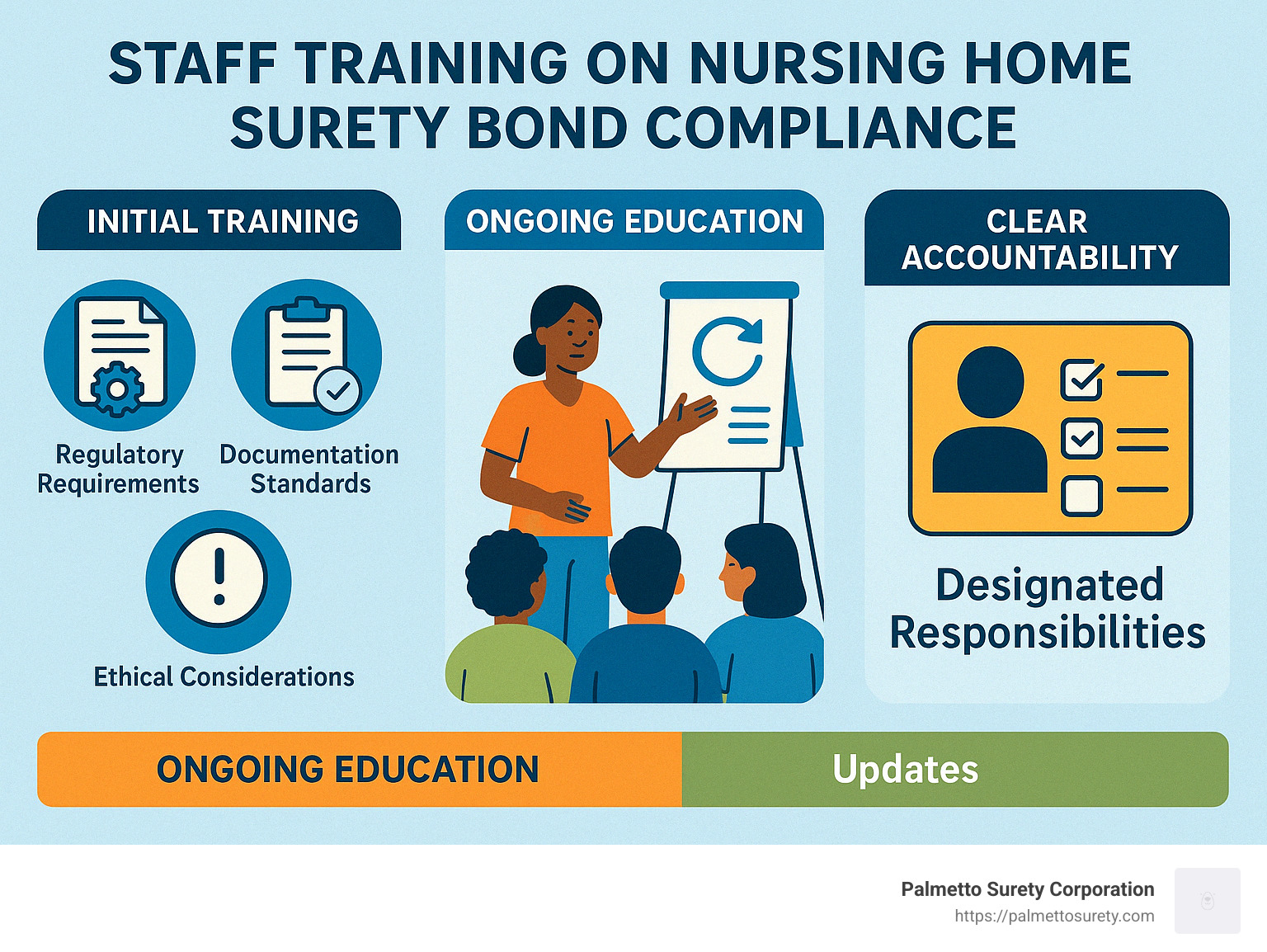
New employees who will handle resident funds should receive thorough training on regulatory requirements, facility policies, and the ethical importance of proper fund management. Make the training practical and relevant – explain not just what to do but why it matters to residents and their families.
But training isn’t a one-and-done event. Regular refresher sessions keep compliance top-of-mind and provide opportunities to address questions or concerns. When regulations change, make sure this information cascades quickly to all relevant team members.
Clear accountability helps everyone understand their role in maintaining compliance. Designate specific positions responsible for monitoring bond adequacy and include these responsibilities in job descriptions and performance evaluations. Create simple ways for staff to report concerns without fear of reprisal.
Communication with Your Surety Provider
Your surety provider should be a partner in your compliance efforts, not just a vendor who sells you a bond once a year.
Keep them informed about significant changes in your operation – substantial increases in resident fund levels, ownership changes, or modifications to your financial management systems. At Palmetto Surety Corporation, we appreciate when clients share updates about regulatory survey findings related to fund management, as this helps us provide better support.
We recommend periodic reviews of your bond coverage to ensure it remains adequate and appropriate. An annual assessment comparing your bond amount to current resident fund levels helps prevent compliance gaps. These reviews also provide an opportunity to discuss any changes in state requirements or consider whether your bond structure remains optimal for your needs.
Don’t wait until the last minute for bond renewals. Beginning the process 60-90 days before expiration gives you plenty of time to update financial information, address any ownership or management changes, and adjust bond amounts if necessary. This advance planning prevents stressful last-minute scrambles and potential compliance gaps.
Staying Informed of Regulatory Requirements
Regulations evolve, and staying current requires ongoing attention to official sources. Regularly check for updates from state licensing agencies, the Centers for Medicare & Medicaid Services (CMS), and relevant industry associations.
Many administrators find it valuable to participate in industry groups like state nursing home associations or long-term care provider organizations. These groups often provide early alerts about regulatory changes and create forums for discussing compliance challenges with peers.
Professional resources can also help you stay informed. Legal counsel specializing in long-term care, compliance consultants, and accounting professionals with healthcare expertise can provide valuable insights. And of course, your surety bond provider should be a resource for bond-specific compliance information.
Best Practices for Managing Your Nursing Home Surety Bond
Maintaining compliance with nursing home surety bonds doesn’t have to be complicated. Focus on these key strategies:
Monitor your resident fund levels consistently, comparing them to your bond amount. Implement financial controls that create natural checks and balances within your system. Train your staff thoroughly so they understand both the how and why of compliance. Maintain open communication with your surety provider for guidance and support. Stay informed about regulatory changes that might affect your requirements. Plan well ahead for renewals to prevent gaps in coverage. And document everything – good records are your best defense during regulatory reviews.
By weaving these practices into your daily operations, compliance becomes less of a burden and more of a natural outcome of good management. At Palmetto Surety Corporation, we’ve seen how facilities that accept these approaches not only maintain compliance but also build trust with residents and their families by demonstrating their commitment to proper fund management.
Frequently Asked Questions about Nursing Home Surety Bonds
What is the difference between a nursing home surety bond and insurance?
I get this question all the time when talking with nursing home administrators, and it’s an important distinction to understand.
Nursing home surety bonds and insurance policies are actually quite different financial tools, though people often confuse them:
When it comes to purpose, a surety bond primarily protects the residents by guaranteeing their funds will be handled properly. Insurance, on the other hand, protects the facility itself against various risks and losses. Think of it this way: the bond is for your residents’ benefit, while insurance is for your facility’s benefit.
The financial responsibility works differently too. With a surety bond, if a claim is paid, we at the surety company expect to be paid back by the facility. As one administrator put it to me recently, “So it’s more like a loan than insurance?” Exactly! Unlike insurance, where you pay a premium and the insurance company covers losses without expecting repayment (beyond your deductible), a bond is more like a financial guarantee.
The parties involved differ as well. A surety bond creates a three-way relationship between your facility (the principal), the regulatory agency (the obligee), and us, the surety company. Insurance is simply a two-party agreement between your facility and the insurer.
From an underwriting perspective, we issue bonds with the expectation that there won’t be any claims. Insurance companies, by contrast, know some claims will happen and price their premiums accordingly.
Your facility needs both appropriate insurance coverage and the required nursing home surety bonds, but they serve completely different purposes in your overall risk management strategy.
Can a nursing home operate without a surety bond?
In a word: no—at least not if you’re managing any resident funds and want to stay on the right side of the law.
Federal regulations are crystal clear on this. Section 483.10(c)(7) of the Code of Federal Regulations requires nursing facilities that manage resident funds to have a surety bond or similar financial instrument in place. Most states have additional requirements that specify exactly how much coverage you need.
What happens if you try to operate without a required nursing home surety bond? Nothing good, I’m afraid:
You’ll face regulatory penalties that can escalate quickly. I’ve seen facilities hit with daily fines that quickly added up to tens of thousands of dollars. Your facility will definitely receive citations during regulatory surveys, which can drag down your Five-Star rating and damage your reputation in the community.
Your facility’s license could be placed in jeopardy. I’ve worked with administrators who had to appear before their state board to explain bond compliance issues—not a pleasant experience! You could even face exclusion from Medicare and Medicaid programs, which would be financially devastating for most facilities.
Without bond protection, your facility also faces direct liability for any resident fund issues. I remember one administrator telling me, “I had no idea we were so exposed until we went through the bonding process.”
The only scenario where you might operate without a bond is if your facility has a strict policy against managing any resident funds whatsoever. But let’s be realistic—that’s impractical for most facilities and residents.
At Palmetto Surety Corporation, we believe proper bond coverage isn’t just about checking a regulatory box—it’s about protecting your residents and your facility.
How often does a nursing home need to renew its surety bond?
Most nursing home surety bonds run on an annual cycle, though this can vary depending on your state regulations and surety provider.
The renewal process isn’t complicated, but it does require some advance planning. Here’s what you need to know:
For timing, mark your calendar about 90 days before your bond expires. Most bonds have a one-year term that ends on the anniversary of when they became effective. While some states might allow multi-year bonds, they’re not common. At Palmetto Surety, we start sending friendly reminders about two months before expiration—but don’t wait for our nudge!
The requirements for renewal are straightforward but important. We’ll need updated financial information for your facility, and sometimes for key principals as well. We’ll verify that your bond amount still adequately covers the resident funds you’re managing. We’ll also confirm your facility remains in good standing with regulatory authorities. And of course, you’ll need to pay the renewal premium.
Several things might change at renewal time. If your resident fund amounts have increased significantly since last year, you may need a larger bond. The good news is that if your facility has established a longer history of proper fund management and improved financial health, you might qualify for better premium rates. One administrator I work with saw her rate drop by nearly a full percentage point after three years of perfect compliance!
At Palmetto Surety Corporation, we make renewal as painless as possible. We send advance notifications, streamline the information collection process, review whether your bond amount is still appropriate, look for ways to improve your rate, and process everything quickly to prevent any coverage gaps.
Whatever you do, don’t let your bond lapse! Even a brief period without required coverage constitutes non-compliance and could trigger serious consequences. I recommend adding bond renewal dates to multiple calendars and assigning clear responsibility for the renewal process to a specific team member.
With a little planning, keeping your nursing home surety bond current is one compliance task that can be relatively stress-free.
Conclusion
Nursing home surety bonds represent far more than a regulatory checkbox—they embody a fundamental commitment to protecting vulnerable residents and their financial resources. Throughout this guide, we’ve explored the multifaceted aspects of these bonds, from their basic structure to the complexities of maintaining compliance.
Key Takeaways
As we’ve seen throughout our discussion, nursing home surety bonds create a three-party relationship that serves as a safety net for resident funds. They’re not just paperwork—they’re a promise that the money entrusted to care facilities will be handled with integrity and accountability.
The cost typically ranges from 1-5% of the total bond amount, influenced by your facility’s financial strength and credit history. While this represents a real expense, it’s ultimately an investment in both compliance and resident protection.
Maintaining proper bond coverage requires vigilance. You’ll need to monitor resident fund levels, implement strong financial controls, and ensure your staff understands their responsibilities. It’s an ongoing commitment rather than a one-time task.
The consequences of non-compliance can be severe, potentially affecting your facility’s licensing, reimbursement eligibility, and reputation in the community. In contrast, proper compliance builds trust with residents, families, and regulatory agencies.
The regulatory landscape continues to evolve, making it essential to work with knowledgeable surety providers who understand the unique requirements of the healthcare industry and can help steer these changes.
The Palmetto Surety Corporation Difference
At Palmetto Surety Corporation, we’ve spent over 20 years developing specialized expertise in nursing home surety bonds throughout the southeastern United States. Our team understands the unique challenges facing long-term care facilities in Georgia, Florida, Louisiana, Mississippi, South Carolina, Tennessee, and Texas.
What makes us different? It starts with our healthcare industry expertise. Our underwriters speak your language and understand the specific regulatory requirements you face. We approve most applications within hours rather than days, helping you maintain continuous compliance without unnecessary delays.
Because we focus specifically on this industry, we’re able to offer highly competitive premium rates for qualified facilities. And our relationship doesn’t end once your bond is issued—we provide ongoing support throughout the bond term and manage renewals proactively to prevent any coverage gaps that could trigger regulatory issues.
Final Thoughts
When I think about the importance of proper nursing home surety bonds, I see a perfect alignment of ethical responsibility, regulatory compliance, and sound business practice. When your facility maintains appropriate bonds and the financial controls they encourage, everyone benefits.
Your residents gain meaningful protection for their financial resources—money that often represents their life savings and final assets. Families enjoy peace of mind, knowing their loved ones’ funds are safeguarded by more than just promises. Your facility demonstrates a tangible commitment to ethical practices that builds trust in your community.
Regulators can focus their limited resources on higher-risk areas when they know your facility has proper bonds in place. And ultimately, the entire long-term care industry maintains the public trust and credibility that’s essential for providing care to our most vulnerable citizens.
The time and effort you invest in understanding and properly managing nursing home surety bonds yields dividends that extend far beyond mere regulatory compliance. It contributes to operational stability and, most importantly, protects the vulnerable residents who have entrusted not only their care but their financial resources to your facility.
For more information about nursing home surety bonds or to discuss your facility’s specific needs, learn more about nursing home surety bonds with Palmetto Surety Corporation or contact our healthcare bond specialists directly. We’re committed to making compliance easy while ensuring the highest level of protection for your residents.


