


Immigration Bail Bond Cost: Top 7 Essential Tips 2025
Immigration bail bond cost is a critical factor for families and individuals facing the challenge of a loved one being detained by ICE. Here’s a concise overview of essential points about immigration bail bonds:
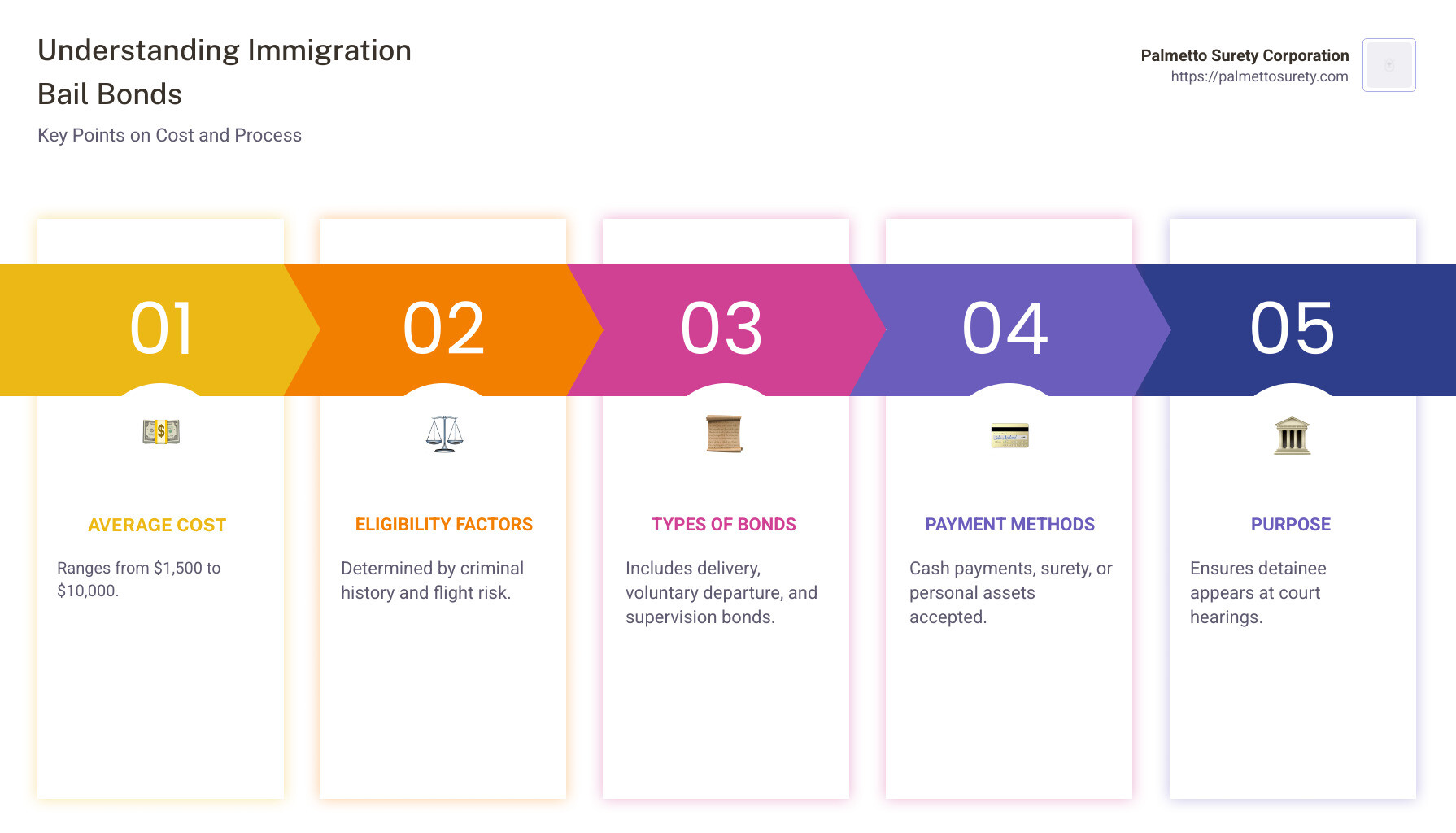
- Average Cost: Typically ranges from $1,500 to $10,000.
- Eligibility: Determined by factors such as criminal history and flight risk.
- Types: Includes delivery bonds, voluntary departure bonds, and supervision bonds.
- Payment Methods: Options include cash payments, surety, or personal assets.
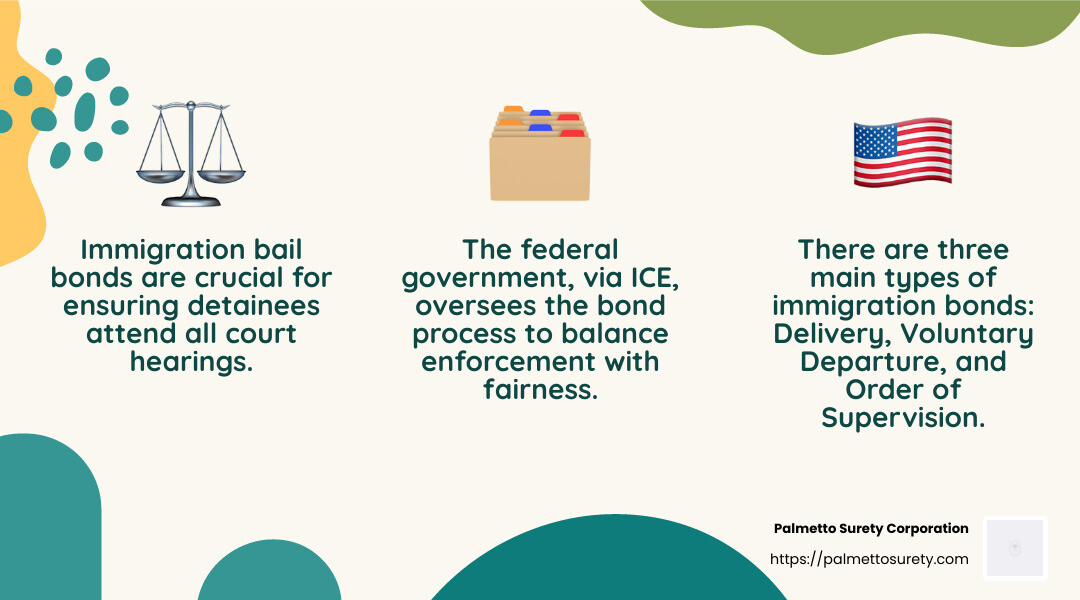
The immigration process can be daunting, with detained immigrants experiencing uncertainty and fear. Bail bonds provide a vital opportunity, allowing the detained individual to remain at home instead of in a detention center while awaiting further proceedings. Immigration bail bonds act as a financial assurance that the detainee will attend all required court hearings and comply with proceedings.
I am Haiko de Poel Jr, and with extensive experience in digital marketing and strategic consultancy, including my work with Palmetto Surety Corporation, I have developed a deep understanding of immigration bail bond cost and its intricacies. This guide will offer clear and actionable insights into navigating these challenges.
What is an Immigration Bail Bond?
An immigration bail bond is a financial guarantee set by either an immigration judge or Immigration and Customs Enforcement (ICE) to ensure that a detained immigrant will appear at all required court hearings. This bond allows the detainee to be released from ICE detention while their immigration case is pending.
How It Works
When a person is detained by ICE, they may be eligible for release on bail. The federal government, through ICE, determines the eligibility based on several factors, such as the individual’s immigration status, criminal history, and flight risk. If deemed eligible, a bond amount is set.
The bond acts as a promise that the immigrant will attend all scheduled court appearances. If they fail to do so, the bond amount is forfeited, and ICE can issue a warrant for their arrest.
Types of Immigration Bonds
-
Delivery Bond: This is the most common type of bond. It allows the detainee to be released so they can spend time with family and consult with their lawyer before their court hearing.
-
Voluntary Departure Bond: This bond allows the detainee to leave the U.S. voluntarily within a specified timeframe. Once the individual departs, the bond amount is refunded.

-
Order of Supervision Bond: This bond is for individuals who are released under specific conditions set by ICE. It allows them to live and work in the U.S. while their case is being processed.
ICE Detention and Federal Oversight
ICE detention centers are facilities where immigrants are held while their cases are being processed. The federal government is responsible for managing these centers and ensuring that detainees’ rights are protected.
The bond process is part of the broader immigration system overseen by federal authorities to balance enforcement with fairness and due process.
Understanding the role of immigration bail bonds can help families and individuals steer the complexities of the immigration system more effectively.
In the next section, we’ll explore the factors that influence the immigration bail bond cost, helping you understand what determines the amount set by ICE or the judge.
Types of Immigration Bonds
When navigating the immigration system, understanding the different types of immigration bonds is crucial. Each bond type serves a specific purpose and has unique conditions. Here’s a breakdown of the main types:
1. Delivery Bond
A delivery bond allows a detained immigrant to be released from ICE custody. This bond ensures that the individual will attend all immigration court hearings. It’s similar to a regular bail bond in the criminal justice system. The detainee can spend time with family and prepare for court appearances, often with the help of a lawyer.
2. Voluntary Departure Bond
A voluntary departure bond offers the option for the detainee to leave the U.S. voluntarily within a specific period. This bond is refundable once the individual departs the country within the agreed timeframe. However, if they fail to leave, the bond is forfeited. This option can be beneficial for those who wish to avoid a formal deportation order on their record.
3. Order of Supervision Bond
An order of supervision bond is for individuals released with specific conditions set by ICE. These conditions might include regular check-ins with ICE officers or restrictions on travel. This bond allows the immigrant to live and work in the U.S. while their immigration case is ongoing. Compliance with the conditions is crucial to avoid any legal repercussions.
Each bond type plays a vital role in balancing the enforcement of immigration laws with the rights and needs of detainees and their families. Understanding these options can help individuals make informed decisions about their situation.
In the next section, we’ll dig into the factors that affect the immigration bail bond cost, providing insight into how ICE or an immigration judge determines the bond amount.
Factors Influencing Immigration Bail Bond Cost
When determining the immigration bail bond cost, several key factors come into play. These factors help ICE officers and immigration judges assess the risk and decide on an appropriate bond amount. Understanding these can help you prepare for a bond hearing.
Criminal History
One of the most significant factors is the detainee’s criminal history. A clean record, with no prior deportations or convictions, often results in a lower bond amount. However, if there are past offenses, especially serious ones, the bond amount can increase significantly. The goal is to ensure that the individual is not a danger to the community or a flight risk.
Family Ties
Strong family connections in the U.S. can positively influence the bond decision. If an immigrant has family members who are U.S. citizens or legal residents, it shows stability and a likelihood of attending court hearings. Family ties can be demonstrated through marriage certificates, birth certificates of children, or affidavits from relatives.
Employment History
A stable job is another factor that can lower the bond amount. Employment history shows that the detainee has responsibilities and connections within the community. Providing recent pay stubs or a letter from an employer can support this. It indicates financial independence and reduces the perceived flight risk.
ICE and immigration judges weigh these factors carefully. The aim is to set a bond that encourages compliance with court appearances while considering the individual’s circumstances. Understanding these elements can help in presenting a strong case for a reasonable bond amount.
In the next section, we’ll explore how to pay for an immigration bail bond, including various payment options and the role of a bond agent.
How to Pay for an Immigration Bail Bond
Once the immigration bail bond amount is set, the next step is figuring out how to pay for it. This can seem daunting, but understanding the process can make it easier. Let’s break it down into simple steps.
Bond Payment Options
Paying an immigration bail bond involves a few specific methods. The most common options include:
-
Certified Check or Money Order: Payments must be made using a certified check or money order payable to the “U.S. Department of Homeland Security.” Personal checks and cash are not accepted.
-
CeBONDS System: As of June 2023, you can pay the bond electronically through the CeBONDS system. This online platform allows you to post bonds and check bond information easily.
Role of a Bond Agent
If you can’t pay the full bond amount upfront, you might consider using a bond agent. A bond agent can pay the bond on your behalf, often for a fee of 10-20% of the total bond amount. This fee is non-refundable. Working with a bond agent can be helpful if you don’t have immediate access to the bond funds.
Collateral Requirements
Sometimes, collateral is needed when working with a bond agent. Collateral is a form of security, like property or a car title, that ensures the bond agent is protected if the detainee does not comply with court requirements. Once the case is resolved, and if all conditions are met, the collateral is returned.
Steps to Make a Payment
-
Gather Information: Ensure you have the detainee’s full name, A-number, and bond amount.
-
Select Payment Method: Decide whether you’ll pay directly with a certified check/money order or through CeBONDS.
-
Complete Payment: Follow the instructions for your chosen payment method. If using CeBONDS, register and follow the online instructions.
-
Get a Receipt: Always get a receipt for your payment. This is crucial for tracking the bond status and for any future refund process.
Understanding these payment options and the role of a bond agent can help you steer the immigration bail bond process more smoothly. In the next section, we’ll dig into immigration bail bond costs, including how bond amounts are set and the potential for refunds.
Immigration Bail Bond Cost
Navigating the immigration bail bond cost landscape can be tricky, but understanding how bond amounts are determined and what to expect in terms of refunds can make a big difference.
How Bond Amounts Are Set
The bond amount is typically set by an ICE officer or an immigration judge. Several factors influence this amount, including:
-
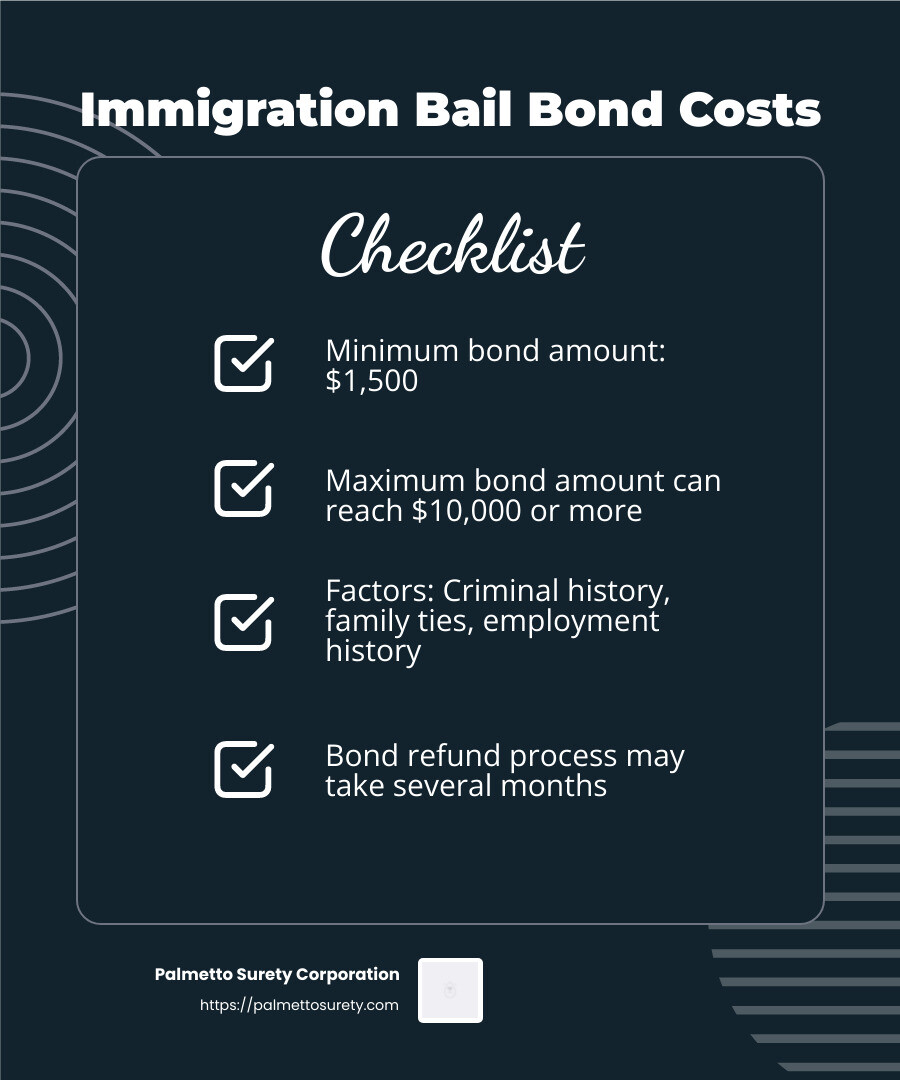
Criminal History: If the detainee has a criminal record, the bond amount might be higher. This reflects the perceived risk of the detainee not appearing for future hearings.
-
Family Ties: Strong family connections within the U.S. can help lower the bond amount. It suggests the detainee has a reason to stay and comply with immigration proceedings.
-
Employment History: Having a stable job or financial independence can also impact the bond amount. It indicates the detainee’s ability to support themselves and their likelihood of complying with court requirements.
Typical Bond Amounts
The minimum bond amount is usually around $1,500 for a delivery bond, but it can go much higher depending on the factors mentioned above. In some cases, bond amounts can reach $10,000 or more.
Bond Refund Process
Once the immigration proceedings are over, and if the detainee has complied with all court requirements, the bond can be refunded. Here’s how the process works:
-
Bond Cancellation: ICE contacts the DHS Debt Management Center to cancel the bond.
-
Notification: The original payer receives a bond cancellation notice, typically using Form I-391. This form outlines the next steps for requesting a refund.
-
Requesting a Refund: Follow the instructions on Form I-391 to request the principal amount and any accrued interest. Refunds can take several months, so patience is key.
-
Compliance with Conditions: It’s crucial to comply with all terms of the bond. Failure to do so can result in the loss of the bond money.
In summary, while the immigration bail bond cost can seem overwhelming, knowing how bond amounts are set and how to steer the refund process can help ease the burden. Next, we will address some frequently asked questions about immigration bail bonds, including minimum and maximum bond amounts and the potential to appeal bond decisions.
Frequently Asked Questions about Immigration Bail Bonds
What are the minimum and maximum bond amounts?
The minimum bond amount for an immigration bail bond is typically set at $1,500. This is the starting point for a delivery bond, which allows the detainee to be released from custody while awaiting their court hearings.
However, the bond amount can increase significantly based on various factors such as criminal history, family ties, and employment status. In some cases, the bond can reach $10,000 or more if the detainee is considered a higher flight risk or poses a danger to the community.
Can bond amounts be appealed?
Yes, bond amounts can be appealed. If a bond amount is set higher than the minimum bond, the detainee or their family can request a bond redetermination. This process involves submitting a “Motion for Bond Redetermination” to an immigration judge.
During a bond redetermination hearing, the judge will review the case and consider the reasons for requesting a lower bond amount. Factors like steady employment, strong family ties, and a clean criminal record can support the case for a reduced bond. It’s important to provide evidence and documentation to strengthen the appeal.
How long does it take to get a bond refund?
The bond refund process begins after the detainee has complied with all court requirements and the immigration proceedings are concluded. Here’s a step-by-step look at how the refund process works:
-
Bond Cancellation: ICE contacts the DHS Debt Management Center to cancel the bond once all conditions are met.
-
Notification: The original bond payer receives a bond cancellation notice, usually via Form I-391. This form provides instructions on how to proceed with the refund request.
-
Requesting a Refund: Following the instructions on Form I-391, the payer must apply for the return of the principal amount and any accrued interest.
It’s important to note that the refund process can take several months, so patience is necessary. Ensure all steps are followed precisely to avoid delays in receiving the refund.
Conclusion
Navigating the complexities of immigration bail bonds can be overwhelming, but at Palmetto Surety Corporation, we strive to make the process as smooth and efficient as possible. Our experienced team of bail bondsmen is dedicated to providing quick service to help you or your loved ones secure release from ICE detention swiftly.
With over 20 years of experience in the surety bond industry, we have honed our processes to ensure fast approvals, often within hours. This efficiency is crucial when dealing with the urgent nature of immigration cases. Our network of bail agents across the southeastern United States, including states like South Carolina, Georgia, and Texas, is ready to assist you every step of the way.
We understand that the immigration bail bond cost can be a significant concern. That’s why our team is available to guide you through the payment options, collateral requirements, and the bond refund process. We aim to provide clear and straightforward information, helping you make informed decisions during this challenging time.
For more information on how Palmetto Surety Corporation can assist you with immigration bail bonds, visit our website to learn more about our services and how we can help you today. Our commitment is to offer reliable support and expert guidance, ensuring you have the peace of mind you need during the immigration process.


