


Bail Bond South Carolina: Top Guide for 2025 Success
Understanding Bail Bond Basics in South Carolina
If you’re searching for information about bail bond South Carolina, here’s what you need to know:
| Bail Bond South Carolina Basics | Details |
|---|---|
| Standard Fee | 10-15% of bail amount (minimum $25) |
| New Requirement | Bondsmen must collect 10% before posting bond |
| Available 24/7 | Most bail bond services operate around the clock |
| Types | Personal recognizance, cash bail, surety bail |
| Process | Arrest → Bond hearing → Posting bail → Release |
Being arrested and charged with a crime in South Carolina can be a traumatic experience. One of the first questions that comes to mind is whether you or your loved one will be released on bail while awaiting trial. Bail bond South Carolina services provide a vital lifeline during this stressful time, helping defendants secure temporary freedom while their case proceeds through the court system.
In South Carolina, the bail process begins with a bond hearing, typically within 24 hours of arrest. A judge will determine whether bail should be granted based on several factors:
- The severity of the alleged crime
- The defendant’s criminal history
- Flight risk assessment
- Potential danger to the community
Once bail is set, you have three main options:
- Personal recognizance – Release based on your promise to appear (typically for non-violent, first-time offenses)
- Cash bail – Paying the full amount directly to the court
- Surety bail – Using a bail bondsman who charges a fee (typically 10-15% of the total bail amount)
The recent law change in South Carolina now requires bondsmen to charge and collect at least 10% of the liability before posting bond for defendants. This has significant implications for how bail bonds work in the state.
I’m Haiko de Poel Jr, and through my work with Palmetto Surety Corporation, I’ve helped countless individuals steer the complexities of bail bond South Carolina processes, ensuring that our clients understand their rights and responsibilities when securing a bail bond.

Understanding Bail Bonds in South Carolina
When someone you care about is arrested in South Carolina, it can feel overwhelming and confusing. You might be wondering—how does bail even work, and what’s the difference between bail and a bail bond? Don’t worry; you’re not alone. Let’s break it down together, step by step.

What Is a Bail Bond?
Simply put, a bail bond is a financial agreement that ensures a defendant will show up in court as required. In South Carolina, bail bonds function as surety bonds, which involve three main parties: the court, the defendant, and a licensed bail bondsman.
Here’s how it works: the court sets a monetary amount as bail to allow the defendant temporary freedom until their trial. If the defendant can’t afford to pay that full amount directly (called cash bail), they can turn to a bail bondsman who posts the bail on their behalf. In return, the defendant or their loved ones pay the bondsman a non-refundable fee, usually around 10-15% of the total bail amount.
A wise South Carolina Circuit Court Judge once explained it best: “When bail is set, it’s not meant as punishment. It’s a mechanism to ensure the defendant returns to face the charges while allowing them the freedom to prepare their defense.” In other words, bail offers defendants the chance to stay out of jail, continue working, take care of family responsibilities, and build their defense—all very important factors in an already stressful situation.
At Palmetto Surety Corporation, we’ve provided reliable bail bond South Carolina services for more than 20 years. We’ve seen how bail bonds bring peace of mind to families, giving defendants the chance to stay connected to their loved ones and their community.
Types of Bail Bonds Available in South Carolina
South Carolina courts offer several options when it comes to bail, depending on the specific circumstances of the case.
With Personal Recognizance (PR), no money changes hands. Instead, the defendant simply promises to appear for all court dates. This option typically applies to first-time, non-violent offenses and defendants with strong ties to their community.
If you have the funds, you can pay the entire bail amount directly to the court through Cash Bail. This money will be refunded after you meet all required court appearances—even if you’re ultimately found guilty.
However, many people find it challenging to pay the full bail upfront. That’s when Surety Bail comes into play. A licensed bail bondsman covers your bail amount, and you pay the bondsman a fee—usually around 10-15% of the total bail. This fee is non-refundable, but it’s often a lifesaver when faced with large bail amounts.
In some cases, courts also allow Property Bonds, where property is put up as collateral instead of cash. If the defendant doesn’t appear in court, the court can legally take possession of the property.
Finally, certain situations might qualify for release with Electronic Monitoring, where the defendant wears a tracking device.
One of our clients at Palmetto Surety Corporation faced a daunting $25,000 bail. Paying that full amount was out of the question, but using a surety bail bond meant they only had to pay $2,500. “It made all the difference for my family,” they told us, emphasizing how crucial bail bonds can be during difficult times.
Whatever your situation, understanding these different options can help you make informed decisions and reduce anxiety. At Palmetto Surety Corporation, we’re always here to offer support and answer your questions about the bail bond South Carolina process.
The Bail Bond Process in South Carolina
Understanding how the bail bond South Carolina process unfolds step-by-step can help ease your anxiety during an already stressful time. Let’s walk through exactly what happens from the moment someone is arrested to their release from custody.

Arrest and Booking
The first step in the bail bond process begins as soon as an individual is arrested. When you or your loved one is taken into police custody in South Carolina, law enforcement officers will begin the booking process.
During booking, officers record personal information, take fingerprints and mugshots, document the alleged charges, conduct background checks, and collect any personal items. Depending on how busy the jail or holding facility is, booking can take several hours.
You won’t be able to arrange for bail or contact a bail bondsman until the booking process is finished and official charges have been filed. So, while waiting can feel frustrating, it’s important to understand this step must be completed first.
Bond Hearing and Setting Bail
In South Carolina, defendants are legally entitled to a bond hearing within 24 hours of their arrest (excluding Sundays and holidays). During this important hearing, a judge or magistrate will carefully review several factors to decide whether or not to grant bail and at what amount.
The judge considers things like the seriousness of the alleged offense, the defendant’s criminal history, their ties to the community, employment status, family responsibilities, flight risk, and potential danger to the public.
Based on these considerations, the judge may choose one of three outcomes:
- Set a specific bail amount
- Release the defendant on personal recognizance (no money required)
- Deny bail (rarely, but possible for very serious charges)
To quote one South Carolina judge we spoke with: “When setting bail, I’m not punishing anyone. I’m making sure the defendant will appear in court and protecting the safety of our community.”
Posting Bail in South Carolina
After bail has been set, you have several options available to secure a release from custody.
One option, cash bail, involves paying the full bail amount directly to the court. This money is returned at the end of the case, no matter the verdict—as long as the defendant makes all required court appearances.
For most people, however, paying the full bail amount upfront isn’t feasible. That’s where a licensed bail bondsman, like the network provided through Palmetto Surety Corporation, becomes essential.
With a surety bail bond, a bail bondsman posts the bail on your behalf. You’ll typically pay the bondsman between 10% and 15% of the total bail amount as their fee (with a minimum of $25). For a bail amount of $10,000, that means paying around $1,000 to $1,500. South Carolina law now requires bondsmen to collect at least 10% upfront before posting the bond—so keep this requirement in mind.
Another option available in some cases is a property bond, which allows defendants or their families to use real estate as collateral. Usually, the property’s value must surpass the bail amount by a specified percentage to qualify.
Whichever method you choose, the sooner you get started, the sooner your loved one can return home to prepare for their case.

Release and Obligations After Posting Bail
Once bail has been paid, the defendant is promptly released from custody—but this freedom comes with important responsibilities.
Most importantly, the defendant is required to attend all scheduled court dates. Missing even one court appearance can have serious consequences, including the immediate issuance of an arrest warrant, forfeiture of any bail paid, additional criminal charges for failure to appear, and possibly losing eligibility for bail in the future.
Judges may also set additional conditions for release, such as curfews, travel restrictions, drug testing, electronic monitoring, no-contact orders, or mandatory reporting requirements. Following these conditions carefully is crucial.
One client who worked with us at Palmetto Surety shared his experience clearly: “My bondsman explained everything I needed to do after being released. I realized quickly that missing a court date or breaking a bail condition wasn’t worth the risk—it could cost me my freedom all over again.”
At Palmetto Surety Corporation, we know how overwhelming facing arrest and bail can feel. Understanding the bail bond South Carolina process clearly is your first step towards taking control of the situation and finding peace of mind during a challenging time.
How to Obtain a Bail Bond in South Carolina
When a loved one is arrested, the first hours can feel overwhelming and confusing. Knowing exactly how to obtain a bail bond South Carolina quickly and efficiently can make all the difference in relieving stress during this difficult time.

Steps to Obtain a Bail Bond South Carolina
The initial step is to gather some essential information about the person who has been arrested. You’ll need their full legal name, date of birth, the jail or detention center where they’re held, booking number (if available), the charges filed, and the bail amount set by the judge. Having these details handy will make your call to the bail bondsman faster and smoother.
Next, you’ll want to contact a licensed bail bondsman. At Palmetto Surety Corporation, we have a network of trusted bail agents throughout South Carolina, ready to help you anytime—day or night. When you call, simply share the information you’ve gathered, and we’ll walk you through the rest.
After you’ve connected with the bondsman, you’ll complete some paperwork. Don’t stress—your bail agent will guide you through every form required, including the bail bond application, indemnity agreement, and payment arrangements. Each county might have slightly different forms, but your agent will make sure you understand every step of the process clearly.
You’ll then pay the bond premium and provide collateral if needed. In South Carolina, bail bond fees typically range from 10%-15% of the total bail amount. A recent legal change now requires bondsmen to collect at least 10% upfront before posting the bond. This premium is non-refundable, even if the case is dropped or the defendant is found not guilty.
Sometimes, especially for larger bail amounts, collateral (such as real estate, vehicles, jewelry, or other valuables) may be necessary. Collateral helps protect the bondsman if the defendant doesn’t appear in court. Once the case concludes and all court appearances have been made, your collateral is returned to you.
With the paperwork signed and payment arranged, the bondsman posts the bond at the jail. Depending on how busy the facility is, posting the bond typically takes anywhere from half an hour to several hours.
Finally, the jail will process the release. Generally, this takes about 1-4 hours but can occasionally take longer depending on how busy the jail is. One client recently told us, “I was amazed at how quickly everything happened once I contacted the bail bondsman. They walked me through exactly what I needed to do, and my brother was released within hours of our first call.” At Palmetto Surety Corporation, we do everything we can to make the release happen as quickly as possible because we know every minute counts.
Costs and Fees for Bail Bond South Carolina
When dealing with bail bonds, understanding the exact costs involved is crucial. By South Carolina law, bail bond fees must be at least $25 and cannot exceed 15% of the bail amount. Most bondsmen charge within the range of 10-15% of the total bail. This fee is non-refundable no matter the outcome of the case.
As mentioned earlier, the new law in South Carolina requires bondsmen to collect at least 10% of the bail amount upfront before posting the bond. While payment plans might still be possible for the remaining amount, this initial 10% must be paid before the defendant can be released. This change aims to promote financial stability and accountability in the bail bond system.
Collateral might also be required, particularly for higher bail amounts. Valuable items like real estate, vehicles, jewelry, or even sentimental family heirlooms can sometimes serve as collateral. This gives the bail bondsman security in case the defendant doesn’t show up to court. As long as the defendant attends all their court dates, the collateral will be returned once the case is resolved.
If you have questions about costs, fees, or collateral, reach out to Palmetto Surety Corporation. We’re here to make sure you completely understand your responsibilities and feel comfortable with every step of the bail bond South Carolina process.

For more detailed information on costs, fees, and licensing regulations, visit the SC Department of Insurance Licensing and Fees.
The Role and Requirements of Bail Bondsmen in South Carolina
When you or a loved one faces an arrest, the bail bond South Carolina system can feel overwhelming. That’s where bail bondsmen come in—they’re the friendly folks guiding you through the complex legal maze and helping you secure temporary freedom. But what exactly do these professionals do, and what qualifications must they have to serve our South Carolina communities?
Let’s take a closer look at the important role bail bondsmen play, along with the specific requirements they need to meet in South Carolina.
Responsibilities of a Bail Bondsman in South Carolina
A bail bondsman’s number one job is ensuring defendants show up to court. It sounds simple, but it’s a task loaded with responsibilities. This often means regular check-ins, friendly reminders about upcoming court dates, and keeping tabs on defendants’ compliance with all bail conditions.
They also handle crucial paperwork—accurately completing all required legal documents, filing monthly reports with the clerk of court, and maintaining detailed records of each bond they write. Bail bondsmen take care of these details so you don’t have to worry—one less thing weighing on your mind during a stressful time.
Financially, a bail bondsman takes on a big responsibility as well. If a defendant doesn’t appear in court, the bondsman must pay the full bail amount to the court. This is why bondsmen carefully screen clients, keep a close eye on their whereabouts, and step in quickly if they sense someone might not show up.
Additionally, South Carolina bail bondsmen must follow strict state regulations about fees, bond forfeitures, and financial practices. As one of our experienced agents at Palmetto Surety Corporation likes to say with a warm smile, “We’re not just here to lend money; we’re here to help people stay on track with their court obligations. It’s a big responsibility—but it’s rewarding to see our clients successfully steer their legal situations.”
Requirements to Become a Licensed Bondsman
Given the critical role bail bondsmen play, it’s no surprise South Carolina law lays down clear guidelines for licensing. According to South Carolina Code Title 38, Chapter 53, applicants must meet several important criteria:
First, they must meet basic eligibility requirements such as being at least 18 years old, living in South Carolina, and having good moral character. Importantly, they cannot have a felony conviction or crime involving moral issues within the last ten years.
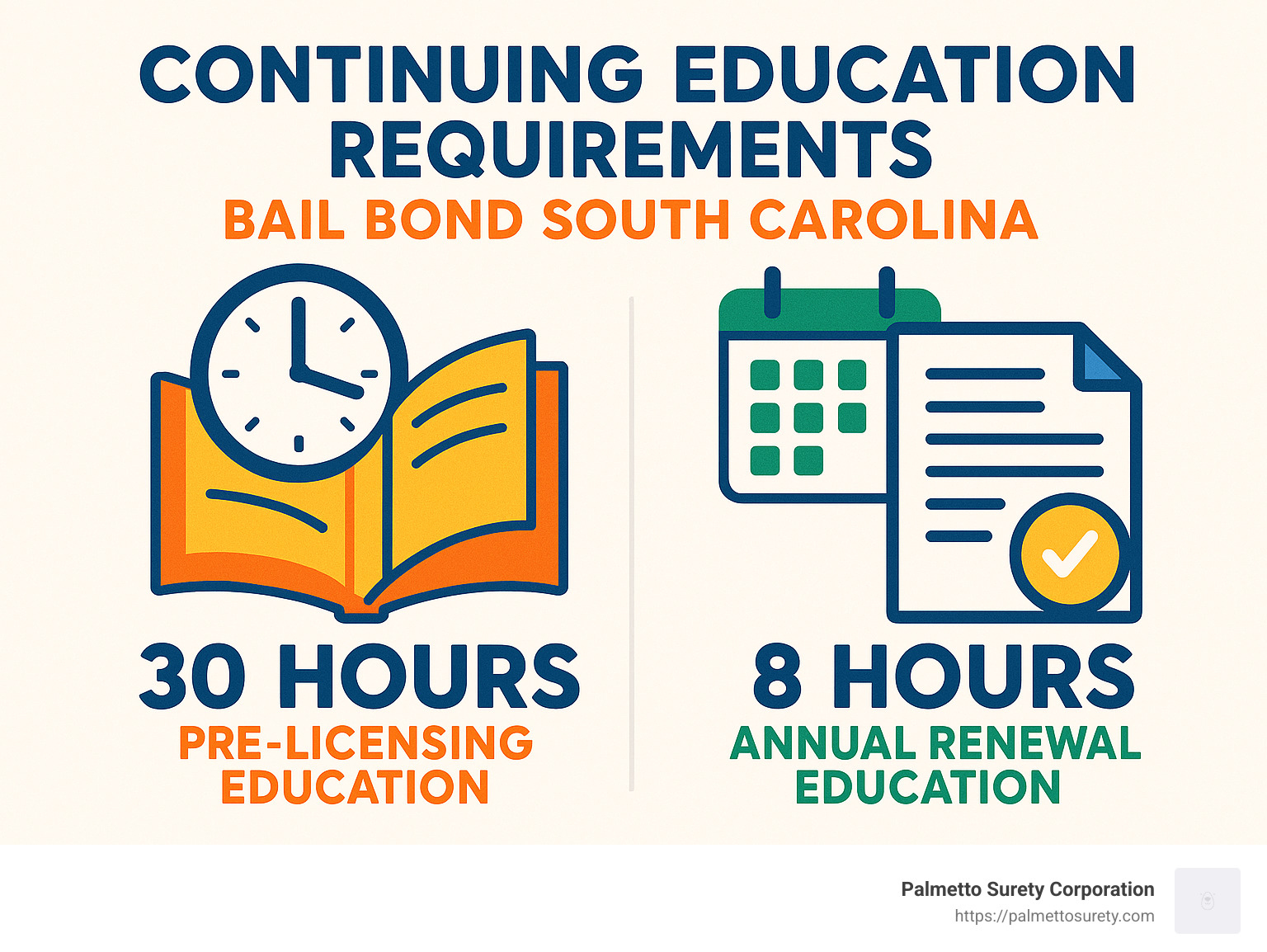
Education is also key. Each bondsman candidate must complete 30 hours of pre-licensing education and successfully pass a state exam. The state also requires fingerprinting and a thorough criminal background check.
Financial stability is another essential requirement. Professional bondsmen must deposit at least $10,000 in cash or certificates of deposit with the clerk of court in their home county. This deposit allows them to write bonds worth up to four times their collateral amount. So, with a $10,000 deposit, they can issue up to $40,000 in bonds.
South Carolina also offers three types of bondsman licenses:
- Professional Bondsman, who posts bonds using their own collateral
- Surety Bondsman, who works for an insurance company that financially supports the bonds
- Runner Bondsman, who helps professional or surety bondsmen with administrative tasks and client interaction
Licensing fees vary depending on the type of license: professional bondsmen pay about $400, runner bondsmen $200, plus county fees ($150 for their home county and $100 for each additional county they operate in).

Educational and Renewal Requirements
Just like the legal world they work within, bondsmen must continually update their knowledge and skills. Every year, South Carolina bondsmen must complete 8 hours of approved continuing education. These courses often cover important legal updates, ethical considerations, and best practices—ensuring they’re always prepared to support their clients effectively.
Licenses aren’t forever, either—they expire every June 30th. Bondsmen must submit renewal paperwork between April 1st and June 30th each year. Renewal also requires updated fingerprint information and proof they’ve completed the necessary continuing education.
To guarantee compliance, the South Carolina Department of Insurance regularly audits bondsmen, examining their financial reserves and adherence to regulations. If someone fails to meet these strict standards, they risk license suspension or revocation.
At Palmetto Surety Corporation, we pride ourselves on working with licensed bail bondsmen dedicated to following the rules and achieving excellence. As one longtime bondsman told us, “Those yearly continuing education courses might seem like a chore at first, but they’re incredibly helpful. They’re an opportunity to learn what’s new, sharpen our skills, and ultimately better serve our clients.”
Recent Changes in South Carolina Bail Bond Laws
The world of bail bonds can feel complicated enough without laws and regulations changing unexpectedly. But, like everything else in life, the bail bond industry continues to evolve. Recently, some significant updates have affected both defendants and bail bondsmen throughout the state. Let’s take a closer look at what’s new, what it means for you, and why compliance matters more than ever.
The New 10% Upfront Collection Law
Perhaps the most impactful recent change is South Carolina’s new law that requires bail bondsmen to charge and collect at least 10% of the total bail amount upfront before posting bond for a defendant. While bondsmen have typically charged between 10% and 15% of the total bail amount, this new rule emphasizes upfront payment of at least the minimum 10%.
To clarify, here’s exactly what the law requires:
- Bondsmen must collect a minimum of 10% of the bail before posting the bond.
- This upfront fee can never be less than $25, nor can it exceed 15% of the total bail amount.
- The payment must be made before the bondsman can post the bond and secure the defendant’s release.
So, what does this mean for defendants and their families? In practical terms, it means you’ll need to come up with at least 10% of the bail amount right away. While payment plans might still be available for any remaining fees beyond the upfront 10%, there’s now less flexibility in the initial payment. This can be particularly challenging if the bail amount is high, potentially causing delays in getting a loved one out of jail.
For bail bondsmen, the news is generally positive (although nobody loves extra paperwork or stricter rules!). The law helps standardize how bondsmen operate across the state, creating a level playing field for all licensed bondsmen. It also provides better financial stability, ensuring bondsmen have the necessary funds on hand to cover potential forfeitures. This, in turn, reduces the risk of taking on clients who may not appear in court.
As a representative from the South Carolina Bail Agents Association recently explained, “This change helps ensure the sustainability of the bail bond system while protecting both the public and bondsmen from practices that could undermine the integrity of the process.”
Consequences for Non-Compliance
South Carolina takes compliance seriously, and the state has outlined clear consequences for bail bondsmen who fail to follow the new law and other regulations. As bondsmen, our responsibility isn’t just financial—it’s also about ensuring defendants uphold their court obligations and comply with bail conditions.
Bondsmen who fail to adhere to these rules can face steep penalties, such as administrative fines and even license suspension or revocation. If a bondsman neglects to collect the required upfront 10%, they could still be on the hook financially if a defendant skips court. The court can estreat (a fancy legal word meaning forfeit) the bond, leaving the bondsman liable for the full bail amount.
To put it simply, non-compliance isn’t worth the risk. At Palmetto Surety Corporation, we emphasize to all our affiliated agents that sticking closely to state guidelines protects their business, safeguards public safety, and ensures the bail system continues to function smoothly.
As stated clearly in a recent order from the South Carolina Department of Insurance: “Bondsmen who ignore or disregard reports that criminal defendants are violating the terms and conditions of the bail bond and who fail to act as outlined in S.C. Code Ann. § 38-53-50… risk having their bonds estreated by the court, but they also risk the imposition of administrative disciplinary action.”
So, whether you’re a defendant, bondsman, or simply trying to help a loved one steer the bail bond South Carolina process, understanding these recent changes and requirements is more important than ever. Staying informed ensures you know exactly what to expect—giving you peace of mind during a challenging time.
Frequently Asked Questions about Bail Bonds in South Carolina
When dealing with bail bond South Carolina procedures, we understand you probably have a lot of questions. We’re here to clear up some of the most common concerns we hear from clients at Palmetto Surety Corporation. Let’s dive right in!
What happens if I cannot afford the 10% fee required by the new law?
You’re definitely not alone in wondering about this—it’s one of the most frequent questions we get. Facing bail is stressful enough without worrying about how you’ll gather the required money upfront. Thankfully, you have several options if you can’t immediately pay the required 10%.
First, many defendants rely on help from family members or close friends. Pooling resources together often makes that upfront 10% fee more manageable.
If family assistance isn’t an option right away, don’t panic! While South Carolina’s recent law requires bail bondsmen to collect at least 10% of the total bail amount upfront, some bondsmen may offer payment plans for any additional fees above that 10% (up to the maximum 15% allowed by the state). This flexibility can significantly ease your financial burden.
Another helpful option might be collateral. For example, you could offer valuable assets like jewelry, vehicles, or property as security. Though, collateral usually doesn’t replace the required 10% cash fee—it just provides extra security for the bail bond service.
Still having trouble? Your attorney may have an option to request the court reconsider the bail amount. In some cases, judges will reduce bail amounts if they see solid evidence of financial hardship. Additionally, some counties in South Carolina run pretrial services programs that offer alternatives to regular bail for eligible defendants.
One client recently shared with us: “When my son was arrested, I didn’t have the full 10% immediately available. The bail bondsman worked with me patiently, accepting some jewelry as collateral while I gathered the cash. Their kindness and flexibility made all the difference for our family.”
Can a bail bondsman refuse to post my bail?
This is another important question we hear a lot. The short answer is yes—bail bondsmen in South Carolina can choose whether or not to take on your case. Because bail bondsmen run private businesses, they carefully assess risks before agreeing to post bail.
Some common reasons bail bondsmen may choose not to take on a case include feeling that there’s too high a risk the defendant might not show up to court (known as a “flight risk”), or finding that the defendant doesn’t have enough collateral to make the bond a safe investment.
If you’ve missed court before, or if the charges you’re facing are especially serious or violent, these may also be factors that convince a bondsman not to take your case. Additionally, if you’re unable to meet the required 10% minimum payment upfront, this could potentially lead a bondsman to decline the bond.
But don’t lose hope yet! Different bail bondsmen have different comfort levels and policies about risk. If one bondsman isn’t comfortable taking your case, another might be willing to help out. At Palmetto Surety Corporation, we work with an extensive network of agents throughout South Carolina who do their best to find workable solutions for our clients.
What are the consequences if I miss a court date after posting bail?
Missing a court date after you’ve posted bail is serious business, and it’s critical to understand exactly what’s at stake. The moment you miss your scheduled appearance, the court typically issues an immediate warrant for your arrest—called a “bench warrant.”
On top of this, the bail amount you posted becomes forfeited (known as bond forfeiture). This means the full bail amount becomes due, and the bail bondsman must pay it. Once this happens, you and any co-signers (such as family members who helped arrange your bail) could be financially liable for the full bail amount. Any collateral you provided may be seized to cover these costs.
Beyond the financial consequences, missing court can lead to separate criminal charges for failure to appear. These additional charges can mean increased penalties and a tougher legal battle moving forward. Worse yet, it makes judges less likely to grant you bail in future proceedings, or they may set a much higher bail amount.
But life happens—we understand emergencies can arise unexpectedly. If you think you can’t make it to court on your scheduled date, immediately inform your attorney and your bail bondsman. With enough advance notice and a valid reason, courts might agree to reschedule your appearance without issuing a warrant or forfeiting your bail.
As one of our experienced Palmetto Surety Corporation agents always reminds clients: “Communication is key. We can often help arrange a continuance or postponement if we know in advance. But once the court date is missed, our options become drastically limited.”
Navigating the bail bond South Carolina process can feel overwhelming, but knowledge is power. Our goal at Palmetto Surety Corporation is always to help you understand your options clearly, so you can confidently make smart choices during challenging times.
Conclusion

Dealing with an arrest in your family can feel overwhelming, stressful, and downright frightening. But the good news is, having a clear understanding of the bail bond South Carolina process doesn’t have to be complicated. Knowing exactly what to expect can greatly reduce stress and help you steer this challenging situation smoothly.
At Palmetto Surety Corporation, we’ve been in the bail bonding business in South Carolina for over 20 years. We’ve seen how crucial it is for families and defendants to understand their rights and responsibilities. The bail bond system exists to provide defendants with temporary freedom, enabling them to work, care for family members, and build their legal defense—all while ensuring they show up for their court dates.
We’ve covered a lot of information here, so let’s wrap it up with a few key points to remember:
First, be familiar with the bail process from start to finish—arrest, bond hearing, posting bail, and finally release. Knowing these steps ahead of time helps you avoid confusion and quickly take action when it matters most.
Second, understand the costs involved. South Carolina now requires bondsmen to collect at least 10% of the bail amount up front before posting bond. Be prepared for this expense, and know your options for payment plans or collateral if you can’t come up with the full amount right away.
Next, always work with a reputable, licensed bondsman. Choosing an experienced, professional bail agent makes the process straightforward, ensuring all paperwork is handled correctly and promptly. At Palmetto Surety Corporation, we take pride in providing fast, efficient, and compassionate service whenever you need us—day or night.
Additionally, always fulfill your legal obligations after posting bail. This means attending every scheduled court appearance and complying fully with conditions set by the judge. Missing a court date isn’t just costly—it can lead to serious legal consequences, including additional charges and arrest warrants.
Finally, stay informed about recent changes in South Carolina bail bond laws. Laws and regulations can shift over time, so staying updated helps you remain compliant. When in doubt, ask questions. We’re here to help.
At Palmetto Surety Corporation, we understand that needing a bail bond isn’t something anyone plans for. Life happens, and we’re here to support you through every step. Our experienced network of licensed bail agents throughout South Carolina is available 24/7 to answer your questions, provide guidance, and offer solutions that accommodate your specific situation.
If you or someone you care about finds themselves needing a bail bond South Carolina, don’t hesitate to get in touch. You’re not alone—Palmetto Surety Corporation has your back.
For more information about bail bond services in South Carolina, visit our dedicated page here: More information about bail bond services in South Carolina.


