


Construction Contractor License: Top 5 Quick Success Tips
When embarking on a construction career, understanding the importance of a construction contractor license is essential. This license ensures your business adheres to state regulations, allowing you to legally and professionally handle large projects. Here’s a quick overview for those short on time:
- A construction contractor license is generally required for most government and public works projects.
- The requirement varies by state and specific trade, with some exceptions like handymen in Texas.
- Beyond legal compliance, having a license can enhance your credibility and trust with clients.
Whether you’re a new contractor or seeking to grow, obtaining this license is a crucial step in your professional journey. While the licensing process differs by state, it universally validates your skills and professionalism.
As Haiko de Poel Jr, I offer extensive industry expertise in branding, marketing, and the intricacies of contractor licenses. This knowledge equips you to proceed with confidence. In the following sections, we’ll explore contractor licenses in more detail and outline the steps to obtain one.
Understanding Contractor Licenses
When it comes to working in the construction industry, understanding the different types of contractor licenses is essential. These licenses don’t just open doors to more work opportunities; they also ensure you’re operating within legal boundaries and maintaining industry standards.
Types of Contractor Licenses
General Contractor License: This is for those who oversee entire construction projects. As a general contractor, you manage everything from hiring subcontractors to ensuring project completion. Most states require this license, and it typically involves passing an exam and meeting experience requirements.
Class B License: This license is for general building contractors who take on projects involving more than two unrelated trades. It’s a step below a general contractor license but still allows for significant project oversight.
Professional Licenses: These are required for specialized trades, such as plumbing and electrical work. Each state has specific requirements for these licenses, often including exams and proof of experience.
To illustrate, in Texas, plumbers and electricians must hold a state-issued license, while general contractors do not. This variance highlights the importance of checking state-specific regulations.
Importance of Being Licensed
Having a construction contractor license isn’t just a legal formality—it’s a badge of credibility and trust.

Building Codes and Safety Regulations: Licensed contractors are expected to adhere to building codes and safety regulations, which protect both the contractor and the client. These codes ensure that work is done safely and up to standard.
Consumer Protection: Licenses serve as a form of consumer protection. They ensure that the contractor has met minimum qualifications and standards, reducing the risk of shoddy work or unfinished projects.
Credibility and Trust: Being licensed signals to potential clients that you’re serious about your trade and committed to maintaining high standards. This can lead to more job opportunities and a better reputation in the industry.
In summary, obtaining the right contractor license not only aligns you with state regulations but also improves your professional credibility, ensuring you’re set up for success in your construction career.

Next, we will explore the steps to obtain a construction contractor license, including application processes and financial considerations.
Steps to Obtain a Construction Contractor License
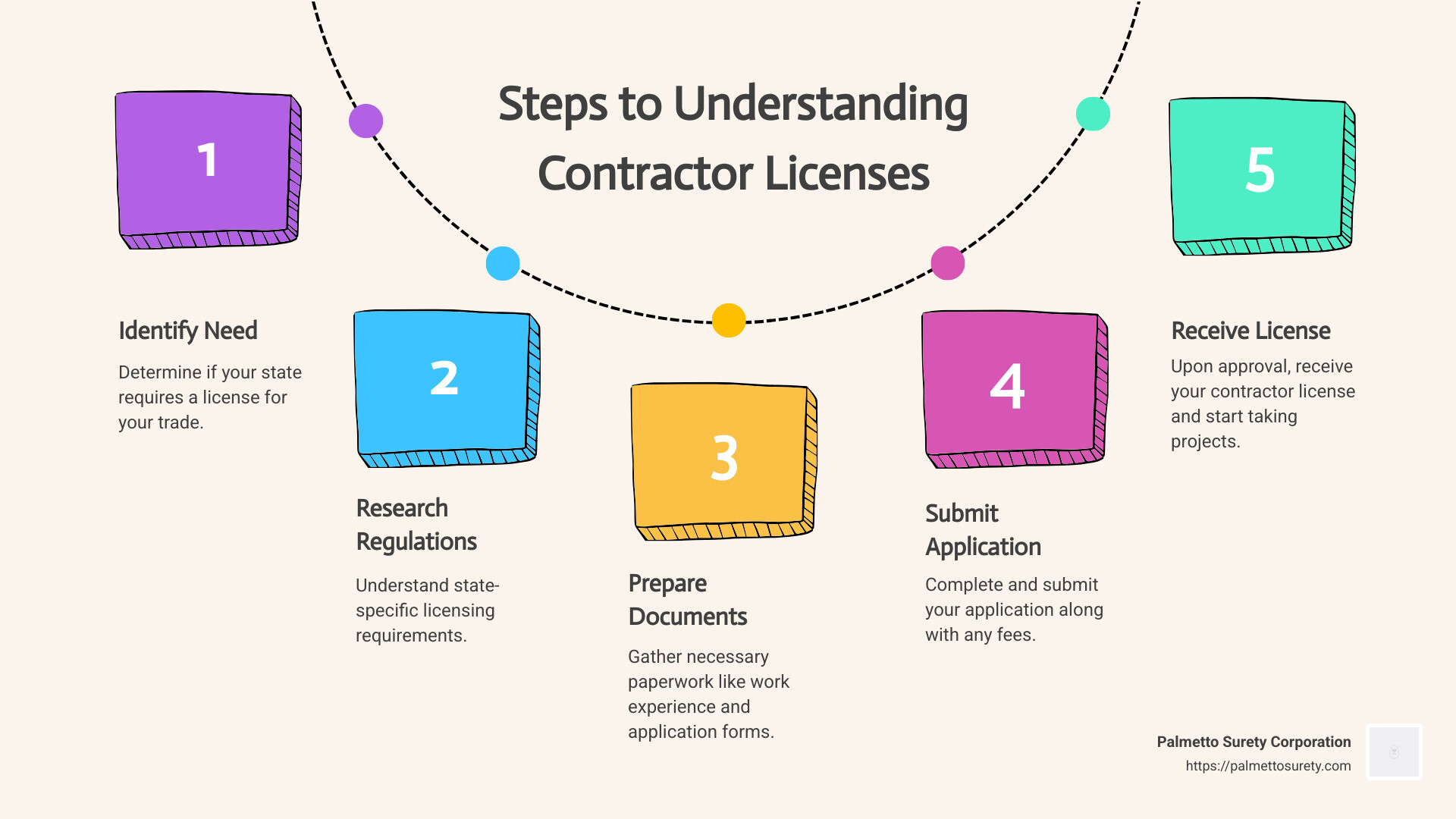
Starting on the journey to obtain a construction contractor license involves understanding the specific requirements and processes involved. While the path may vary from state to state, some common elements are shared across the board.
State-Specific Requirements
Each state has its own set of rules when it comes to contractor licensing. Let’s dive into a few examples:
California: In California, obtaining a contractor license is a multi-step process. Applicants must pass a written exam covering law, business, and trade-specific knowledge. They also need at least four years of journeyman-level experience in their trade. Additionally, a background check is conducted to ensure the applicant meets the state’s standards for licensing.
Texas: Texas has a more relaxed approach for general contractors, who do not need a state-issued license. However, specialized trades like plumbing and electrical work require state licenses. These licenses involve passing relevant exams and meeting experience requirements. It’s crucial to check local city or county regulations, as they might have additional requirements.
Pennsylvania: Unlike California and Texas, Pennsylvania does not require a state license for most contractors. However, Philadelphia and other municipalities may have their own licensing requirements. It’s important to check local regulations and ensure compliance with any specific municipal rules.
Financial Considerations
Obtaining a construction contractor license isn’t just about meeting experience and education requirements. There are financial aspects to consider as well:
License Cost: The cost of obtaining a license varies by state and type of license. For example, in California, the application fee for a contractor license is around $450, with an additional fee for the exam. Renewal fees also apply, typically every two years.
Construction Bonds: Many states require contractors to secure a construction bond as part of the licensing process. These bonds act as a financial guarantee that the contractor will adhere to state regulations and fulfill contractual obligations. Companies like Palmetto Surety Corporation offer these bonds, ensuring contractors can meet state requirements.
Payment Restrictions: Some states have specific rules regarding payment schedules and deposits. For instance, in California, contractors can only require a down payment of 10% of the total project cost or $1,000, whichever is less. Understanding these restrictions helps in planning finances and managing client expectations.
In conclusion, obtaining a contractor license involves navigating state-specific requirements and managing financial obligations. With the right preparation and understanding of these elements, you’ll be well on your way to securing your license and building a successful career in construction.
Maintaining Your Contractor License
Once you’ve secured your construction contractor license, the journey doesn’t end there. Maintaining your license involves keeping up with renewals, ensuring compliance, and managing insurance and bonds. These steps are crucial in safeguarding your business and staying in good standing with regulatory bodies.
Renewal and Compliance
Renewing your contractor license is a critical part of maintaining your standing. Most states require active renewal of licenses every one to three years. This process often involves:
-
Submitting a Renewal Application: Ensure you submit your renewal application before your current license expires. Late renewals can lead to penalties or even suspension of your license.
-
Continuing Education: Some states mandate continuing education as part of the renewal process. This ensures that contractors remain updated on the latest industry standards and regulations.
-
Workers’ Compensation and Statement of Clearance: Maintaining workers’ compensation coverage is not just about compliance; it protects both you and your employees. Some states require a statement of clearance, proving that you have no outstanding tax liabilities, before renewing your license.
Staying compliant with these requirements not only keeps your license active but also demonstrates your commitment to professional standards and safety.
Insurance and Bonds
Insurance and surety bonds are vital components of maintaining your contractor license. They provide financial protection and build trust with clients.
- Surety Bonds: These are essential for protecting clients and ensuring you fulfill contractual obligations. Palmetto Surety Corporation offers a range of surety bonds custom to meet state requirements. They act as a safety net, guaranteeing that your clients are covered in case of any contractual breaches.
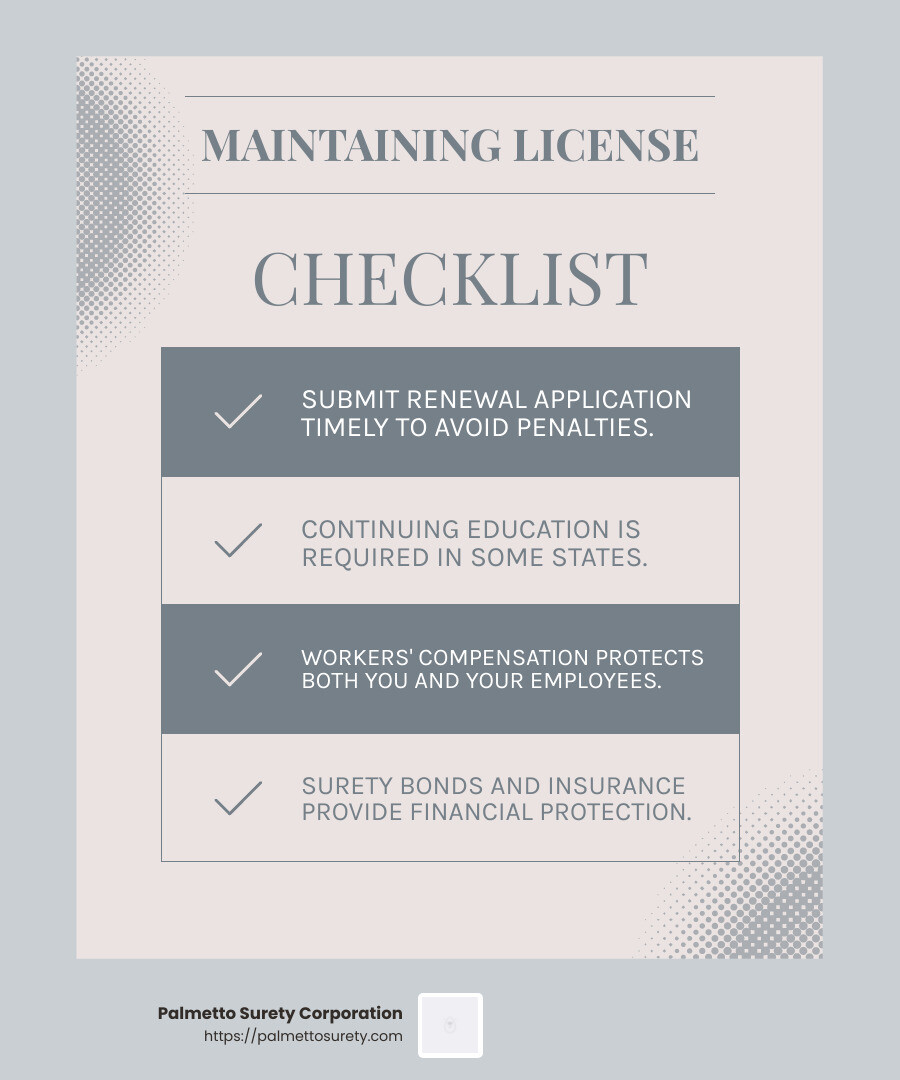
- Insurance Coverage: Apart from bonds, having adequate insurance coverage is crucial. General liability insurance protects against claims of property damage or personal injury. It’s important to review and update your insurance policies regularly to ensure comprehensive coverage.
By actively managing renewals, compliance, and insurance, you secure your business’s future and uphold your reputation in the industry. This not only helps in legal compliance but also improves client confidence in your services.
In the next section, we’ll address frequently asked questions about construction contractor licenses, including the easiest licenses to obtain and costs associated with them in different states.
Frequently Asked Questions about Construction Contractor Licenses
What is the easiest contractor license to get?
The easiest contractor license to obtain often depends on the state and the specific trade. Generally, a handyman license or a Class C contractor license is considered easier to get. These licenses typically require less experience and fewer exams compared to more specialized licenses. For example, in Texas, general contractors and handymen do not need a state-issued license, making it simpler to start working in these roles. However, it’s important to check local city requirements as they may vary.
Do contractors need a license in Texas?
In Texas, the need for a contractor license depends on the specific trade. General contractors, handymen, and home improvement specialists do not need a state-issued license. However, certain trades like plumbing, electrical, and HVAC work do require a license from the state. If you offer services in these specialized areas, you’ll need to meet specific requirements and pass exams. It’s also crucial to check for any additional local permits or registrations required by the city you plan to work in.
How much does a California general contractor license cost?
In California, obtaining a general contractor license involves several costs. The application fee is approximately $450, and once approved, there’s an additional initial licensing fee of about $200. Contractors must also pass exams and may incur costs for study materials and preparation courses. Additionally, California requires contractors to have a bond, which can cost between $100 to $250 annually, depending on credit history. These figures can change, so it’s wise to verify current fees with the California Contractors State License Board.
These FAQs highlight the importance of understanding specific state requirements and costs associated with obtaining a construction contractor license, ensuring you start your contracting business on the right foot.
Conclusion
Navigating the construction industry can be challenging, but obtaining a construction contractor license is a crucial step toward building a successful career. At Palmetto Surety Corporation, we understand the complexities involved in this process and are committed to making it as smooth as possible for you.
Quick Service and Expertise
With over 20 years in the industry, we specialize in providing surety bonds custom to your needs. Our expertise spans various sectors, including construction, manufacturing, and transportation. We pride ourselves on our ability to approve most applications within hours, ensuring you can focus on your projects without unnecessary delays.
Why Choose Palmetto Surety Corporation?
-
Speed and Efficiency: Our streamlined processes mean you get your surety bonds quickly, allowing you to meet state and local requirements without hassle.
-
Comprehensive Support: From obtaining your initial license to maintaining compliance, our team is here to support you every step of the way.
-
Wide Coverage: With locations across the southeastern United States, including Florida, Georgia, and South Carolina, we’re well-positioned to serve your needs wherever you are.
Start Your Journey with Us
Whether you’re just starting or looking to expand your business, partnering with Palmetto Surety Corporation can make all the difference. We offer the resources and expertise to help you succeed in the competitive construction industry.
Taking the first step toward your construction career has never been easier. Let us help you build a solid foundation for your business with the right surety bonds and support.


