


Bail Bondsman Career: Top Guide to Success in 2025
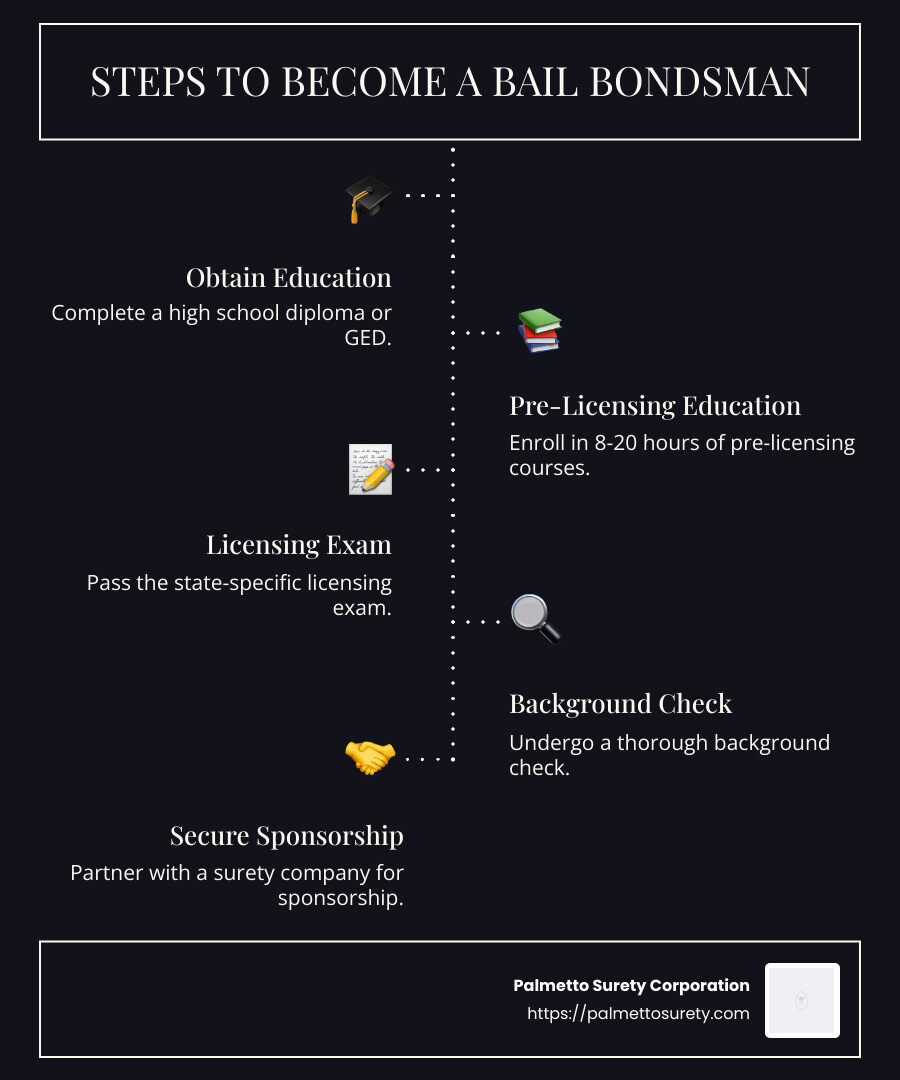
Exploring a bail bondsman career opens the door to a unique path in the legal industry, offering insight into the judicial system and providing vital services to communities. For those interested in what it takes, here’s a quick look at the requirements for a bail bondsman career:
- Education: High school diploma or GED
- Training: 8-20 hours of pre-licensing education
- Examination: State licensing exam
- Age: At least 18 years old
- Certification: Continuing education to maintain license
- Sponsorship: Partnership with a surety company
This role is about freeing defendants awaiting trial by posting bail on their behalf, which ensures they return to court. Being a bail bondsman involves working with courts, assessing defendants, and sometimes tracking them if they fail to appear.
My name is Haiko de Poel Jr, and I bring a wealth of experience in marketing and strategic growth, most recently in my work with Palmetto Surety Corporation. My knowledge spans from understanding business needs in legal services to developing innovative solutions that bolster the bail bondsman career.
Bail bondsman career terms you need:
– bail agent jobs
– bail bondsman career florida
Understanding the Role of a Bail Bondsman
A bail bondsman plays a crucial role in the legal system by acting as a bridge between the court and defendants. Here’s how they make it all happen:
Liaison with Courts and Defendants
Bail bondsmen serve as the liaison between the courts, police departments, and defendants. They ensure that all parties are on the same page regarding the bail process. By doing so, they help defendants steer the complex legal system and secure their release from jail while awaiting trial.
Court Appearances
While a bail bondsman doesn’t usually appear in court for the trial, their work is essential for the defendant’s court appearances. They provide the financial guarantee that the defendant will show up for their court date. If the defendant fails to appear, the bondsman might have to pay the full bail amount to the court or track down the defendant to avoid this penalty.
Defendant Assessment
Before posting bail, a bondsman must assess the defendant’s risk level. This involves checking their background to determine if they are a flight risk or likely to skip court dates. This assessment is critical because it affects whether the bondsman will agree to post bail. A careful evaluation helps in deciding whether to proceed with the bond or not.

Bond Qualification
Once a defendant passes the assessment, the next step is bond qualification. The bondsman collects a fee, usually a percentage of the total bail amount, and secures collateral if needed. This collateral can be anything of value, like real estate or vehicles, ensuring that the bondsman is protected if the defendant skips bail.

A bail bondsman career requires a mix of financial savvy and legal knowledge. It’s about balancing the needs of the legal system with the rights of the defendant, all while managing the risks involved in posting bail. This career offers a unique perspective on the justice system and plays a vital role in ensuring that defendants can maintain their freedom while awaiting trial.
Next, we’ll explore the steps to becoming a bail bondsman, including the necessary education and licensing requirements.
Steps to Becoming a Bail Bondsman
Starting on a bail bondsman career involves several key steps. It’s crucial to understand the specific requirements and regulations of your state, as they can vary significantly. Let’s break down the essential steps:
State Regulations
The first step is to research your state’s regulations. Not all states allow private bail bondsmen. For instance, states like Oregon and Wisconsin have strict policies or outright bans. It’s important to check if your state permits bail bondsmen and what the specific requirements are.
To find this information, visit your state’s Department of Insurance or criminal justice website. They typically provide detailed guidelines on what you need to do to become a licensed bail bondsman.
Pre-Licensing Course
Many states require aspiring bail bondsmen to complete a pre-licensing course. This course covers crucial topics such as state statutes, business practices, and apprehension techniques. It usually consists of 8-20 hours of coursework.
Even if your state doesn’t mandate it, taking a pre-licensing course is beneficial. It provides a solid foundation and prepares you for the licensing exam. For example, in North Carolina, you must complete 12 hours of pre-licensing education.
Licensing Exam
After completing the pre-licensing course, the next step is to pass the licensing exam. This exam tests your knowledge of the bail industry and relevant laws. It typically consists of up to 100 multiple-choice questions, with a passing score of 70% required.
The exam fee ranges from $40 to $80, depending on the state. Be prepared for a waiting period between retries if you don’t pass on the first attempt. In some cases, you might have to wait a full year before retaking the exam.
Background Check
A background check is a standard requirement for becoming a bail bondsman. States conduct background checks to ensure that applicants do not have a criminal history that could hinder their ability to perform the job responsibly.
This step often involves fingerprinting and submitting various documents, such as a copy of your driver’s license and proof of residency. For instance, North Carolina requires at least two documents showing your residential address, like a utility bill or pay stub.
Becoming a bail bondsman involves navigating state-specific requirements and preparing thoroughly for exams and background checks. With the right preparation and understanding of the process, you can start on this rewarding career path.
Next, we’ll dig into the skills and qualifications needed to succeed in a bail bondsman career.
Skills and Qualifications Needed
To succeed in a bail bondsman career, you need a mix of skills and qualifications that go beyond just meeting legal requirements. Let’s explore the essential skills you should develop:
Financial Knowledge
A bail bondsman deals with financial transactions daily. You need to understand how bail amounts are set and how to assess the financial risk of each client. This includes knowing how to evaluate a defendant’s ability to pay and manage the financial aspects of bail agreements. Knowledge in basic accounting and finance is a plus.
Contract Law
Understanding contract law is crucial. As a bail bondsman, you’ll create contracts that bind defendants to appear in court. You must ensure these contracts are legally sound and enforceable. Familiarity with state-specific laws surrounding bail and contracts will help you avoid legal pitfalls.
Criminal Law
A solid grasp of criminal law is essential. You need to understand the charges your clients face and how they impact bail eligibility. This knowledge helps in assessing whether a client is a flight risk or likely to reoffend. It also aids in navigating the legal system and working effectively with attorneys and courts.
Communication Skills
Effective communication is key. You’ll interact with defendants, their families, attorneys, and court officials. Being able to explain complex legal terms in simple language is vital. Good communication helps build trust and ensures all parties understand their responsibilities.
Problem-Solving Skills
Every case is unique, and challenges can arise unexpectedly. Whether it’s tracking down a defendant who missed a court date or resolving a financial dispute, strong problem-solving skills are essential. Being resourceful and thinking on your feet will help you tackle these challenges effectively.
Interpersonal Skills
Empathy and patience are important. Dealing with people in stressful situations requires a calm and understanding approach. Building rapport with clients can make the process smoother and increase the chances of a successful outcome.
These skills and qualifications form the backbone of a successful bail bondsman career. By developing these abilities, you can steer the challenges of the job and provide a valuable service to your community.
Next, we’ll explore the salary expectations and job outlook for bail bondsmen.
Bail Bondsman Salary and Job Outlook
When considering a bail bondsman career, understanding the potential earnings and job prospects is crucial.
Average Salary
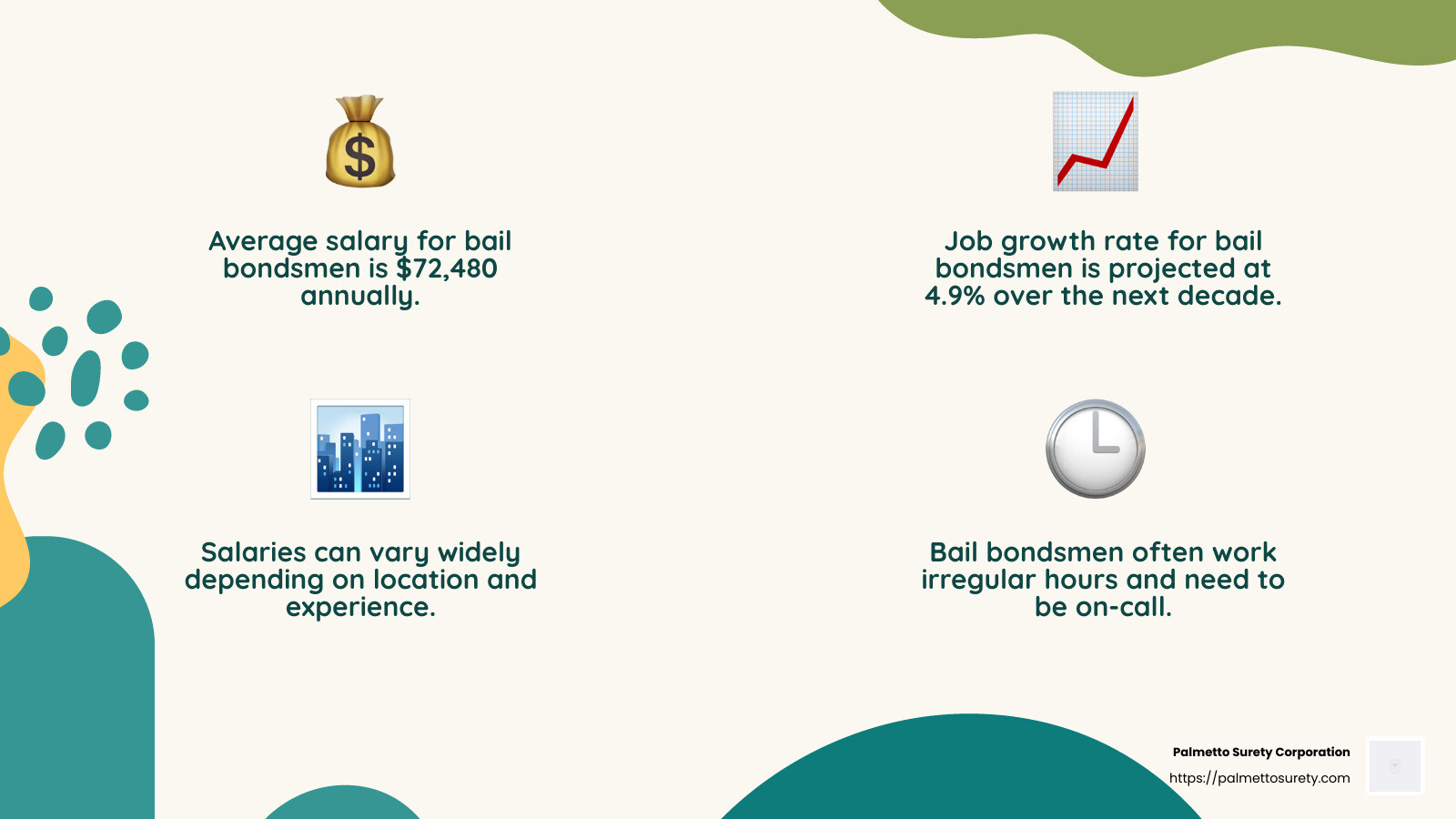
Bail bondsmen can expect to earn a decent living. Nationally, the average salary for a bail bondsman is around $72,480 per year. This translates to approximately $35 per hour. However, earnings can vary widely depending on experience, location, and the size of the agency you work for. Entry-level positions or those in states with lower costs of living might see salaries starting around $49,590 annually, while more experienced bondsmen in high-demand areas can earn up to $112,140 per year.
Job Growth Rate
The job outlook for bail bondsmen is promising, with a projected growth rate of 4.9% over the next decade. This growth is considered above average compared to other professions, indicating a steady demand for bail bondsmen in the coming years. The increase in the criminal justice system’s complexity and the high population in jails contribute to this demand.
Employment Sectors
Bail bondsmen primarily work in two sectors:
-
Self-Employed or Contractors: Many bail bondsmen choose to be self-employed, running their own agencies. This path offers flexibility and the potential for higher earnings but also comes with the responsibility of managing a business.
-
Bond Agencies: Others work for established bail bond agencies. This option provides a more stable income and the opportunity to gain experience without the risks associated with starting a business.
In both scenarios, bondsmen often collaborate with law enforcement, courts, and attorneys, providing an essential service to the community.
Understanding these aspects of a bail bondsman career can help you make informed decisions about pursuing this path. Next, we’ll address some frequently asked questions about the career to provide further clarity.
Frequently Asked Questions about Bail Bondsman Career
What are the typical work hours for a bail bondsman?
A bail bondsman career involves unpredictable hours. While some time is spent in the office during regular business hours, bondsmen must be prepared to be on-call 24/7. Crimes and arrests can happen at any time, requiring immediate attention to secure a client’s release. This means your phone could ring in the middle of the night, or you might need to visit a jail on a weekend.
How much money do you need to start as a bail bondsman?
Starting a bail bondsman career involves some initial financial investment. You’ll need to cover costs for licensing, training courses, and potentially setting up an office. Licensing fees can range from $40 to $80, and pre-licensing courses might cost around $500. If you plan to start your own agency, you’ll also face expenses for business registration, surety bonds, and office space. Overall, expect to budget several thousand dollars to get started.
What is the job growth projection for bail bondsmen?
The job growth outlook for bail bondsmen is positive. With a projected growth rate of 4.9% over the next decade, the demand for bail bondsmen is expected to rise. This growth is driven by the increasing complexity of the criminal justice system and the high population in jails, which creates a steady need for bail services. The profession ranks #441 nationally in terms of growth, indicating above-average expansion compared to other careers.
Understanding these details can help you better prepare for and succeed in a bail bondsman career. Now, let’s explore more about the skills and qualifications needed to excel in this field.
Conclusion
In the changing world of bail bonds, Palmetto Surety Corporation stands out as a trusted leader. With over 20 years of experience, we specialize in providing quick and efficient service to our clients. Our expertise spans various industries, including construction, manufacturing, transportation, and healthcare, ensuring that we meet the diverse needs of our clients.
One of our key strengths is our ability to approve most applications within hours. This fast turnaround is crucial in the bail bonds industry, where time is of the essence. We understand that every minute counts when securing a client’s release, and we are committed to providing prompt service without compromising on quality.
Our extensive network of bail bondsmen across the southeastern United States, including locations in Georgia, Florida, Louisiana, Mississippi, South Carolina, Tennessee, and Texas, allows us to offer localized support and personalized service. We work closely with our agents to ensure they have the resources and backing needed to thrive in their bail bondsman career.
Choosing Palmetto Surety Corporation means partnering with a company known for its industry expertise and dedication to client satisfaction. Whether you’re just starting in the bail bonds profession or looking to expand your agency, we are here to support your journey every step of the way.


