


Are Bail Bonds Refundable? 5 Crucial Facts 2025
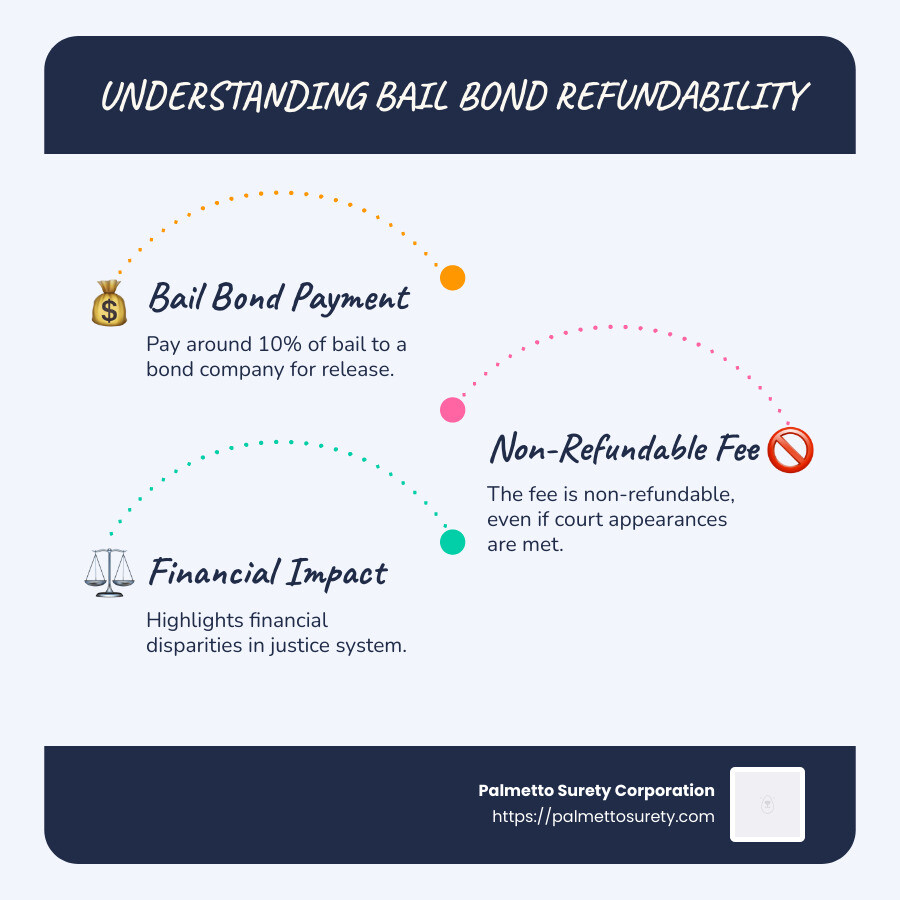
Are bail bonds refundable? The short answer is: not usually. When you secure a bail bond to get someone released from jail, the fee paid to the bail bond company is non-refundable. This fee, typically around 10% of the total bail amount, is how bail bond companies earn income. Even if the court appearance schedule is perfectly kept, this fee is the cost of using their bail posting service.
The bail system in the U.S. is a cornerstone of our justice system, meant to ensure that defendants return to court. Yet, this system often highlights the financial differences between individuals. Money talks, so when bail is set too high for some to afford, it can lead to prolonged jail time for individuals from lower-income backgrounds. This financial element raises questions about fairness and influence within our justice system.
As an industry expert, I’ve seen how complex navigating the topic of “are bail bonds refundable” can be, especially given the intricacies of financial obligations within the justice system. In my role as a guide of change in the industry, I’ve delved into the nuances of bail bonds extensively.
Understanding Bail Bonds
When someone is arrested, the bail system allows them to be released from custody while waiting for their court date. Bail bonds are one of the most common ways to secure this release, but understanding how they work is crucial.
Cash Bail
Cash bail is straightforward: you pay the full bail amount set by the court in cash. This ensures that the defendant will return for all court appearances. If the defendant attends all required court dates, the cash bail is returned, minus any court fees. However, if the defendant skips a court date, the bail is forfeited, and you lose the entire amount.
Property Bonds
With a property bond, a piece of property is used as collateral instead of cash. The court places a lien on the property, which is released once the defendant fulfills all court obligations. If the defendant fails to appear, the court can seize the property. This option is useful for those who may not have the cash but own valuable assets.
Bail Bonds
Bail bonds are a more affordable option for those who cannot pay the full cash bail. A bail bondsman pays the bail on behalf of the defendant, charging a non-refundable fee, usually 10% of the bail amount. This fee is not returned, even if the defendant attends all court dates. Bail bonds are a common choice because they require less immediate cash, but they come with the cost of the non-refundable fee.
Each type of bail has its pros and cons, and understanding these can help you make an informed decision if you or a loved one needs to post bail. The choice often depends on the financial situation and the resources available to the defendant.

Are Bail Bonds Refundable?
When dealing with bail bonds, the question “are bail bonds refundable?” often arises. The short answer is no, they are not refundable. Understanding why requires a closer look at how bail bonds work and the costs involved.
Non-Refundable Bail Bond Premium
When you opt for a bail bond, you’re essentially hiring a bail bondsman to pay the full bail amount on your behalf. For this service, you pay a bail bond premium. This premium is typically about 10% of the total bail amount. It’s important to know that this fee is non-refundable, regardless of the outcome of the case. Even if the charges are dropped or the defendant is acquitted, this fee is the cost of using the bail bond service.
Court Appearances and Compliance
The main role of a bail bond is to ensure that the defendant appears in court as required. If the defendant attends all court appearances and complies with any release conditions, the bail amount is returned to the bail bondsman—not to you. The bail bondsman takes on the risk of the defendant not showing up in court, which is why the premium you pay is non-refundable.

Why Choose a Bail Bond?
Despite the non-refundable nature of the premium, many people still choose bail bonds. This is because they offer a way to secure release from custody without needing to pay the full bail amount upfront. For many, coming up with 10% of the bail is more manageable than paying the full cash bail, especially when bail amounts can be quite high.
In summary, while bail bonds offer a financial solution for many, it’s crucial to remember that the premium you pay is a service fee and is not returned, irrespective of court outcomes. Always weigh the costs and benefits before deciding on this option.
Types of Bail and Their Refund Policies
When navigating the bail system, it’s crucial to understand the different types of bail and their refund policies. Each type comes with its own set of rules and implications for getting your money back. Let’s break down the main types: cash bail, property bonds, and bail bonds.
Cash Bail
Cash bail is straightforward. You pay the full bail amount in cash to secure the defendant’s release. The good news? If the defendant attends all court appearances and follows the court’s rules, you can get your money back. However, be mindful that some minor court fees might be deducted from the refund.
Key Point: If the defendant skips court or breaks any conditions, the cash bail is forfeited, meaning you lose the money.
Property Bond
A property bond uses real estate as collateral instead of cash. This method involves pledging property to the court to secure the defendant’s release. If the defendant meets all court obligations, the property is returned. But if they fail to appear in court, the court can seize the property.
Key Point: Property bonds are a viable option if cash isn’t available, but they carry the risk of losing your property if court conditions aren’t met.
Bail Bonds
Bail bonds are a popular alternative when cash bail is too high. A bail bondsman pays the full bail amount on behalf of the defendant, in exchange for a non-refundable premium—usually about 10% of the bail amount. This fee is your cost for the service and won’t be refunded, even if the defendant complies with all court requirements.
Key Point: While bail bonds can ease the financial burden, the premium is a service fee and is non-refundable.
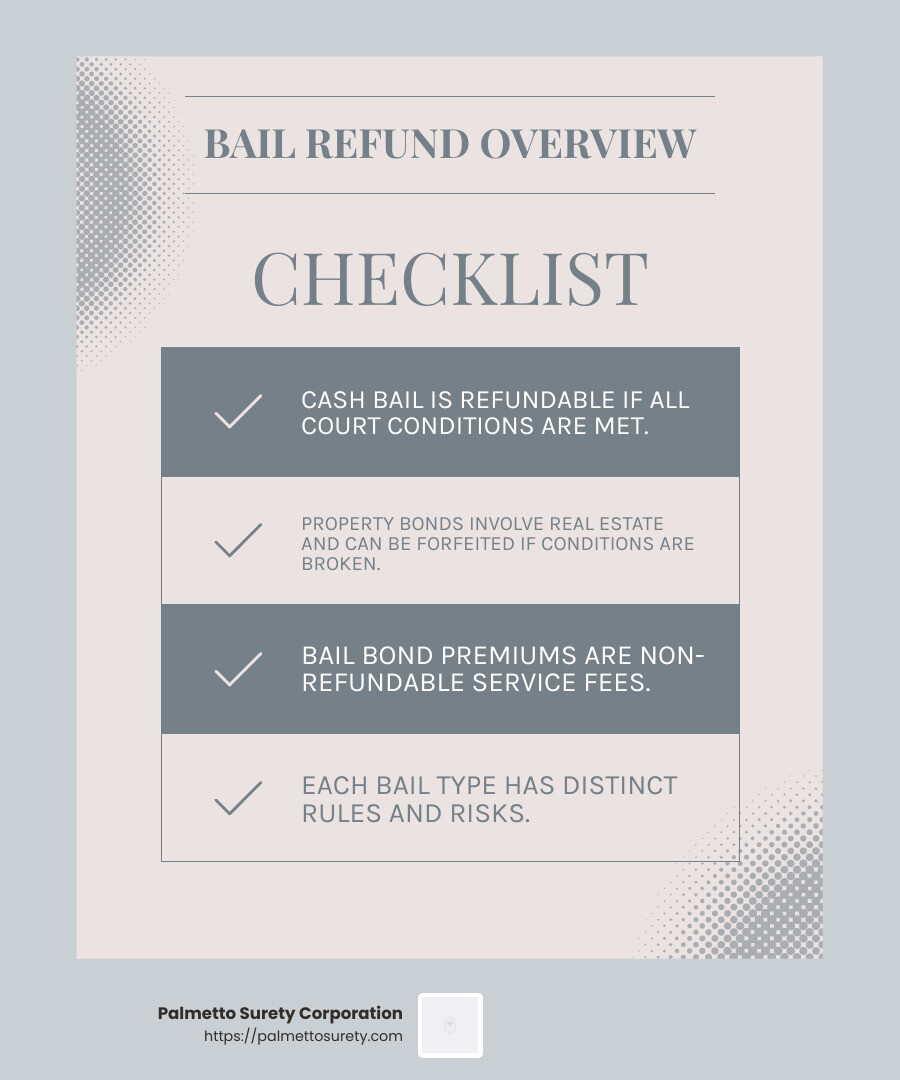
Understanding these types of bail and their refund policies helps you make informed decisions during a challenging time. Each option has its pros and cons, so consider your financial situation and the defendant’s ability to comply with court terms before proceeding.
Factors Affecting Bail Bond Refunds
When dealing with bail bonds, understanding the factors that can affect refunds is key. Let’s take a closer look at three critical elements: court compliance, release conditions, and defendant behavior.
Court Compliance
Court compliance is crucial for getting your bail money back. If the defendant attends all court appearances as required, the process of getting a refund becomes smoother. Missing a court date can lead to the forfeiture of bail. This means you lose the money you paid, and there might be additional legal consequences.
Key Point: Always ensure the defendant knows their court dates and attends each one without fail.
Release Conditions
Aside from attending court, defendants must comply with specific release conditions set by the court. These might include regular check-ins with a probation officer, travel restrictions, or participation in a treatment program. Not adhering to these conditions can lead to bail forfeiture and possibly more legal issues.
Key Point: It’s important to fully understand and follow all release conditions to avoid losing your bail money.
Defendant Behavior
The behavior of the defendant significantly impacts the refundability of bail bonds. If the defendant skips bail, gets re-arrested, or violates any terms of their release, the bail bond can be forfeited. This means not only losing the money but also facing potential legal consequences.
Key Point: Responsible behavior by the defendant is essential for ensuring that the bail money is returned.
Understanding these factors can help you steer the complexities of the bail system and safeguard your financial interests. Always prioritize compliance and responsible behavior to avoid any issues with bail bond refunds.
Frequently Asked Questions about Bail Bonds
Are bail bonds refundable if charges are dropped?
When charges are dropped, you might think that getting your bail money back is automatic. However, with bail bonds, the situation is a bit different. If you used a bail bondsman, the bail bond premium you paid is non-refundable. This premium is the fee for the bail agent’s services, and it doesn’t get returned, even if the charges are dismissed. On the other hand, if you posted cash bail directly with the court, you should receive your money back, minus any court fees or fines.
Do you get bail money back if the defendant dies?
In unfortunate situations where the defendant passes away, the bail process changes. Typically, if the defendant dies before their court appearances are completed, the court will cancel the bail. This means any cash bail posted can be refunded to the person who paid it, again, minus any applicable court fees. However, if you used a bail bondsman, the premium remains non-refundable, as it was the cost of their service.
How long does it take to get your bond money back?
The refund process for bail money can vary. Generally, if you paid cash bail, the court processes refunds within about 30 business days after the case is resolved. Court fees or fines might be deducted from the refunded amount. If you’re facing delays, it’s crucial to stay in contact with the court clerk to ensure there are no outstanding issues preventing the return of your funds.
Understanding these aspects of bail bonds can help you manage expectations and steer the legal process more smoothly. For more details, always consult with a legal professional or your bail bondsman.
Conclusion
Navigating the bail system can be complex, but understanding the ins and outs of bail bonds and their refund policies is crucial for ensuring justice and financial peace of mind. At Palmetto Surety Corporation, we are dedicated to providing equitable justice and financial solutions to those in need.
Our expertise in commercial surety bonds and court surety (bail bonds) has been honed over 20 years. We work closely with a network of trusted bail agents across the southeastern United States, ensuring our clients receive efficient and reliable service. Our ability to approve most applications within hours means you can count on us for quick assistance when it matters most.
While the bail bond premium is non-refundable, understanding this upfront can help you plan financially. It’s essential to remember that the premium is a fee for the service provided by the bail agent, ensuring the defendant’s release and appearance in court. However, if you post cash bail directly with the court, you can expect a refund, minus any court fees or fines, upon case resolution.
At Palmetto Surety Corporation, we believe in offering solutions that support equitable justice. Our goal is to help individuals and families steer the bail process with confidence and clarity. For more information on how we can assist you, please visit our service page.
Empowering you with knowledge and support, we stand by your side to make the legal journey as smooth as possible.


