


Texas Surety Bonds: What You Need to Know About Costs
How much do surety bonds cost in Texas? This is a common question for businesses and individuals navigating the Lone Star State’s busy commercial landscape. Surety bond costs typically range between 1% and 10% of the bond amount. The premium you pay will depend on various factors including the type of bond, bond amount, and your personal credit score.
Texas surety bonds are essential for anyone looking to secure a business license, comply with industry regulations, or protect against financial loss. These bonds are more than just a legal requirement; they are a guarantee of trust and performance. Whether you’re in construction, transportation, or any other field requiring compliance, a surety bond ensures that you meet contractual obligations and safeguard against malpractice.
I’m Haiko de Poel Jr., and I’ve been committed to simplifying the complexities around surety bonds. With experience in marketing for one of the fastest-growing surety bond companies in the United States, I’ve gained an in-depth understanding of the surety bond landscape, including how much do surety bonds cost in Texas. Let’s dig deeper into why these bonds matter and how they work.
What is a Surety Bond?
A surety bond is a promise. It’s a financial agreement that involves three parties. These parties ensure that a specific obligation is fulfilled.
Parties Involved
-
Principal: This is the person or business that needs the bond. They promise to complete an obligation, like finishing a construction project.
-
Obligee: This is the party that requires the bond. It could be a government agency or a company. They need assurance that the principal will do what they promised.
-
Surety: This is the insurance company that backs the bond. They guarantee that the principal will meet their obligation. If the principal fails, the surety steps in.
Purpose of Surety Bonds
Surety bonds serve several important purposes:

-
Compliance: They ensure that businesses follow laws and regulations. For example, a contractor may need a bond to get a license.
-
Protection: They protect the obligee from financial loss. If the principal doesn’t meet their obligations, the surety covers the cost.
-
Trust: They build trust between parties. When a principal is bonded, it shows they are serious about fulfilling their commitments.
How Surety Bonds Work
When a surety bond is in place, it acts like a safety net. If the principal doesn’t fulfill their obligation, the obligee can make a claim. The surety company will investigate the claim. If it’s valid, the surety will compensate the obligee.
However, the principal is ultimately responsible for the obligation. If the surety pays a claim, the principal must repay the surety. This is why surety bonds are more like credit than insurance.
In Texas, surety bonds are crucial for many industries. They help maintain standards and protect everyone involved. Whether you’re a business owner, contractor, or government agency, understanding surety bonds is essential.

Let’s explore the different types of surety bonds available in Texas and how they can affect your business.
How Much Do Surety Bonds Cost in Texas?
The cost of a surety bond in Texas isn’t a fixed price; it varies based on several factors. Understanding these factors can help you estimate what you’ll pay and why.
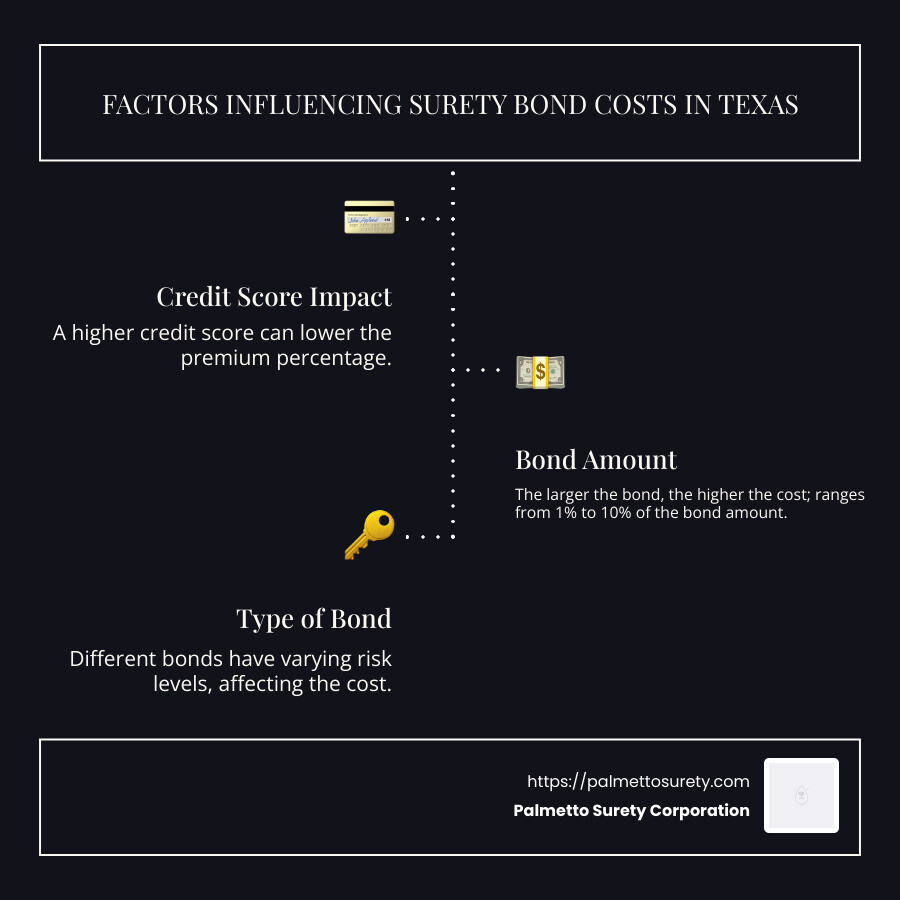
Factors Affecting Surety Bond Costs
-
Credit Score: Your credit score plays a big role. A higher score often means a lower premium. Lenders see you as less risky, so they charge less.
-
Bond Amount: The amount of the bond also matters. The larger the bond, the higher the cost. This is because the surety takes on more risk.
-
Type of Bond: Different bonds come with different risks. For example, a contractor bond might cost more than a notary bond because construction projects have more variables.
-
Professional Experience: More experience can lead to lower costs. If you’re new to a field, you might pay more until you establish a track record.
-
Business Financials: Strong financials can lead to better rates. If your business is stable and profitable, you might get a discount.
Typical Cost Ranges
Surety bonds in Texas typically cost between 1% and 10% of the bond amount. Here’s a simple breakdown:
-
Low-Risk Bonds: These might cost around 1% to 3% of the bond amount. For a $10,000 bond, expect to pay $100 to $300.
-
Medium-Risk Bonds: These might range from 3% to 5%. A $10,000 bond could cost $300 to $500.
-
High-Risk Bonds: These can go up to 10%. So, a $10,000 bond might cost up to $1,000.
Real-World Example
Imagine you’re a small business owner needing a $50,000 bond. If your credit score is excellent and your business is strong, you might pay just 1%, or $500. But if your credit is shaky, it could rise to 10%, or $5,000.
Understanding how much do surety bonds cost in Texas can help you budget and plan. It’s essential to shop around and get quotes based on your specific situation. That way, you can find the best deal and ensure you’re meeting all legal and contractual requirements.
Next, we’ll dive into the different types of surety bonds available in Texas and what they mean for your business.
Types of Surety Bonds in Texas
Surety bonds come in various forms, each designed to meet specific needs. In Texas, the three main categories are commercial bonds, contract bonds, and court bonds. Let’s break these down.
Commercial Bonds
Commercial bonds are essential for businesses to operate legally. They often serve as a prerequisite for obtaining business licenses, ensuring compliance with state regulations. These bonds guarantee that businesses adhere to laws and ethical standards.
- Examples: Business service bonds, notary bonds, and license and permit bonds.
- Renewal: Many commercial bonds require annual renewal. The renewal process may involve a credit check and adjustment of the premium based on current risk factors.
Contract Bonds
Contract bonds are crucial in the construction industry. They protect project owners by ensuring contractors fulfill their obligations.
-
Performance Bonds: These guarantee that a contractor will complete a project according to the contract terms. If the contractor fails, the bond covers the financial loss.
-
Payment Bonds: These ensure that subcontractors and suppliers get paid. Without a payment bond, unpaid parties might file liens against the project.
-
Use Case: A contractor working on a public infrastructure project in Texas would likely need both performance and payment bonds to secure the contract.
Court Bonds
Court bonds are required in various legal proceedings. They protect parties involved in court cases by ensuring compliance with court orders.
-
Bail Bonds: These allow defendants to be released from custody while awaiting trial, guaranteeing their appearance in court.
-
Appeal Bonds: Used when a party wants to appeal a court decision. They ensure that the original judgment will be paid if the appeal fails.
-
Administration Bonds: Required for individuals managing an estate. They ensure that the estate is handled according to legal requirements.
Each type of bond serves a unique purpose, providing security and trust in business, construction, and legal proceedings. Understanding the specific requirements and costs associated with these bonds is crucial for anyone operating in Texas.
Next, we’ll explore how to obtain a surety bond in Texas, including the application process and what to expect during underwriting.
How to Obtain a Surety Bond in Texas
Securing a surety bond in Texas involves a straightforward process. Whether you’re a business owner, contractor, or involved in legal proceedings, understanding the steps to obtain a bond is essential. Here’s a simple guide to help you steer the process.
Steps to Get a Surety Bond
-
Application: Start by identifying the type of bond you need. Once you know which bond is required, fill out an application. This will include details about your business or project, as well as personal information.
-
Credit Check: Your credit score plays a significant role in determining the bond’s cost. A higher credit score often results in a lower premium. The surety company will assess your creditworthiness to evaluate the risk involved.
-
Indemnity Agreement: You’ll need to sign an indemnity agreement. This is a legal contract where you agree to reimburse the surety company if they have to pay out a claim on your bond.
-
Underwriting: The surety company will conduct an underwriting process. This involves assessing your financial stability, business experience, and the specific risks of the bond. The underwriting process helps determine your bond premium.
-
Approval Time: After underwriting, you will receive a quote for the bond premium. Approval times can vary, but many bonds are issued within a few days.
Once approved, you’ll pay the premium, and the bond will be issued. You’ll then file the bond with the relevant authority or obligee.
Renewal and Maintenance
Surety bonds have term limits, typically ranging from one to three years. It’s important to keep track of your bond’s expiration date to ensure continuous coverage.
-
Renewal Process: As the bond term ends, you’ll need to renew it. The renewal process often requires a new credit check and reevaluation of your financial status. This is to ensure that the risk level hasn’t changed significantly.
-
Credit Re-evaluation: Your credit score will be checked again during renewal. Any changes in your creditworthiness can affect the premium for the renewed bond.
Maintaining an active bond is crucial for compliance and trust. Failing to renew a bond can lead to legal and financial consequences, so it’s important to stay proactive in managing your surety bond obligations.
Now that you know how to obtain a surety bond in Texas, let’s address some common questions about surety bonds in the state.
Frequently Asked Questions about Surety Bonds in Texas
How much do you have to pay on a $50,000 bond in Texas?
When securing a $50,000 surety bond in Texas, the cost you pay is typically a small percentage of the total bond amount. This fee often ranges from 1% to 10% of the bond value, depending on several factors such as your credit score and the type of bond. For a $50,000 bond, you could expect to pay between $500 and $5,000 as the premium. In the case of bail bonds, this fee is generally around 10%, which means you’d likely pay $5,000.
Do you get surety bond money back in Texas?
The premium paid for a surety bond in Texas is generally non-refundable. This fee compensates the surety company for taking on the risk associated with issuing the bond. However, if there are specific conditions outlined in the bond agreement, such as the bond being canceled before it takes effect, a partial refund might be possible. It’s crucial to understand the terms and conditions of your bond agreement to know if any exceptions apply.
Do I need a surety bond to be a notary in Texas?
Yes, if you want to become a notary public in Texas, you are required to obtain a $10,000 surety bond. This bond serves as a financial guarantee for the faithful performance of your duties as a notary. The bond is valid for a 4-year commission term. It protects the public from any potential errors or misconduct by the notary. The cost of this bond is a small percentage of the bond amount, and it ensures that you can cover any claims made against you during your notary commission.
These answers should clarify some of the most common questions about surety bonds in Texas, helping you steer your bonding needs with confidence.
Conclusion
In summary, understanding how much do surety bonds cost in Texas is crucial for anyone involved in industries requiring these bonds. The cost typically ranges from 1% to 10% of the bond amount, influenced by factors like credit score and bond type. For example, a $50,000 bond might cost between $500 and $5,000. The premium is generally non-refundable, serving as a fee for the surety company’s risk.
At Palmetto Surety Corporation, we specialize in providing a wide range of surety bonds custom to meet your specific needs. With over 20 years of experience, we offer quick approval and efficient service, ensuring you can secure the bonds you need without hassle. Whether it’s for commercial, contract, or court purposes, our team is equipped to assist you every step of the way.
For more information or to get started on obtaining a surety bond, visit our service page and explore our offerings. Our dedicated team is ready to help you steer the bonding process with ease. Feel free to reach out with any questions or to request a free quote.


