


Do Independent Contractors in SC Need to Be Bonded in 2024?
Do independent contractors in SC need to be bonded? The answer is not straightforward but understanding why bonding matters is crucial.
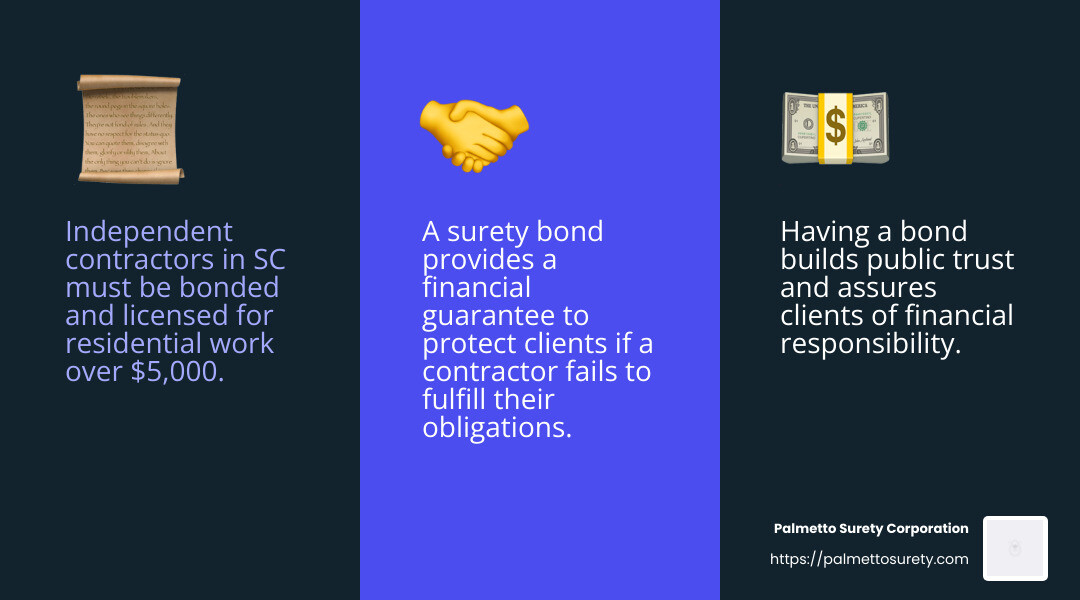
- Independent contractors in South Carolina performing residential work over $5,000 generally need to be bonded and licensed.
- Types of bonds: Residential Builder, Registered Residential Specialty Contractor, Licensed Residential Specialty Contractor.
Bonding serves as a security to ensure contract completion and safeguard financial interests. Without proper bonding, contractors may face penalties, legal issues, and loss of lien rights—profoundly impacting their business.
I’m Haiko de Poel Jr. With over 20 years in the marketing and surety bond industry, I’ve seen the importance of bonding for contractors. Let’s explore why bonds are vital and what the regulations entail.
Do independent contractors in sc need to be bonded terms made easy:
– South Carolina contractor bonds
– contractor bonds sc
Understanding Independent Contractor Bonds in South Carolina
What is a Surety Bond?
A surety bond is a three-party agreement that provides a financial guarantee. The three parties involved are:
- Principal: The independent contractor.
- Obligee: The entity requiring the bond, often a government agency.
- Surety: The company that issues the bond and guarantees payment if the contractor fails to meet obligations.
The primary purpose of a surety bond is to protect the public. If a contractor performs shoddy work or fails to complete a project, the bond ensures that the client can receive financial compensation to cover the damages.
Why Independent Contractors Might Need Bonds
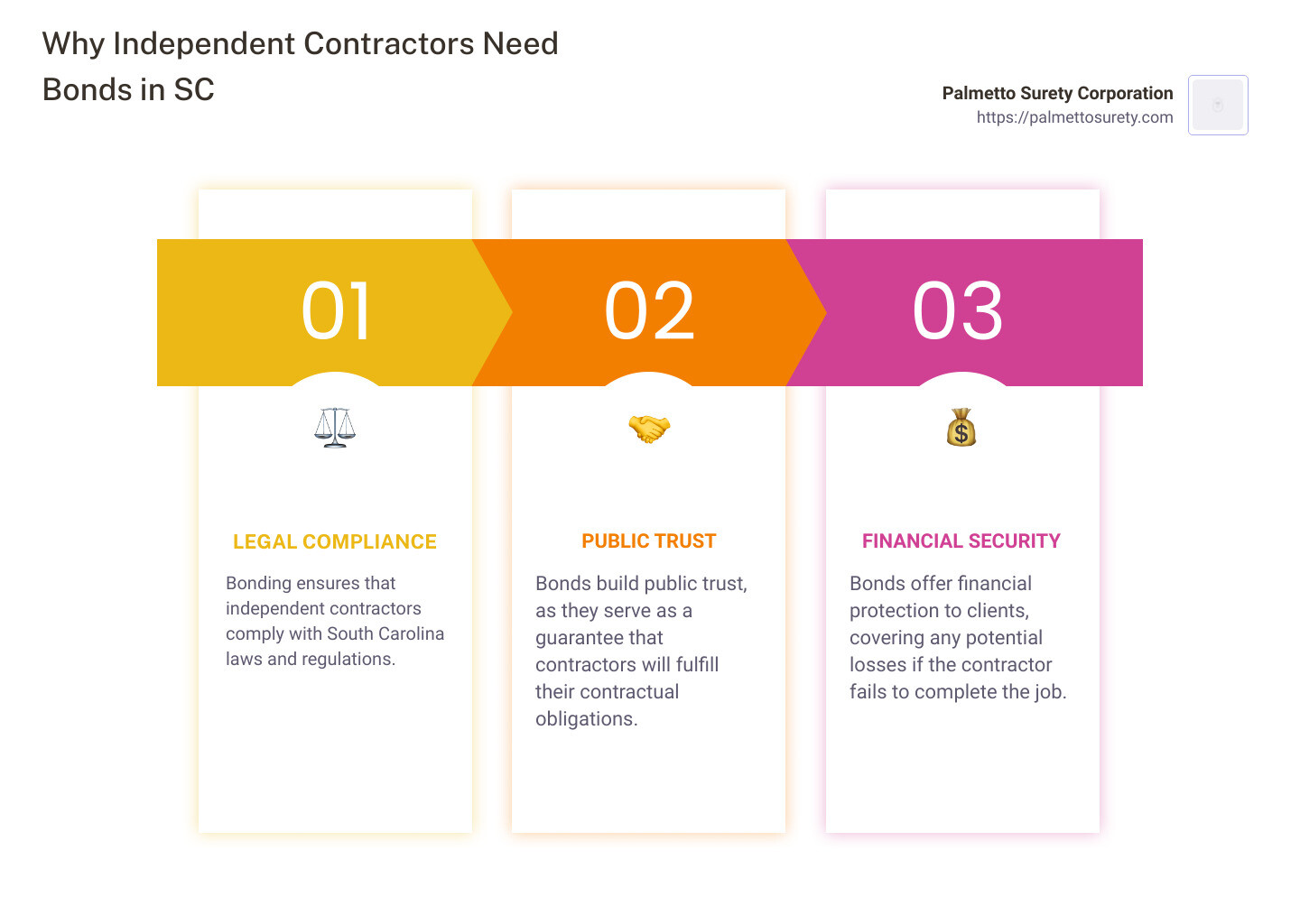
Legal Compliance: In South Carolina, independent contractors performing residential work over $5,000 must be bonded and licensed. This requirement is enforced by the South Carolina Department of Labor, Licensing, and Regulation (LLR). For example, a Residential Builder or Licensed Residential Specialty Contractor must have a bond to operate legally.
Public Trust: Having a bond builds trust with clients. It assures them that the contractor is financially responsible and committed to completing the job correctly. A surety bond acts as a safety net, providing clients with peace of mind.

Financial Security: A surety bond serves as a financial guarantee. If a contractor fails to fulfill their obligations, the surety company compensates the damaged party. However, the contractor must reimburse the surety company, ensuring accountability.

Types of Contractor Licenses and Bonds in South Carolina
General Contractor License Bonds: These are for contractors handling larger projects, including commercial and significant residential works. Depending on the project size, contractors must submit financial statements or opt for a surety bond to prove financial stability.
Residential Contractor License Bonds: These bonds are for those working on residential projects over $5,000. The bond amount varies based on the type of residential contractor license—whether it’s a Residential Builder or a Licensed Residential Specialty Contractor.
Mechanical Contractor License Bonds: These are for contractors working on mechanical systems in buildings. Similar to general contractors, they may provide financial statements or opt for a surety bond based on the project size.
Each type of bond ensures that the contractor adheres to state regulations and provides a financial safety net for clients.
Understanding these requirements and the purpose of surety bonds helps independent contractors in South Carolina operate legally and build trust with their clients.
Types of Contractor Licenses and Bonds in South Carolina
General Contractor License Bonds
General contractors handle large-scale projects, including commercial buildings and significant residential constructions. In South Carolina, if a general contractor is working on projects valued over $5,000, they must hold a license and, in many cases, secure a surety bond.
The bond amount depends on the project size and the contractor’s financial stability. Contractors can choose between submitting a financial statement or securing a surety bond. Here’s a quick breakdown of the financial requirements:
| Group | Bid & Job $$ Limitation | Net Worth / Equity |
|---|---|---|
| Group #1 | $100,000 | $20,000 |
| Group #2 | $400,000 | $60,000 |
| Group #3 | $1,000,000 | $150,000 |
| Group #4 | $3,000,000 | $250,000 |
| Group #5 | Unlimited | $350,000 |
Groups 1 and 2 need only submit a financial statement with an affidavit of accuracy, while Groups 3-5 need a GAAP-compliant financial statement prepared by a licensed public accountant or CPA.
Residential Contractor License Bonds
Residential contractors are those who work on residential projects valued over $5,000. The South Carolina Residential Builders Commission oversees these contractors, and they must be bonded and licensed. There are three main types of residential contractors:
- Registered Residential Specialty Contractor
- Licensed Residential Specialty Contractor
- Residential Builder
Each type has specific bond requirements based on the level of risk associated with their trade. For example, a Residential Builder must have a bond to cover potential damages from substandard work or other issues.
Additionally, companies that operate under a fictitious name or as a subsidiary must obtain a Certificate of Authority bond amounting to $15,000, unless a licensed individual owns 51% or more of the organization.
Mechanical Contractor License Bonds
Mechanical contractors specialize in systems such as heating, air conditioning, plumbing, and electrical work. Like general contractors, they need to be licensed and may be required to secure a surety bond or submit a financial statement.
The financial requirements for mechanical contractors are as follows:
| Group | Bid & Job $$ Limitation | Net Worth / Equity |
|---|---|---|
| Group #1 | $35,000 | $7,000 |
| Group #2 | $100,000 | $15,000 |
| Group #3 | $200,000 | $30,000 |
| Group #4 | $400,000 | $60,000 |
| Group #5 | Unlimited | $300,000 |
Mechanical contractors can choose to provide a financial statement or secure a surety bond based on their group classification.
Understanding the different types of contractor licenses and bonds in South Carolina is crucial for operating legally and ensuring financial protection for clients. This helps build trust and demonstrates a commitment to quality work.
How to Obtain a Surety Bond in South Carolina
Steps to Apply for a Surety Bond
Applying for a surety bond in South Carolina is a straightforward process. Here’s a step-by-step guide to get you started:
-
Complete the Application: Start by filling out a surety bond application. You’ll need to provide details about your business, including your financial history and the type of bond you need.
-
Credit Check: A credit check is mandatory. The surety company will assess your credit score to determine the bond premium. Higher credit scores generally result in lower premiums.
-
Submit Financial Statements: Depending on the bond amount and type, you may need to submit financial statements. These can include balance sheets, income statements, and other relevant documents.
-
Receive a Quote: Based on your application and credit check, the surety company will provide you with a bond quote. This quote will include the premium you need to pay.
-
Pay the Premium: Once you accept the quote, you will need to pay the bond premium. Payment options typically include credit card, check, or electronic transfer.
-
Receive Your Bond: After payment, the surety company will issue your bond. You can receive it via email or mail, depending on your preference.
Cost of Surety Bonds
The cost of a surety bond, or bond premium, varies based on several factors:
-
Credit Score: Your credit score significantly impacts the bond premium. Higher scores mean lower premiums, while lower scores result in higher premiums.
-
Bond Amount: The bond amount required by the state or regulatory body also affects the cost. Larger bonds come with higher premiums.
-
Business Financials: Your business’s financial health, including assets and liabilities, can influence the premium.
Typically, bond premiums range from 1.5% to 6% of the bond amount. For example, a $10,000 bond might cost anywhere from $150 to $600 annually, depending on your credit and financial stability.
Payment Options: Most surety companies offer flexible payment options. You can often pay the premium in full upfront or opt for installment plans.
Impact of Credit Score: A higher credit score can save you money. If your credit score is low, taking steps to improve it can reduce your bond costs in the future.
By understanding the application process and costs, you can steer the surety bond landscape in South Carolina with ease. This ensures you remain compliant and build trust with your clients.
Frequently Asked Questions about Independent Contractor Bonds in SC
Do independent contractors in SC need to be bonded?
In South Carolina, independent contractors may need to be bonded depending on the type of work they perform and the specific requirements of their contracts. A surety bond is a financial guarantee that protects clients and ensures contractors fulfill their obligations.
Legal Requirements: South Carolina law mandates certain contractors, such as general and residential builders, to obtain a bond before they can get licensed. This bond guarantees that the contractor will adhere to state regulations and contractual obligations.
Exceptions: Not all independent contractors need to be bonded. For example, if you are working on smaller projects or not performing work that requires a state license, you might not need a bond. However, even if it’s not legally required, having a bond can improve your credibility and trustworthiness.
Compliance: To stay compliant, ensure you understand the specific bonding requirements for your type of work. Violating these requirements can result in penalties, including fines or the loss of your license.
How much work can you do without a contractor license in SC?
In South Carolina, the amount of work you can perform without a contractor license is limited:
License Thresholds: For general contractors, any project valued over $5,000 requires a license. This includes both labor and materials. For residential builders, a license is needed for projects exceeding $200.
Project Limits: If you are working on smaller jobs that fall below these thresholds, you don’t need a license. However, keep in mind that clients may still prefer contractors who are licensed and bonded, as it provides them with additional security.
Legal Compliance: Always adhere to these thresholds to avoid legal issues. Working on larger projects without the appropriate license can lead to penalties, including fines and potential lawsuits.
What happens if a contractor violates bond terms?
Violating the terms of a surety bond can have serious consequences:
Penalties: If a contractor fails to meet the obligations outlined in the bond, they may face legal penalties. This can include fines and the suspension or revocation of their contractor license.
Claims Process: When a violation occurs, the client or subcontractor can file a claim against the bond. The surety company will investigate the claim to determine its validity. If the claim is valid, the surety will pay the client up to the bond amount.
Restitution: After paying the claim, the surety company will seek reimbursement from the contractor. This means the contractor is ultimately responsible for repaying the amount paid out, along with any additional costs incurred during the claims process.
By understanding the importance of bonding and adhering to the bond terms, contractors can avoid these pitfalls and maintain a good standing in the industry.
Conclusion
At Palmetto Surety Corporation, we understand the complexities and importance of getting the right surety bond for your contracting business. With over 20 years of experience in the surety bond industry, we specialize in providing quick and efficient service to contractors across South Carolina.
One of our key advantages is our ability to approve most bond applications within hours. This means you can get your bond quickly and focus on what you do best—running your business. Our streamlined process ensures you spend less time dealing with paperwork and more time on your projects.
We offer a wide range of surety bonds custom to meet the requirements of various industries, including construction, manufacturing, transportation, and healthcare. Whether you need a general contractor bond, a residential contractor bond, or a mechanical contractor bond, we have the expertise to guide you through the process.
Quick Approval: Our state-of-the-art underwriting platform allows us to significantly reduce underwriting times. This means faster approvals and less waiting time for you.
Efficient Service: Our dedicated support team is available 24/7 to assist you with any questions or concerns you may have. We aim to provide exceptional service that exceeds your expectations.
For more information on how Palmetto Surety Corporation can help you with your surety bond needs, visit our service page. Let us help you secure your business and build a strong foundation for success.


