


What is a Bond Hearing in Court: 5 Key Steps Explained
The Importance of Bond Hearings: From Courtroom to Jail
When you hear the term “bond hearing in court,” you might imagine scenes from a TV crime drama. But in reality, a bond hearing is a critical legal proceeding that determines whether an arrested individual can be released from jail before their trial.
Quick answer: A bond hearing is a court session where a judge decides if and under what conditions an arrested person can be released on bail, based on factors like flight risk, community safety, and the severity of the alleged crime.
Understanding these hearings is vital, whether you’re facing charges or helping a loved one through the legal system. These hearings are usually one of the first steps in a criminal case and can significantly affect what happens next.
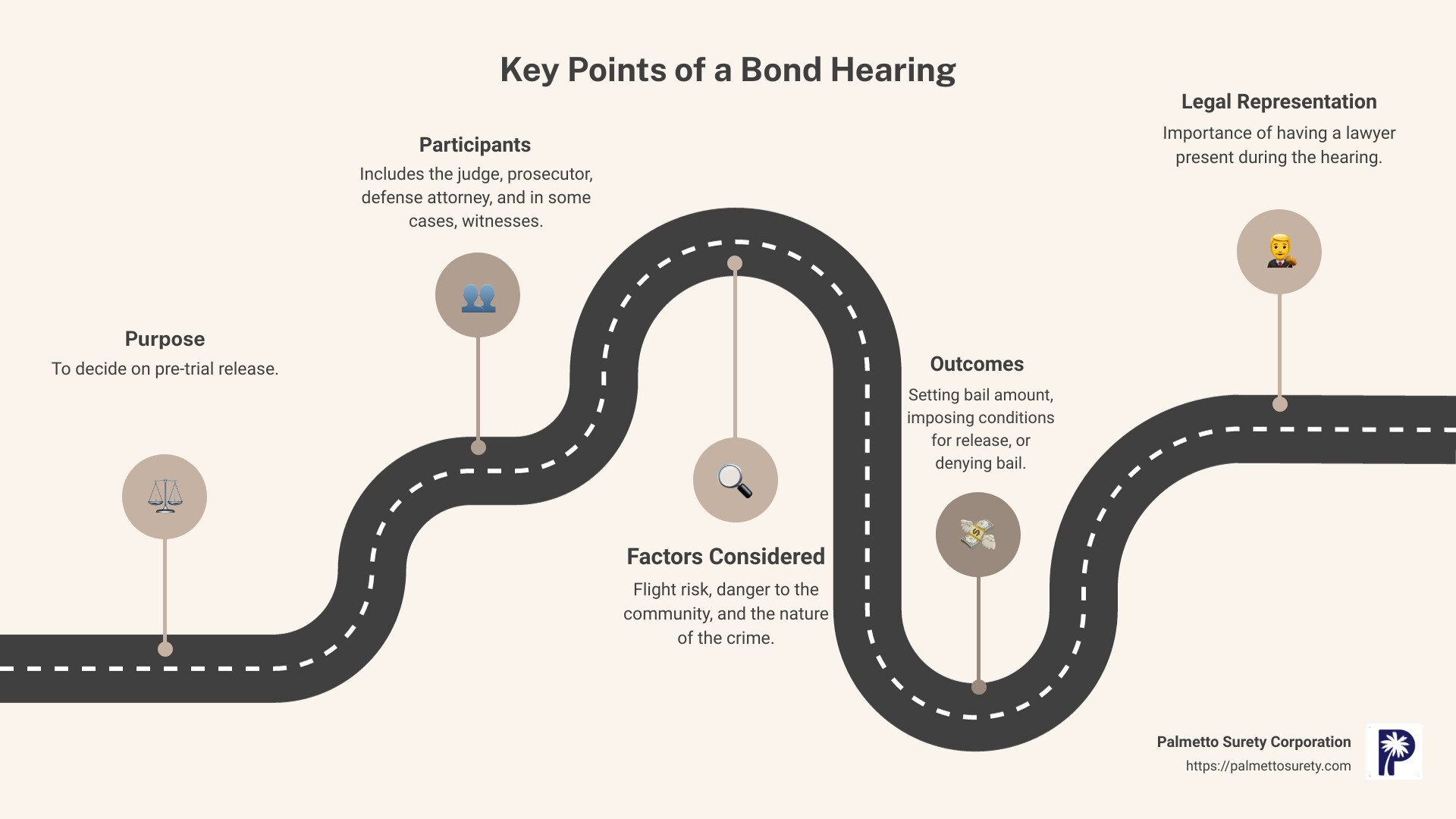
Key points of a bond hearing:
1. Purpose: To decide on pre-trial release.
2. Participants: Includes the judge, prosecutor, defense attorney, and in some cases, witnesses.
3. Factors considered: Flight risk, danger to the community, and the nature of the crime.
4. Outcomes: Setting bail amount, imposing conditions for release, or denying bail.
My name is Haiko de Poel Jr., and I have in-depth experience in explaining complex legal processes like bond hearings. Having worked with Palmetto Surety Corporation, I understand the intricacies and importance of these hearings within the judicial framework.
What is a Bond Hearing in Court?
A bond hearing is a court proceeding where a judge decides whether an arrested person can be released from jail before their trial. The judge also sets the terms and amount of the bond. This hearing is crucial because it determines if the defendant will await trial in jail or at home.
Initial Appearance
When someone is arrested, their first court appearance is usually before a magistrate judge. This is called the initial appearance. During this appearance:
- Charges: The judge informs the defendant of the charges against them.
- Right to Lawyer: The defendant is told about their right to hire an attorney or have one appointed if they cannot afford one.
Factors Considered by the Judge
The judge considers several factors to decide whether to grant bond and what the conditions should be. These include:

-
Flight Risk: The judge assesses the likelihood that the defendant might flee and not return for their court dates. Factors like having a stable job, family ties, and a history of appearing in court help reduce perceived flight risk.
-
Danger to the Community: The judge evaluates if releasing the defendant would pose a threat to public safety. This is especially crucial in cases involving violent crimes or if the defendant has a history of illegal activities.
-
Prior Criminal History: A defendant’s past criminal record is scrutinized. A history of failing to appear in court or committing new crimes while on bail can negatively affect the judge’s decision.
-
Witness Intimidation: The judge considers whether the defendant might threaten or intimidate witnesses if released. In such cases, strict conditions or even denial of bond might be enforced to protect the integrity of the judicial process.
By considering these factors, the judge aims to balance the defendant’s rights with the safety and interests of the community.

In the next section, we will dig into the bond hearing process, including the steps involved, the timeline, and the parties involved.
The Bond Hearing Process
Scheduling the Hearing
Scheduling a bond hearing is the first step. This hearing can take place in either a magistrate court or a superior court, depending on the severity of the charges. For less serious offenses, it might be handled quickly by a magistrate judge. However, more serious crimes require a superior court judge, which can mean a longer wait.
Lawyer’s role: Your lawyer plays a crucial role in scheduling and preparing for the bond hearing. They will file a motion for the hearing and ensure all necessary documents and witnesses are ready. In some cases, an attorney writ bond can expedite the process, especially for non-violent misdemeanors.
Presenting Evidence
At the bond hearing, both the prosecution and the defense present evidence to argue their case.
-
Prosecution’s Role: The prosecutor will usually call a police officer or detective to testify about the facts of the case. They will outline the charges, present any evidence collected, and may even bring in alleged victims to testify. This aims to show why the defendant should not be released.
-
Defense’s Role: The defense lawyer will counter by presenting evidence to show that the defendant should be released. They might call friends, family, or employers to testify about the defendant’s ties to the community and good character. The goal is to convince the judge that the defendant is not a flight risk and poses no danger to the community.
Judge’s Decision
After hearing both sides, the judge will make a decision on whether to grant bond and, if so, how much it should be. The judge considers:
-
Bond Amount: The amount should be high enough to ensure the defendant returns for trial but reasonable given the charges and the defendant’s financial situation.
-
Types of Bonds: There are several types of bonds the judge might consider:
- Cash Bond: Requires the full amount to be paid in cash.
- Property Bond: Uses property as collateral.
-
Surety Bond: Involves a bail bondsman, like Palmetto Surety Corporation, who guarantees the bond for a fee.
-
Conditions: The judge might set conditions for the bond, such as no contact with victims, regular check-ins with law enforcement, or attending all court dates. Failure to comply with these conditions can result in bond revocation.
Once the judge announces the decision, the defendant can either be released on bond or remain in custody until the trial. In some cases, there is an option to appeal the bond decision to a higher court.
Understanding the bond hearing process is crucial for anyone navigating the legal system. In the next section, we will explore the different types of bonds in detail, including cash bonds, property bonds, and surety bonds.
Types of Bonds
When it comes to securing release from jail before trial, there are three primary types of bonds: cash bonds, property bonds, and surety bonds. Each type has its own definition, process, and associated risks. Let’s break them down:
Cash Bond
A cash bond is the simplest form of bail. Here’s how it works:
- Definition: A cash bond is a set amount of money that must be paid in full to secure the release of an arrested person.
- Process: The defendant or their family pays the full bail amount set by the judge directly to the court. If the defendant appears for all court dates, the money is refunded.
- Refund: Once the case concludes, the cash bond is returned, minus any court fees or fines if the defendant complied with all court appearances.
For example, if the court sets bail at $10,000 and the defendant pays this amount, they will be released from jail. If they attend all required court dates, they will get their $10,000 back at the end of the trial.
Property Bond
A property bond allows the defendant to use real estate as collateral for bail:
- Definition: A property bond involves using real estate property to secure the defendant’s release.
- Collateral: The defendant or their family offers a property with equity equal to or greater than the bail amount. The court places a lien on the property.
- Risks: If the defendant fails to appear in court, the property can be foreclosed upon by the court to cover the bail amount.
For instance, if a defendant’s bail is set at $50,000, they might use a house valued at $100,000 as collateral. If they attend all court dates, the lien is removed. If not, the court can seize and sell the property.
Surety Bond
A surety bond is commonly used when defendants can’t afford to pay the full bail amount upfront:
- Definition: A surety bond involves a bail bondsman who posts bail on behalf of the defendant in exchange for a fee.
- Bail Bondsman: The defendant pays the bondsman a non-refundable fee, usually 10% of the bail amount. The bondsman then guarantees the full bail amount to the court.
- Palmetto Surety Corporation: At Palmetto Surety Corporation, we specialize in surety bonds, offering a quick and efficient way to secure bail. Our experienced team ensures that defendants can steer the bond process smoothly.
For example, if bail is set at $25,000, the defendant might pay a bail bondsman $2,500. The bondsman posts the full amount, and the defendant is released from jail. If the defendant appears in court, the bond is resolved. If not, the bondsman may seek to recover the full amount from the defendant or their co-signers.
These are the main types of bonds that can be used to secure release from jail before trial. Each has its own benefits and risks, and understanding them can help you make the best decision for your situation.
In the next section, we will answer some frequently asked questions about bond hearings, such as “What is a bond hearing in court?” and “How long does it take to get a bond hearing?”
Frequently Asked Questions about Bond Hearings
What is a bond hearing in court?
A bond hearing is a court proceeding where a judge decides if an arrested person can be released from jail before their trial and under what conditions. The judge considers several factors, such as:
- Flight risk: Will the defendant show up for court dates?
- Danger to the community: Is the defendant a threat to public safety?
- Prior criminal history: Does the defendant have a record of not appearing in court or committing other crimes?
- Witness intimidation: Could the defendant threaten witnesses?
The goal is to ensure the defendant returns for trial while balancing community safety.
How long does it take to get a bond hearing?
The timing of a bond hearing can vary, but it generally happens within 48 to 72 hours after an arrest. In some jurisdictions, bond hearings are part of the initial arraignment process, while in others, they take place at specific times during the week.
Quick Tip: Hiring a lawyer promptly can help speed up the scheduling of your bond hearing.
Can bond conditions be changed?
Yes, bond conditions can be changed. If circumstances change, either the defense or the prosecution can request a modification of the bond conditions. For example, if new evidence suggests the defendant is not a flight risk, the defense can ask for a lower bond or fewer restrictions.
Important: Always consult with your lawyer before requesting any changes to bond conditions. They can guide you on the best approach and increase your chances of success.
These frequently asked questions cover some of the basics about bond hearings. Understanding these can help you steer the process more effectively.
Conclusion
Navigating the complexities of a bond hearing can feel overwhelming. But understanding the basics can make a big difference. To summarize:
- Initial Appearance: This is your first step after arrest, where a magistrate judge informs you of the charges and your right to a lawyer.
- Factors Considered: The judge looks at flight risk, danger to the community, prior criminal history, and potential for witness intimidation.
- Hearing Process: Your lawyer plays a crucial role in scheduling the hearing, presenting evidence, and arguing for your release.
- Types of Bonds: These include cash bonds, property bonds, and surety bonds, each with its own process and conditions.
The importance of legal representation cannot be overstated. A skilled lawyer can make a significant difference in the outcome of your bond hearing. They can present compelling evidence, bring in character witnesses, and argue convincingly for your release.
At Palmetto Surety Corporation, we understand the stress and urgency that come with bond hearings. Our goal is to provide you with the best possible support and expertise to steer this challenging time. Whether you need a surety bond or simply more information, we’re here to help.
For more detailed information on court bonds, visit our Court Bonds page.
You don’t have to go through this alone. Reach out to us for assistance and let us help you through the process.


