


Georgia Bond Laws: Top Guide to Understand in 2024
Understanding Georgia Bond Laws: A Clear Guide
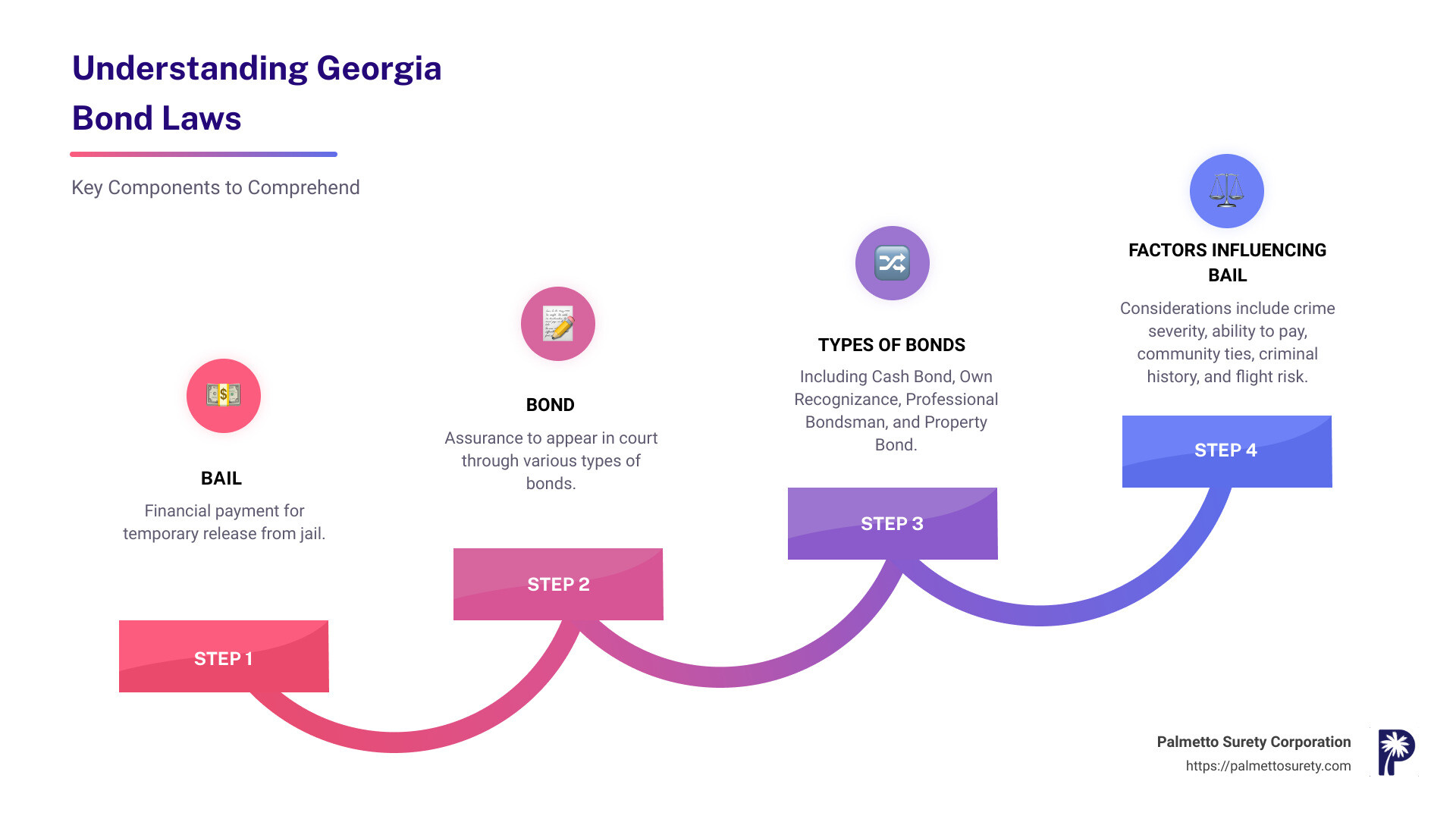
When dealing with the intricacies of the legal system in Georgia, understanding Georgia bond laws is crucial. These laws determine how and when an individual can be released from jail while awaiting trial. Here’s a quick snapshot:
- Bail is the financial payment that allows temporary release.
- Bond is the assurance to appear in court.
- Types of bonds: Cash bond, own recognizance, professional bondsman, and property bond.
- Factors affecting bail: Crime severity, ability to pay, community ties, criminal history, and flight risk.
Taking full advantage of Georgia bond laws can significantly impact your case and future. Familiarize yourself with the process to navigate it effectively.
My name is Haiko de Poel Jr, and I have extensive experience with Georgia bond laws through my work with Palmetto Surety Corporation. I believe in straightforward, transparent communication to help you understand and navigate these laws seamlessly.
Understanding Bail and Bond in Georgia
When you or a loved one faces criminal charges in Georgia, understanding the bail and bond process is crucial. Let’s break down these concepts to make them easier to grasp.
What is Bail?
Bail is a financial deposit made to the court to ensure that the defendant appears for all scheduled court hearings. Think of it as a security deposit. If the defendant shows up for all their court dates, the bail amount is refunded, minus any administrative fees.
- Financial Deposit: The amount varies based on factors like the severity of the crime and the defendant’s history.
- Court Hearings: The primary purpose of bail is to guarantee the defendant will attend all court proceedings.
What is a Bond?
A bond is an assurance given to the state that the defendant will appear in court as required. While bail is the actual money paid, a bond is the promise or guarantee that the defendant will comply with court requirements.
- Assurance: A bond assures the court that the defendant will fulfill their obligations.
- Bondsman: A bondsman or bail bond company can post bail on behalf of the defendant if they cannot afford the full bail amount. The bondsman charges a fee, usually a percentage of the bail amount.
Difference Between Bail and Bond
While the terms are often used interchangeably, they have distinct meanings:
- Bail: The actual money paid to secure the defendant’s release.
- Bond: The guarantee or promise that the defendant will appear in court.
Bail Hearing
After an arrest, the defendant is entitled to a bail hearing within 72 hours, excluding weekends and holidays. During this hearing, the judge decides whether to grant bail and sets the bail amount. The judge considers several factors, including the severity of the crime and the defendant’s flight risk.

Bond Hearing
A bond hearing is similar to a bail hearing but focuses on whether the defendant should be released on bond. If granted, the defendant can leave jail until their court date. The bond can be posted by the defendant or a bondsman.
In summary, understanding the differences between bail and bond, as well as the processes involved, can help you navigate the legal system more effectively. Stay informed and consult with legal experts to make the best decisions for your case.

Types of Bail Bonds in Georgia
When it comes to getting out of jail in Georgia, there are four main types of bail bonds: cash bond, own recognizance, professional bondsman, and property bond. Each of these has its own rules and requirements.
Cash Bond
A cash bond is straightforward. The defendant pays the full bail amount in cash. This money is refunded at the end of the case, no matter the outcome, as long as all court dates are attended. It’s a simple option but can be expensive, as the entire amount must be paid upfront.
Own Recognizance
With an own recognizance bond, the defendant doesn’t have to pay any money. Instead, they sign a form promising to attend all court appearances. This option is usually available for minor offenses, like traffic violations. It’s a good option if the defendant has a clean record and strong community ties.
Professional Bondsman
A professional bondsman can be a lifesaver if you can’t afford the full bail amount. The bondsman pays the bail and charges a fee, usually 10-15% of the bail amount. This fee is non-refundable. For example, if bail is set at $10,000, you’d pay the bondsman $1,000 to $1,500. The bondsman then guarantees you’ll show up to court. If you don’t, they lose the bail money and might come after you to get it back.
Property Bond
A property bond allows you to use real estate as collateral. This means you put up a home or other property to cover the bail amount. There are specific requirements: the mortgage and taxes must be current, and anyone listed on the deed must be present. This option can be complicated but is useful if you have valuable property and can’t pay cash.
Understanding these types of bail bonds can help you or a loved one get out of jail while awaiting trial. Each option has its pros and cons, so consider your financial situation and consult with a legal expert to make the best choice.
Determining Bail Amounts
In Georgia, the amount of bail set for a defendant can vary widely. The judge uses several factors to decide the bail amount. This section will explain those factors and introduce the concept of bail schedules.
Factors Influencing Bail
Crime Severity: The more severe the crime, the higher the bail. For instance, a serious felony like armed robbery will result in a higher bail compared to a minor misdemeanor like petty theft.
Ability to Pay: Judges consider the defendant’s financial situation. If a person can’t afford high bail, the judge might lower it to ensure fairness.
Community Ties: Strong ties to the community, such as family, a job, or long-term residence, can lower bail. These ties suggest the defendant is less likely to flee.
Criminal History: A defendant with a long criminal record may face higher bail. This history indicates a higher risk of reoffending.
Flight Risk: If there’s a chance the defendant might not show up for court, bail will be higher. Past behavior, like missing court dates, influences this decision.
Bail Schedules
Preset Amounts: Georgia uses bail schedules for common offenses. These schedules list standard bail amounts for specific crimes. For example, the bail for a DUI might be preset at $1,500.
Common Offenses: Bail schedules cover many common offenses like traffic violations, minor theft, and simple assault. This helps speed up the bail process.
No Court Hearing: With a bail schedule, a defendant might not need to see a judge right away. They can pay the preset amount and be released quickly.
Bail schedules and the factors influencing bail help ensure that the system is fair and efficient. By understanding these elements, you can better navigate the bail process in Georgia.
Next, we will explore Georgia Bond Laws and Regulations, including applicable statutes, licensing requirements for agents, and procedures for forfeiture and remission.
Georgia Bond Laws and Regulations
Navigating Georgia bond laws can be complex, but understanding the key statutes and regulations can simplify the process. This section covers the applicable statutes, licensing requirements for agents, and procedures for forfeiture and remission.
Applicable Statutes
Georgia bond laws are primarily governed by Title 17 of the Georgia Code, specifically under Chapter 6: Bonds and Recognizances. This chapter is divided into several articles and parts that address different aspects of bond laws:
- Article 2: Sureties outlines the roles and responsibilities of sureties, including professional bondsmen.
- Part 1: General Provisions provides general rules and guidelines.
-
Part 2: Professional Bondsmen defines who qualifies as a professional bondsman and their specific requirements.
-
Article 3: Proceedings for Forfeiture of Bonds or Recognizances details the procedures for bond forfeiture, including notice requirements and defenses available to sureties.
Licensing Requirements for Agents
If you plan to become a professional bondsman or bail recovery agent in Georgia, you must meet specific licensing requirements:
- Professional Bondsmen:
- Must be 18 years or older.
- Must have been a Georgia resident for at least one year before applying.
- Must be of good moral character and have no felony convictions or crimes involving moral turpitude.
-
Must be approved by the sheriff in the county where they conduct business and comply with all federal, state, and local laws.
-
Bail Recovery Agents:
- Must be a U.S. citizen and 25 years or older.
- Must obtain a license under Code Section 16-11-129, the same statute governing concealed weapons permits.
- Must be registered with the county sheriff by the professional bondsman they work for.
Forfeiture and Remission
Forfeiture occurs when a defendant fails to appear in court as required, leading to the loss of the bond. Here’s how the process works:
-
Notice: The court will issue a notice of forfeiture to the surety (bondsman) and the defendant.
-
Payment: The surety must pay the bond amount if the defendant does not appear within a specified time.
-
Defenses: Sureties can present defenses to avoid forfeiture. Common defenses include proving that the defendant’s absence was due to uncontrollable circumstances.
-
Remission Procedures: If the surety pays the forfeited bond, they can seek remission (refund) if they later produce the defendant in court. The court considers factors like the time elapsed and efforts made to apprehend the defendant.
Understanding these statutes and requirements is crucial for anyone involved in the bail bond industry in Georgia. It ensures compliance with the law and helps navigate the complexities of bond forfeiture and remission.
Next, we will address some frequently asked questions about Georgia bond laws, including how long you can be held without bond and what happens if you cannot afford bail.
Frequently Asked Questions about Georgia Bond Laws
How long can you be held without bond in Georgia?
In Georgia, after an arrest, you are entitled to a bond hearing within 72 hours (not including weekends and holidays). During this hearing, a judge will decide if you should be detained or released pending trial. If you are not charged with a crime within this period, you must be released.
Can you bail yourself out of jail in Georgia?
Yes, you can bail yourself out of jail in Georgia if you have the financial means to pay the bail amount set by the judge. This is known as a cash bond. If you cannot afford to pay the full amount, you may use a professional bondsman who will post bail on your behalf for a fee, typically a percentage of the total bail amount.
What happens if I cannot afford bail?
If you cannot afford bail, you have a few options:
- Professional Bondsman: You can use a bondsman who will post bail for you in exchange for a fee, usually around 10-15% of the bail amount.
- Own Recognizance: For minor offenses, you may be released on your own recognizance, meaning you do not have to pay bail but must promise to appear in court.
- Property Bond: You can use property as collateral to secure your release. This requires proving the property’s value and ownership to the court.
If none of these options are viable, you may remain in jail until your trial.
Understanding these aspects of Georgia bond laws can help you navigate the legal system more effectively. For more detailed guidance, consider consulting with a qualified attorney.
Conclusion
Understanding Georgia bond laws is crucial if you or someone you care about is facing criminal charges. Knowing the difference between bail and bond, the types of bonds available, and the factors that influence bail amounts can make a significant difference. This knowledge can help you make informed decisions and potentially secure a quicker release.
Why is this important?
Navigating the legal system can be overwhelming, but understanding how it works can reduce stress and improve your chances of a favorable outcome. For instance, knowing that you can use property as collateral for a bond or understanding the role of a professional bondsman can provide options you might not have considered.
Palmetto Surety Corporation is here to help. We offer comprehensive services and support to guide you through the bond process. With over twenty years of experience, we provide reliable and transparent communication, ensuring you have the best possible service at all times.
For personalized surety bond services and expert support, contact Palmetto Surety Corporation. Let us help you navigate Georgia bond laws with ease and confidence.
Understanding the complexities of bond laws can make a significant difference in your legal journey. Make sure to consult with professionals who can provide the expertise and support you need.


