


Everything You Need to Know About Public Official Bonds
When you’re asking, “What does a public official bond cover?”, you’re really inquiring about the security blanket that wraps around public trust, offering protection against financial loss due to dishonest or negligent actions of public officials. In a nutshell, these bonds serve as a financial guarantee that public officials will act in accordance with their duties and laws. If they don’t, there’s financial backing ready to address any losses.
Public official bonds are vital in maintaining the integrity of our government divisions and the positions within. They ensure that officials are held to their statutory responsibilities, safeguarding public funds and operations from malfeasance or mismanagement. This not only protects the government but also the public who relies on these officials to manage resources ethically and responsibly.
Key Coverage Points of Public Official Bonds:
– Protection from financial loss due to unethical or negligent actions by public officials.
– Ensures faithful performance of duties as prescribed by law.
– Mandated for certain positions, especially those directly handling public funds or making financial decisions.
– Varies by statutory requirements, with coverage details often governed by specific laws and duties pertaining to the public official’s role.
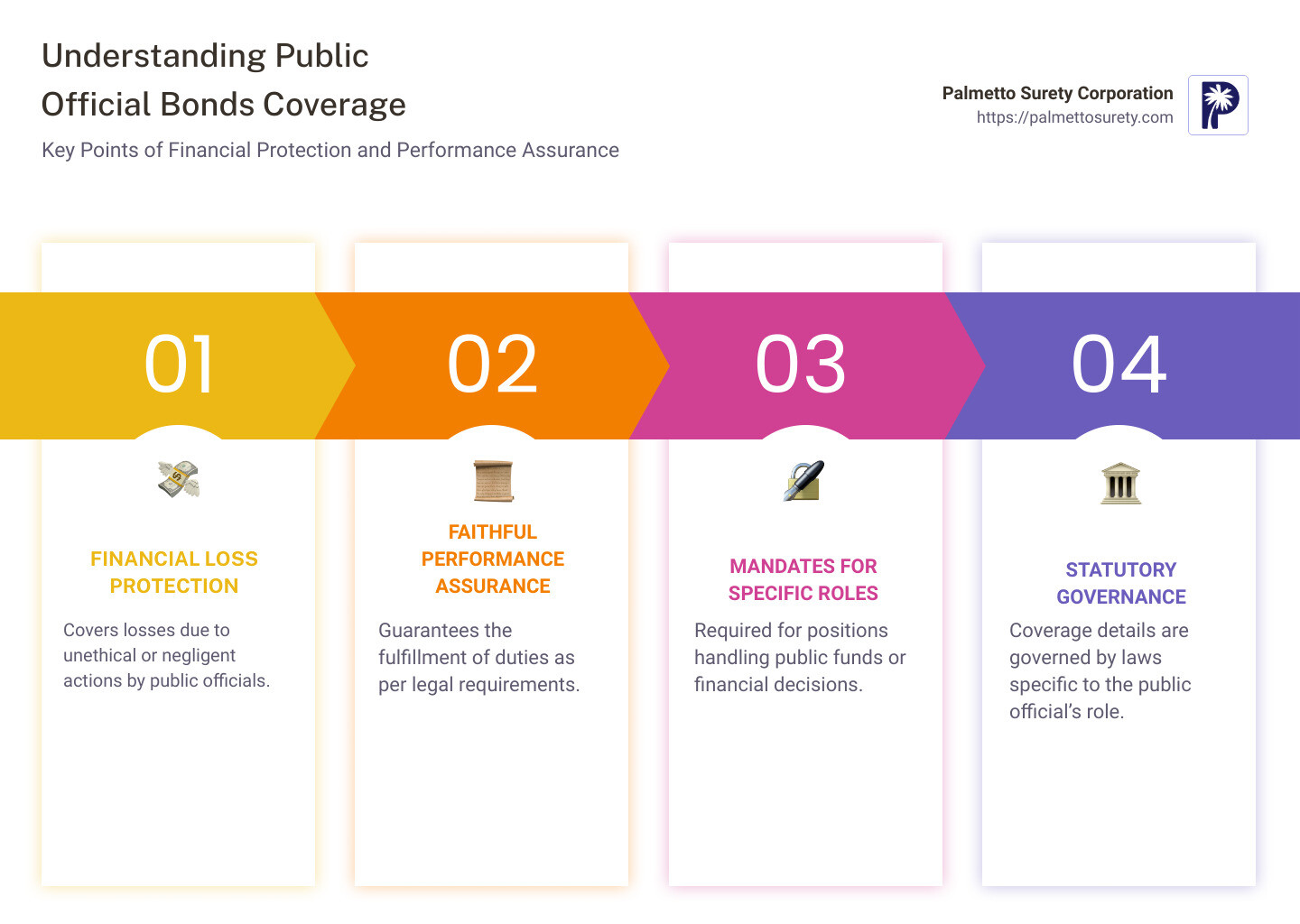
In this introduction, we unravel the essence of public official bonds, highlighting their role in combining public trust with financial insurance to protect against losses that may arise from the actions of government officials. Whether it’s a question of integrity, performance, or statutory obligation, these bonds play a critical role in the seamless and ethical operation of our government entities.
What is a Public Official Bond?
When we talk about a Public Official Bond, we’re really getting into the nuts and bolts of how our public system tries to ensure that its officials do their jobs honestly and correctly. Let’s break it down:
-
Surety: This is basically a promise. A promise made by a third party (the bonding company) that they’ll cover financial losses if the public official doesn’t do their job right. It’s like having a backup plan to ensure that the public doesn’t suffer from a public official’s mistake or dishonesty.
-
Faithful Performance: At its core, a Public Official Bond is all about making sure that public officials stick to their duties. They’ve got to be honest, they’ve got to be diligent, and they’ve got to stick to the rules. If they don’t, the bond is there to cover any fallout.
-
Statutory Requirement: This isn’t just a good idea; it’s the law. Different places have different rules, but many require their officials to have these bonds before they can even start their job. It’s a way of making sure that everyone entering public service is ready to stand behind their actions.

-
Blanket Form vs. Individual Bonds: Here’s where it gets a bit technical. Some places might issue one big bond that covers a whole bunch of officials (that’s the blanket form). Others might require each official to have their own bond (those are individual bonds). The choice depends on the government’s preference and the specific needs of the position or department.
Each of these elements plays a vital role in what a Public Official Bond is and what it covers. It’s a system designed to protect the public from financial harm that could come from a public official’s failure to perform their duties properly. Whether through negligence, dishonesty, or failure to follow statutory duties, these bonds provide a financial safety net for the government and its citizens.
What does a public official bond cover? It covers the gap between trust and risk, ensuring that the public’s interests are safeguarded against the potential misconduct or poor performance of its officials. With a Public Official Bond in place, there’s a mechanism to recover losses, ensuring that the public doesn’t pay the price for individual failures.
Now, let’s move on to explore how these bonds work in practice, particularly how one might go about suing a public official for their bond if things go awry.
Coverage and Requirements of Public Official Bonds
When we talk about what does a public official bond cover, we’re diving into the heart of what keeps our public system trustworthy. Let’s break it down into clear, bite-sized pieces.
Faithful Performance
At its core, a Public Official Bond is a promise. It’s a promise that the person in a public position will do their job right and according to the rules. Think of it as a safety net that catches mistakes or wrongdoings, ensuring that the public doesn’t suffer for them.
Dishonest Conduct
Nobody’s perfect, and sometimes, people make bad choices. If a public official decides to act dishonestly, this bond covers the financial fallout. It’s like a guarantee that if someone tries to pull a fast one, there’s a way to fix the damage.
Financial Handling
Handling public money is a big responsibility. This bond covers instances when money doesn’t end up where it’s supposed to because of mishandling or mismanagement. It’s a bit like a promise that the public’s money is safe, no matter what.
Statutory Duties
Every public official has a rulebook for their job, dictated by law. This bond ensures they stick to that rulebook, covering losses if they step out of line. It’s a way to make sure that the laws and regulations are more than just suggestions.
Negligent Performance
Mistakes happen, but sometimes they’re big ones that can hurt the public. If a public official’s mistake comes from carelessness, this bond helps rectify the situation. It’s a bit like a safety net for when someone drops the ball.
Unauthorized Expenditures
This bond also covers situations where money is spent without the proper go-ahead. It’s a safeguard against rogue spending, ensuring that every penny is accounted for and spent wisely.
Actual Damages
At the end of the day, this bond is about covering real, tangible losses. If a public official’s actions—or lack thereof—cause financial damage, this bond steps in to make things right. It’s a promise that the public won’t be left holding the bag for someone else’s mistakes.
Public Official Bonds are a critical part of maintaining trust and integrity within our public systems. They ensure that even when things go wrong, there’s a path to make them right, protecting both the public and the integrity of our governmental bodies.
It’s important to understand not just the coverage, but also how to navigate the process should you need to claim against a bond. This ensures that accountability isn’t just a concept, but a practice.
Now, let’s move on to explore how one might go about suing a public official for their bond if things go awry.
How to Sue a Public Official for Their Bond
When a public official fails to meet their duties, it can lead to financial losses or other damages. Knowing what does a public official bond cover is crucial, but understanding how to take action against that bond is equally important. Let’s break down the steps involved in this process.
Claim Process
Filing a claim against a public official’s bond starts with identifying the specific misconduct or failure that occurred. This could be anything from financial mismanagement to not performing their statutory duties. Once you’ve identified the issue, you’ll need to contact the surety company that issued the bond. They will provide you with the necessary forms and guide you through their claim process.
Financial Loss Proof
To move forward with your claim, you must prove the financial loss or damage caused by the public official’s actions (or lack thereof). This involves gathering documents, financial records, or any other evidence that clearly shows the loss you’ve suffered. It’s important to be thorough and detailed in this step to strengthen your claim.
Statutory Authority
Understanding the statutory authority that governs the public official’s duties is crucial. This will help you establish that the official had a clear obligation that they failed to meet. Research the laws, regulations, or guidelines that outline what the official was supposed to do, and use this as a foundation for your claim.
Third-party Claims
In some cases, third parties affected by the official’s misconduct may also have the right to sue for damages. This could include individuals, businesses, or other government entities that suffered losses due to the official’s actions. If you’re a third party, ensure you have a clear connection to the damages and the official’s responsibilities.
Recovery on Bond
Once your claim is filed, the surety company will investigate to determine if the bond covers the damages claimed. If the investigation finds in your favor, the surety will compensate you up to the bond’s limit. The bond is there to protect against financial losses caused by the official’s failure to perform their duties faithfully.
Navigating this process can be challenging, but it’s a vital mechanism for holding public officials accountable and recovering losses caused by their actions. If you’re considering pursuing a claim, it might also be helpful to consult with a legal professional experienced in surety bonds and public official misconduct.
As we’ve seen, public official bonds serve as a critical safeguard for the public and entities that might suffer from an official’s misconduct. Understanding the coverage is one thing, but knowing how to take action ensures that these bonds fulfill their intended purpose of protection and accountability.
Moving forward, let’s delve into the financial aspects of these bonds, including how they’re priced and issued. This will give you a complete picture of the role these bonds play in the public sector.
Cost and Issuance of Public Official Bonds
When it comes to public official bonds, understanding the cost and how they are issued is crucial for anyone stepping into a public office or involved in the administrative side of government operations. Let’s break it down into simple, bite-sized pieces.
Bond Cost Factors
The cost of a public official bond can vary widely. Several factors influence this cost:
- The Role of the Public Official: Different positions carry different levels of responsibility and risk, affecting the bond’s price.
- The Bond Amount: Larger bonds mean higher costs. It’s straightforward – the more coverage you need, the more you’ll pay.
- Personal Credit Score: Yes, even in public office, personal credit matters. A higher credit score can lead to lower costs, as it signals lower risk to the surety company.
State Payment
In most cases, the state foots the bill. It might sound surprising, but since these bonds protect the public and ensure officials perform their duties, it’s seen as a necessary expense. However, if a claim is made against the bond, the official might be responsible for repaying the surety company.
Personal Credit Score
Think of your personal credit score as a reflection of your financial reliability. For public officials, a solid credit score can ease the bonding process and potentially reduce costs. But don’t worry if your credit isn’t perfect; options are still available, though they might come at a higher price.
Indemnification Process
Here’s where things get a bit technical. If a claim is made against a public official bond, the surety company pays out to cover the claim. But, the official is then required to reimburse the surety company for this amount. It’s a safety net, not a get-out-of-jail-free card.
Surety Compensation
The initial cost of the bond, paid by the state, is essentially a service fee for this protection. This fee is a percentage of the total bond amount, typically ranging from 1% to 5%. Factors like the official’s personal credit score and the specifics of their role can push this cost towards the higher end of the spectrum.
In Summary
Getting a public official bond involves a blend of state involvement, personal financial history, and the specifics of the public position. While the state usually covers the cost upfront, the responsibility to maintain the bond’s integrity falls squarely on the shoulders of the public official. Understanding these dynamics is key to navigating public official bonds smoothly.
As we’ve seen, these bonds play a critical role in safeguarding public interest and ensuring that officials carry out their duties responsibly. With the right approach, the process of obtaining and maintaining a public official bond can be straightforward and stress-free.
Moving on, let’s explore some alternatives to public official bonds and how they compare in terms of coverage and protection.
Alternatives to Public Official Bonds
When it comes to ensuring the integrity and financial responsibility of public officials or employees, public official bonds are a well-known tool. However, there are other ways to protect public funds and maintain trust in those handling them. Let’s dive into some alternatives that offer similar protections.
Government Employee Crime Coverage
Unlike public official bonds, government employee crime coverage policies are structured as traditional insurance products. These policies are designed to protect against losses caused by the dishonest acts of employees. They cover a range of wrongful actions, including theft, forgery, and fraud. This type of coverage is particularly useful for covering losses that might not fall under the strict definitions required for claims against public official bonds.
Insurance Products
In the realm of protecting against financial misconduct or negligence, various insurance products are available. These products can be tailored to the specific risks faced by public entities. For instance, a city might purchase a comprehensive policy that covers everything from employee dishonesty to cyber theft, providing a broader safety net than a public official bond alone.
Two-Party Relationship
One key difference between these insurance products and public official bonds is the two-party relationship. Insurance policies are agreements between the insured party (the government entity) and the insurer, simplifying the claims process. This direct relationship can sometimes make it easier to address and recover from losses.
Indemnification
Both public official bonds and alternative insurance products include indemnification clauses. However, the scope and process can vary. Insurance policies may offer more flexible terms for indemnification, potentially providing broader coverage for losses that don’t strictly fall under a public official’s duties but still affect the public entity.
Loss Coverage
Loss coverage in insurance products can be more comprehensive than in public official bonds. For example, government employee crime coverage policies might cover losses both inside and outside of premises, including cyber fraud, which is increasingly relevant in today’s digital age.
Fidelity Bonds
Fidelity bonds are another alternative, offering protection against losses caused by fraudulent acts committed by employees or third parties. These bonds can be purchased on a blanket basis, covering all employees, or targeted to specific individuals or positions deemed high-risk.
Employee Dishonesty
Both fidelity bonds and government employee crime coverage policies specifically address employee dishonesty, providing a safety net for losses resulting from criminal acts by employees. This focus ensures that public entities can recover financially from such incidents, maintaining public trust and financial stability.
In conclusion, while public official bonds are a critical tool for ensuring the faithful performance of public officials, alternative coverage options like government employee crime coverage policies and fidelity bonds offer additional layers of protection. These alternatives can provide broader coverage against a range of risks, including employee dishonesty and other fraudulent acts, thus safeguarding public funds and trust more comprehensively.
Frequently Asked Questions about Public Official Bonds
When it comes to ensuring the integrity and accountability of public officials, understanding the scope and functionality of public official bonds is crucial. Let’s dive into some of the most common questions to help clarify their purpose and application.
What Does a Public Official Bond Cover in Texas and California?
In both Texas and California, as well as across most states, public official bonds serve as a safeguard to ensure that public officials carry out their duties honestly and faithfully. What does a public official bond cover? Primarily, these bonds cover financial losses resulting from dishonest conduct, negligence, or failure of a public official to perform statutory duties.
For instance, if a public official engages in unauthorized expenditures or fails to manage public funds properly, leading to financial loss, the bond can provide compensation up to the bond’s limit. This ensures that public funds are protected and that there is a recourse in case of misconduct.
How Can You Lookup a Public Official Bond by Name?
Looking up a public official bond by name involves contacting the relevant government agency or the surety company that issued the bond. In many cases, public official bonds are matters of public record. Therefore, one can start by reaching out to the state or local government’s secretary office or the department that oversees public records. Additionally, online databases and official state websites might offer search functionalities to look up bonds by the name of the public official.
What Are the Differences Between Public Official Bonds and Government Employee Crime Coverage Policies?
Understanding the differences between public official bonds and government employee crime coverage policies is key to recognizing the level of protection each offers.
-
Public Official Bonds are essentially a three-party agreement ensuring that public officials perform their duties honestly and faithfully. If the official fails to do so, the bond compensates the government or the injured party for financial losses up to the bond amount. These bonds are typically required by law for individuals in public office.
-
Government Employee Crime Coverage Policies, on the other hand, are insurance products that protect against financial losses from dishonest acts committed by government employees. Unlike public official bonds, these policies create a two-party relationship between the insured entity (the government or department) and the insurer. Coverage can include a range of dishonest acts, such as theft, embezzlement, or forgery, and is not limited to the actions of elected or appointed officials.
While both aim to protect public funds and trust, they differ in their structure, coverage scope, and the parties involved. Public official bonds focus on ensuring the faithful performance of duties by public officials, whereas government employee crime coverage policies offer broader protection against dishonest acts by government employees.
By understanding these distinctions and the specific protections offered by public official bonds in states like Texas and California, entities and individuals can better navigate the complexities of safeguarding public integrity and financial accountability. Whether through traditional public official bonds or alternative coverage options, the goal remains the same: to ensure the faithful and honest service of those in public office, upholding the public trust.
Conclusion
In wrapping up our exploration of public official bonds, it’s clear that these instruments play a pivotal role in maintaining the integrity and accountability of public servants. The journey through understanding what does a public official bond cover has taken us from the basics to the nuances of claims and alternatives, highlighting the importance of these bonds in safeguarding public resources and trust.
At Palmetto Surety Corporation, we are committed to upholding these values of trust and accountability. Our extensive experience and dedication in the field of surety bonds, including public official bonds, position us as a trusted partner for municipalities, government agencies, and public officials themselves. Whether you’re a newly elected official seeking your first bond or a seasoned public servant looking for comprehensive coverage, we’re here to guide you through every step of the process.
We understand that the landscape of public official bonds can be complex, but our expertise simplifies this journey, ensuring that public officials are adequately covered, and ultimately, that the public trust is preserved. Our team is equipped with the knowledge and tools to provide the necessary bonds, tailored to meet the statutory requirements and the unique needs of each position and jurisdiction.
For those looking to delve deeper into the specifics of public official bonds or to secure a bond with confidence, we invite you to explore our services further. Visit our surety bonds page to discover how we can assist you in meeting your obligations with integrity and assurance.
At Palmetto Surety Corporation, excellence is our standard. We’re not just providing bonds; we’re fostering a culture of accountability and trust that benefits not only the officials we serve but the communities they represent. Let us be your partner in navigating the complexities of public official bonds, ensuring that together, we uphold the highest standards of public service and integrity.


